


Smart circuit breaker metering is useful only when the measured quantities, accuracy conditions and exported data are documented for the exact device. A display of voltage and current does not establish accurate active power, accumulated energy or suitability for billing. Buyers should define the intended decision first, then verify the available data points, measurement range, uncertainty and communication mapping. For a panel builder, the practical acceptance question is whether the complete installed measurement chain gives sufficiently reliable information for its intended use, rather than whether the product is described as smart or high precision.
Separate protection, measurement and reporting
A breaker can protect a circuit, measure selected electrical quantities and communicate information, but those are distinct functions. A satisfactory protection specification does not establish a metering accuracy class. Likewise, an accurate local display does not prove that a building management system receives the same quantity with the correct scaling. Purchase specifications should contain separate requirements and separate acceptance evidence for each function.
Start by identifying the decision the data will support. Maintenance staff may need current trends to investigate changing load patterns. An energy manager may need accumulated active energy for comparing operating periods. An operator may need alarm indications, while a tenant billing arrangement may require approved measurement and legal compliance beyond ordinary monitoring. These use cases should not inherit one generic accuracy requirement without review.
The SUTON smart panel guide helps put these requirements into the wider distribution system. Where energy data will support a contractual or financial allocation, confirm the applicable jurisdiction and metering rules with the responsible specialist. Do not treat a marketing phrase, display resolution or communication feature as approval for revenue billing.
Define the quantities before requesting accuracy
Voltage, current, active power, apparent power, reactive power, power factor and active energy describe different aspects of the load. Ask which ones are measured, calculated, displayed locally and exported through the interface. A quantity available on a display may not be available in the communication map, and a reported total may not include per-phase detail. Make the required granularity explicit.
Active energy integrates active power over time. The US Energy Information Administration explanation of electricity measurement illustrates the relationship between power, operating time and energy. That explanation does not establish the performance of any circuit-breaker meter. For installed monitoring, the device's actual measurement method and operating conditions determine how reliable the reported value will be.
As an illustration, a constant measured active load of 2 kW operating for 3 hours consumes 6 kWh. This is an arithmetic example, not a SUTON specification or a prediction for a varying load. If the load changes during the period, energy requires integration of the changing active power. A single instantaneous value multiplied by the entire period can misrepresent consumption.
For alternating-current loads, multiplying voltage and current alone generally does not establish active power. Under specified sinusoidal single-phase conditions, active power can be expressed as voltage multiplied by current and power factor. Three-phase systems require the correct treatment of each phase and the relevant connection. Distorted or unbalanced waveforms need an appropriate measurement method; do not substitute a simplified balanced-load calculation for documented meter performance.
Read an accuracy claim with its operating conditions
An accuracy statement needs to identify the quantity, reference basis and conditions under which it applies. Ask whether the limit is a percentage of reading, a percentage of full scale, a stated class under a named standard, or a combination of terms. These descriptions are not interchangeable. The error relevant to a small operating load can be very different from the error suggested by a number stated only near the upper end of a range.
Request the applicable current range, voltage range, frequency conditions, temperature range and load conditions. Determine whether the statement covers the complete installed device or only a sensor or internal measurement element. If external sensors are used, obtain the approved sensor ratios and their performance requirements. Do not assume that a component's accuracy becomes the system's accuracy without considering the rest of the measurement chain.
The NIST discussion of measurement uncertainty explains why a measurement result needs an uncertainty context. Use that principle when designing acceptance tests: a reference instrument has its own uncertainty, and the test setup contributes additional influences. A small difference between two displays does not automatically mean that either device has failed its specification.
| Metering item | Request from supplier | Acceptance question |
|---|---|---|
| Quantity | Voltage, current, power and energy point definitions | Is the required quantity actually available? |
| Accuracy | Reference basis, range and conditions | Does the statement cover the intended use? |
| Resolution | Display and interface units and scaling | Are values decoded without false precision? |
| Energy counter | Retention, reset, rollover and direction | Can interval consumption be reconstructed? |
| Measurement chain | Sensor and configured installation details | Does the complete arrangement meet the requirement? |
Distinguish resolution from measurement performance
A display showing several decimal places can look precise while still having a much wider measurement uncertainty. Resolution is the smallest change represented by the display or data format. Accuracy describes agreement with the relevant reference under stated conditions. Repeatability describes how consistently the device reproduces a result under repeated conditions. A complete specification should not collapse these ideas into one promotional number.
Check the exported resolution as well as the display resolution. A local display may round a current value, while the interface transmits a scaled integer or a floating-point number. That difference can be entirely normal if the conversion is documented. Problems arise when the receiving software applies the wrong scaling, interprets a signed value incorrectly or uses an inconsistent unit label.
Where a measured value fluctuates, review whether the device reports an instantaneous value, an average or a filtered result. A stable-looking dashboard may reflect smoothing rather than a steady load. Document the averaging period and refresh interval where available. This is especially relevant when comparing a breaker display with a handheld reference instrument that uses a different time window.
Verify data points all the way to the dashboard
Create a point list containing each required quantity, phase association, unit, sign convention, scaling, data type and update interval. Also identify unavailable-value indicators and how stale data are detected. Missing communication is not zero consumption. If the software preserves the last valid value after a connection failure, it needs a visible indication that the value is no longer current.
For accumulated energy, ask about counter capacity, rollover, reset permission and retention after a power loss. Determine whether a counter is lifetime energy, energy since reset or energy within a defined interval. An automatic reset or an undocumented rollover can make a monthly trend appear to drop. The application should preserve the raw counter readings and the transformation used to calculate interval energy.
Import and export conventions matter where photovoltaic generation or another source can reverse energy flow. Obtain the definitions for positive power, negative power, imported energy and exported energy. Confirm whether the meter distinguishes direction and whether the site wiring and sensing arrangement support that function. Do not infer bidirectional capability from a signed software field or from the presence of a solar installation elsewhere in the building.
Use the smart circuit breaker communication checklist to verify transport, point mapping and stale-data handling. These checks complement measurement testing and help avoid blaming the sensor for an error introduced by the receiving software.
Plan a meaningful acceptance comparison
Use an approved test arrangement and a suitably calibrated reference instrument. A qualified person should define the safe setup, operating points, observation period and acceptance limits before energization. Include conditions representative of the intended use rather than testing only one convenient operating point. The acceptance plan should explain which product specification each observation addresses.
Compare like quantities over compatible time windows. When checking active energy, record the start and end readings of both systems over the same period. For varying loads, a time-aligned comparison is more useful than separate snapshots taken minutes apart. A gateway delay can create disagreement even when the underlying sensors are functioning as intended. Preserve timestamps and raw data so the cause can be investigated.
If an illustrative reference records 10.00 kWh and the installed system records 10.10 kWh over the same interval, the relative difference is 1 percent of the reference reading. That calculation does not by itself establish pass or fail. The relevant device limit, reference uncertainty, test conditions and agreed acceptance rule must also be applied. Avoid inventing a universal tolerance for all smart breakers.
Review the actual SUTON product evidence
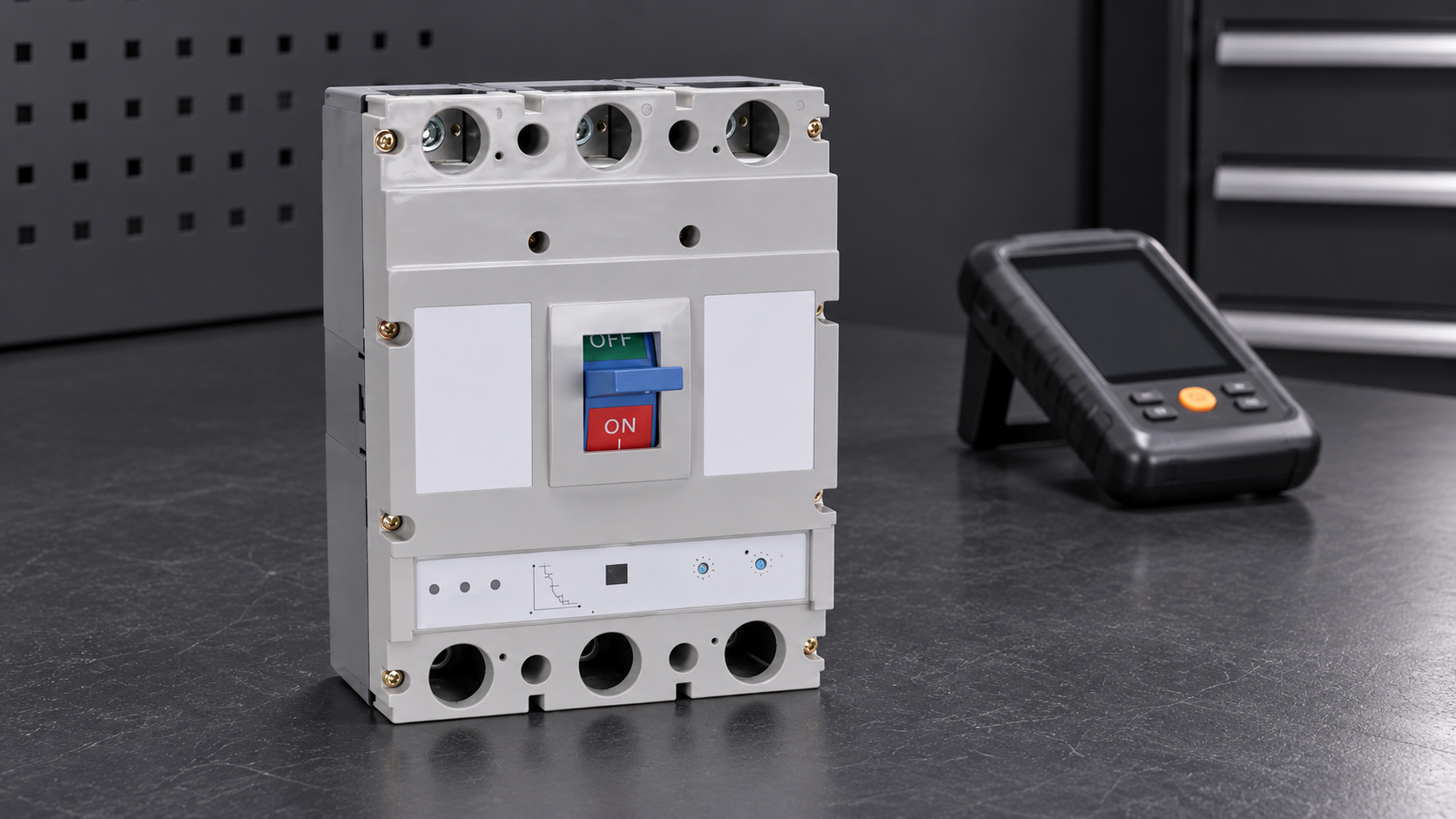
The ETM3E intelligent measurement circuit breaker page describes high-precision metering and real-time three-phase voltage and current display. Those statements identify a relevant product family for a measurement inquiry. They do not provide a complete accuracy class, uncertainty budget, billing approval or guaranteed list of exported energy and power points for every configuration.
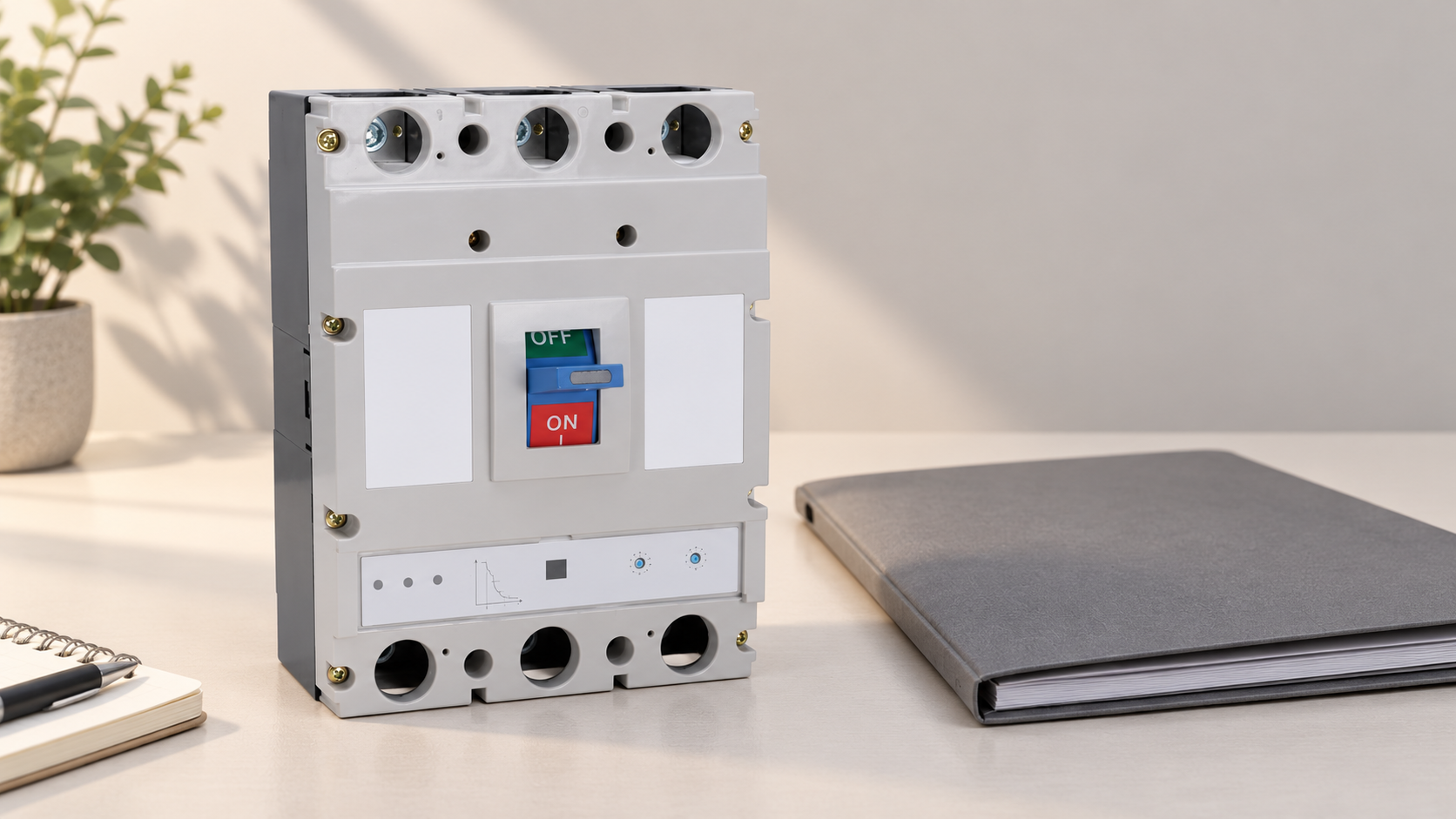
Ask SUTON for the exact ordered model's measurement specification and communication map, including the covered quantities and conditions. Confirm whether the selected electronic configuration, pole arrangement and accessories match the proposed monitoring application. The article's reference-based exterior illustrations identify the product family; they do not demonstrate a metering class or show the internal sensing architecture.
Use the smart circuit breaker selection guide alongside these measurement questions. Electrical suitability, protection coordination, installation requirements and measurement performance all remain relevant. If a separate approved meter is needed for the project, retain it in the design rather than stretching an undocumented breaker function into that role.
Keep energy conclusions within the evidence
Circuit-level measurements can reveal differences between periods, identify unexpected operation and guide investigation. They do not automatically establish why consumption changed or prove an energy saving. Occupancy, production output, weather, operating hours and equipment changes can all influence the comparison. Record the context before attributing a reduction to a new breaker or control strategy.
Protect the data pipeline as well as the equipment. Restrict counter-reset permissions, retain mapping revisions and back up gateway configuration. When firmware or a module changes, check whether point meanings, scaling or retention behavior changed. The NIST operational technology security guidance provides a framework for managing connected industrial systems while considering their operational requirements.
For procurement, attach the point list, accuracy conditions, acceptance method and required records to the order. During handover, provide raw test results, reference-instrument information, configuration versions and unresolved limitations. This gives the owner a basis for deciding which measurements can support routine monitoring and which require further verification before more consequential use.
Frequently asked questions
Does a high-resolution display establish metering accuracy?
No. Display resolution describes how finely values are represented. Measurement accuracy needs a stated quantity, reference basis, range and operating conditions. Ask for the exact device's specification and the evidence supporting it.
Can voltage and current readings be used as active power?
They are not generally sufficient by themselves for an alternating-current load. Power factor, waveform and phase arrangement affect the relationship. Use documented active-power measurements or an appropriate validated calculation, and label calculated estimates clearly.
Can a smart circuit breaker replace a revenue meter?
Only when the exact device and installed arrangement meet the applicable measurement, approval and legal requirements for that use. Ordinary monitoring, a metering marketing claim or a communication interface does not establish permission to use its readings for billing.
Educational video
Power Factor Explained – The basics what is power factor pf by The Engineering Mindset. This video is educational background only. For voltage recovery it explains electrical-shock protection limits; for metering and communication it explains active and apparent power and power factor. It does not establish a SUTON rating, metering accuracy, protocol or approved installation procedure.