

Fuse switch disconnector maintenance should combine equipment-specific inspection instructions, an appropriate maintenance plan and a controlled isolation procedure. Replacing a blown fuse is not simply exchanging two cartridges with the same current marking. The cause of operation, approved fuse identity, holder condition and safe access boundary all need review. For industrial buyers and maintenance managers, the practical aim is to restore the supported arrangement, record what changed and prevent an avoidable repeat fault without exposing personnel to energized parts.
Define the maintenance task before opening equipment
Separate routine observation from work that requires access to internal components. A user reporting a damaged cover is performing a different task from a qualified person replacing a fuse or investigating overheating. Define responsibilities, the permitted observations and the escalation route in the site's maintenance plan. Personnel should not open a fuse compartment or remove barriers merely to complete a general visual checklist.
Record the equipment model, circuit identification, enclosure location and available instructions. Identify the reason for intervention: scheduled inspection, visible deterioration, abnormal operation, a protection event or a planned component replacement. Each reason calls for a different scope of review. Where the product identity or circuit information is uncertain, resolve that uncertainty before selecting spares or planning access. A handwritten label is useful information but should not be treated as proof of the actual circuit.
Establish a suitable inspection interval
There is no defensible universal inspection interval for every fuse switch. The equipment instructions, environment, service duty, installation conditions and previous findings should inform the plan. A clean indoor panel and an installation exposed to contamination or vibration should not automatically share the same schedule. Record why an interval was selected and how findings trigger an earlier inspection or a revised maintenance approach.
The HSE electrical maintenance guidance describes a risk-based approach in which equipment, environment and previous results influence checks. That principle is useful context, not a product-specific service schedule. Ask SUTON for the applicable instructions and use competent engineering judgment for the installation. Avoid copying a yearly or monthly interval from an unrelated product without considering the actual conditions.
Inspect the exterior and available records
Within the permitted observation scope, note damaged housings, missing covers, discoloration, contamination, illegible identification and signs of water entry. Record the location and nature of each finding rather than marking only satisfactory or unsatisfactory. External observations can prompt investigation, but they cannot prove the condition of hidden contacts or establish that the fuse holder is safe for continued use.
Review earlier maintenance notes alongside the new findings. Repeated fuse operation, recurring discoloration or a history of loose connections deserves attention even if the latest exterior looks acceptable. Check whether the equipment or its operating environment changed since the previous inspection. A changed load, enclosure arrangement or replacement fuse can affect the relevance of earlier acceptance records. Preserve photographs as supporting observations without presenting them as an electrical test result.
Plan isolation around every relevant energy source
The operating handle does not by itself establish that all accessible parts are de-energized. Identify incoming supplies, alternative sources, backfeeds and stored energy relevant to the proposed task. Secure isolation and verification of the safe condition must follow the site procedure under competent control. This article does not provide a universal live-work method or authorize access to an energized fuse compartment.
The HSE safe-working guidance provides a general framework for controlled electrical work. Use that framework with current equipment instructions and local requirements. Record the isolation boundary in the job documentation, including any adjacent parts that remain energized. If the planned task exceeds that boundary, reassess the work before proceeding rather than treating the first isolation action as sufficient for every subsequent step.
Review the maintenance evidence checklist
| Maintenance question | Evidence required | Release consideration |
|---|---|---|
| Task and circuit | Exact equipment identity and work scope | Scope understood before access |
| Safe condition | Site isolation and verification record | All relevant sources addressed |
| Replacement fuse | Approved part identity and circuit evidence | Supported configuration restored |
| Holder condition | Qualified inspection and recorded findings | Damage resolved or escalated |
| Protection change | Engineering review if configuration changes | Relevant protection evidence retained |
| Handover | Work, verification and authorization record | Outstanding actions explicit |
The table is intended for managers and qualified maintainers to agree the evidence needed before release. It does not replace the product's service procedure. No cleaning agent, torque value, lubricant or test voltage is specified because those requirements depend on the actual equipment. An unspecified generic instruction can damage insulation or change a supported assembly. Where a requirement is missing, obtain it before carrying out that part of the work.
Investigate why the fuse operated
Preserve the identity of the removed fuse and the available event information. Review the circuit, load and protective design rather than assuming the cartridge failed without cause. A fuse may have operated in response to a condition requiring attention elsewhere in the circuit. Simply fitting another fuse and repeatedly restoring supply can conceal the original problem and create additional risk or damage.
The investigation should consider the appropriate evidence for that circuit: operating records, protection information, inspection findings and competent measurements where required. Record conclusions separately from assumptions. If the cause has not been established, document the remaining uncertainty and the conditions for further investigation. Do not increase the fuse rating or change its protection class merely to stop repeated operation. Such a change requires a fresh protection and equipment review.
Confirm the replacement fuse identity
Obtain the approved replacement part code or documented compatibility requirements for the exact holder and application. Physical dimensions, rated current and voltage are not the only relevant characteristics. The fuse system, protection function, losses and circuit requirements can also matter. Confirm the replacement against the equipment and circuit records rather than relying on a spare that happens to fit.
The NH fuse size and compatibility guide explains the distinction between physical fit and a supported selection. Retain the replacement's manufacturer identification and part code in the maintenance record. If an equivalent part is proposed, obtain evidence for the claimed equivalence and its applicable boundaries. A verbal statement that all cartridges of that size are the same is insufficient for controlled maintenance.
Assess the holder and complete assembly
Replacing a cartridge does not restore a damaged holder, distorted contact, compromised cover or overheated connection. The qualified maintainer should inspect the relevant components within the approved procedure and decide whether repair, replacement or further assessment is required. Findings should be related to the exact location and component. Do not hide deterioration by cleaning surfaces and recording the work as a successful fuse replacement.
The equipment family is addressed by IEC 60947-3, whose public scope includes fuse-combination units. The scope does not supply a generic field-repair method or approve substitute components. Use the exact product instructions for service limits and replacement parts. If an assembly's supported configuration cannot be restored, keep that issue explicit in the maintenance decision instead of assuming a new fuse makes the complete unit acceptable.
Keep protection coordination intact
A replacement should preserve the accepted protection arrangement unless a deliberate engineering change is approved. Record any proposed change to fuse class, part code or rating and assess its effect on the circuit. The previous study may no longer apply after such a change, even if the nominal current remains identical. Downstream device settings and upstream protection can also affect the required review.
Consult the fuse-switch and downstream-breaker coordination guide for the evidence needed to define that relationship. Maintenance records should identify whether the work restored the original configuration or introduced a reviewed change. These are different outcomes. A maintenance log that says only fuse replaced provides too little information for a later engineer to determine which protection evidence remains relevant.
Review the actual SUTON product
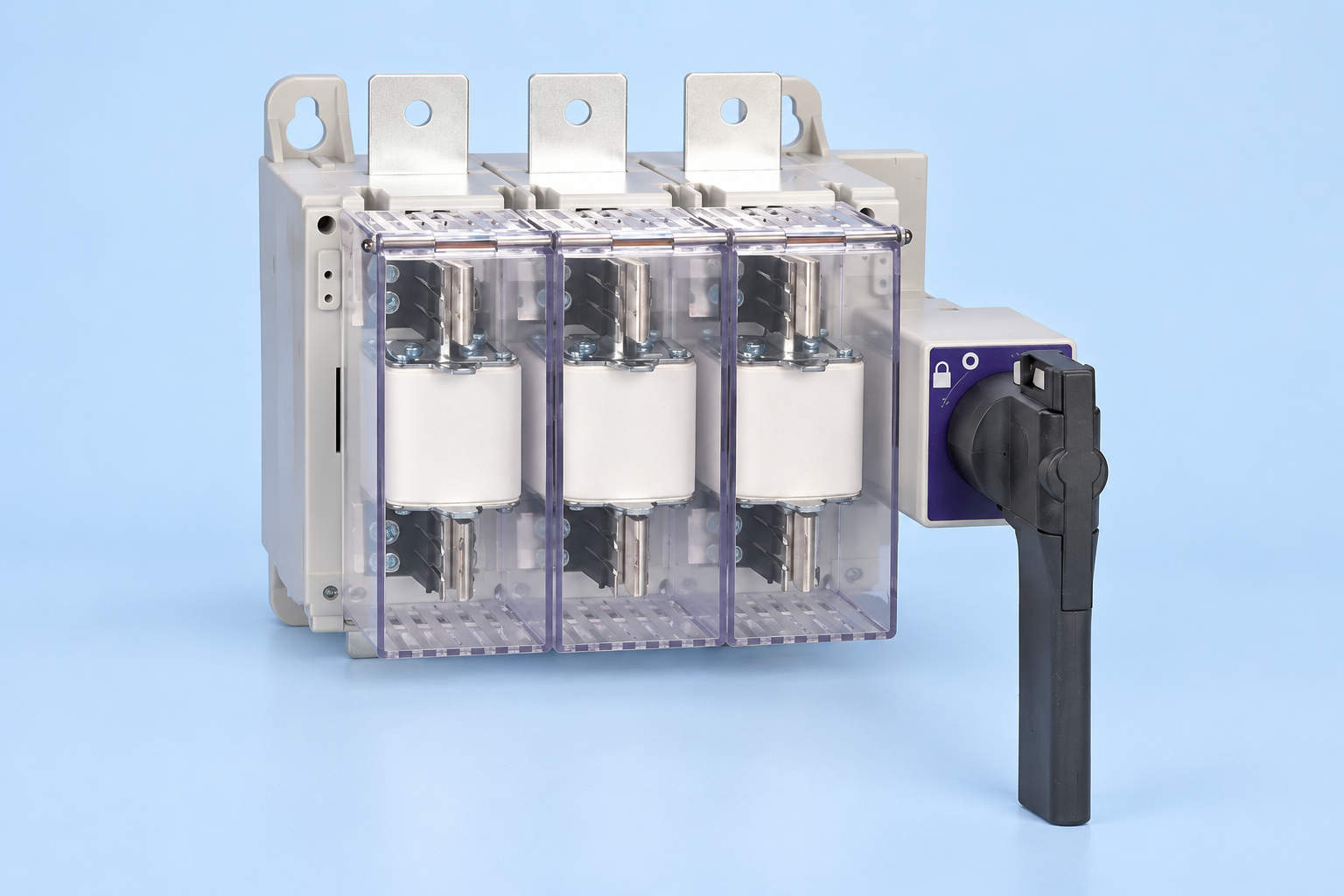
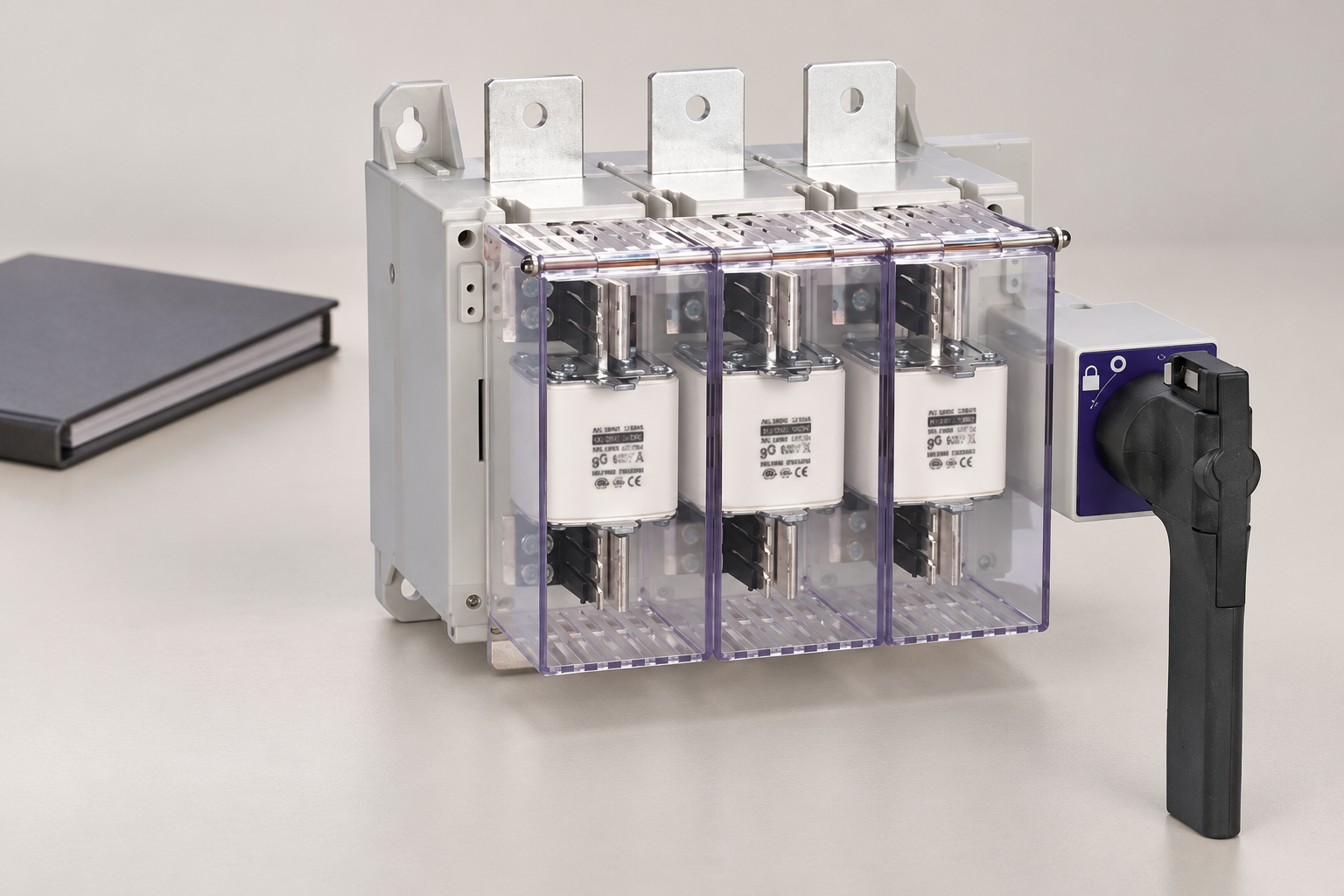
For a SUTON ETGLR fuse-switch-disconnector, request current model-specific instructions, approved spares and the relevant accessory list. The illustrations here show the complete exterior with closed covers and no connected conductors. They are product-reference illustrations, not demonstrations of safe fuse removal. The visible housing cannot establish a torque, fuse code, permitted cleaning method or safe access state.
Provide the equipment identity, installed arrangement and observed issue when requesting support. Include clear photographs taken within the site's permitted observation scope, plus the fuse identification and available maintenance history. Ask specific questions about acceptable component condition and replacement requirements. Do not ask a supplier to approve an entire installation from a single exterior photograph. The circuit and assembly information is essential to a useful response.
Apply a controlled return-to-service review
Before release, confirm that the required work and competent checks are complete, the accepted components are recorded and the equipment is restored according to its instructions. Review covers, barriers and access arrangements as part of that process. Confirm that no unresolved finding has been silently carried forward. The responsible person should define who can authorize restoration and how operating personnel are informed.
For example, a fuse replacement after repeated operation may involve both restoring the unit and investigating a downstream fault. Closing the maintenance ticket after the cartridge is installed would omit the second issue. A useful record separates the replaced component, investigation outcome, verification results and any remaining actions. The wider disconnect-switch guide for panel builders supplies a parent framework for equipment selection and documentation.
After return to service, retain the work record with the product instructions and circuit evidence. Use recurring findings to adjust the maintenance plan rather than repeating an unchanged checklist indefinitely. Record who performed the work, the exact replacement identity, the reason, relevant checks and the release decision. For unresolved product questions, contact SUTON with those records so the next decision is based on the actual unit and application.
Frequently asked questions
How often should a fuse switch disconnector be inspected?
Use the equipment instructions and a risk-based maintenance plan reflecting environment, duty and previous findings. There is no universal interval appropriate for every installation. Record the basis and revise it when conditions or findings change.
Can a blown fuse be replaced by another with the same current rating?
Current alone does not establish compatibility. Confirm the approved fuse identity, system, voltage, protection function and relevant equipment conditions. Investigate the reason for operation and assess holder condition before controlled return to service.
Does turning the handle OFF make fuse replacement safe?
The handle position alone is insufficient. Relevant supplies, backfeeds and stored energy must be addressed under the site isolation and verification procedure by competent personnel, using the specific equipment's access instructions.
Educational video
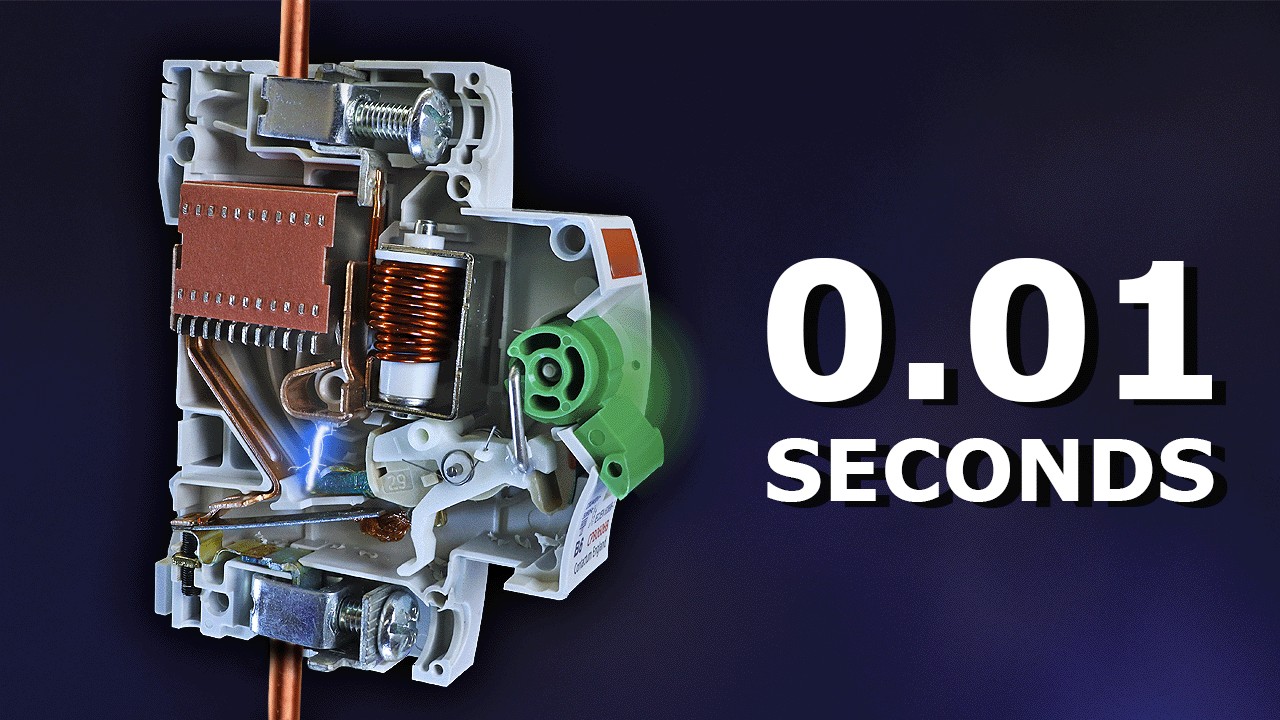
Why Circuit Breakers DON'T Protect People (electric shocks) by The Engineering Mindset. This video explains electrical-shock protection limits; it supports the safety-function distinction here, not an exact SUTON rating, protector response time, feed direction, fuse selection or maintenance procedure.