


A knife switch describes a construction, while a load-break switch describes a declared operating function. They are not opposites and are not automatically interchangeable. Some knife-switch configurations are intended only for isolation without interrupting load current; others include an approved load-switching arrangement. The correct selection comes from the exact model's declared duty, not from the visible blades or the size of the handle. For a panel buyer, the practical question is whether the proposed device can perform the required switching and isolation functions under the actual circuit conditions. This guide compares those questions using SUTON's HD(HS) knife-switch and HGL(ETGL) product families.
Separate construction from electrical function
The IET guide to protective, isolation and switching devices distinguishes the functions of isolation and functional switching. That distinction supports a function-based specification; it does not establish a SUTON model rating from a trade name or construction photograph.
A knife-type mechanism typically uses a moving conductive blade or blade assembly engaging fixed contacts. That description helps identify the mechanical arrangement. It does not establish what current the device may interrupt, which utilization category applies or whether its open state satisfies the required isolation function. Those are declared characteristics of the complete equipment.
Similarly, a product called a load-break switch should be reviewed against the exact load, voltage, current and operating conditions. A family name is not enough. Ask which order code, accessories and connection arrangement support the proposed duty. If the supplier's response describes only physical appearance, the electrical selection remains incomplete. Keep mechanism information and duty information in separate rows of the comparison.
Read the knife-switch family's actual limits
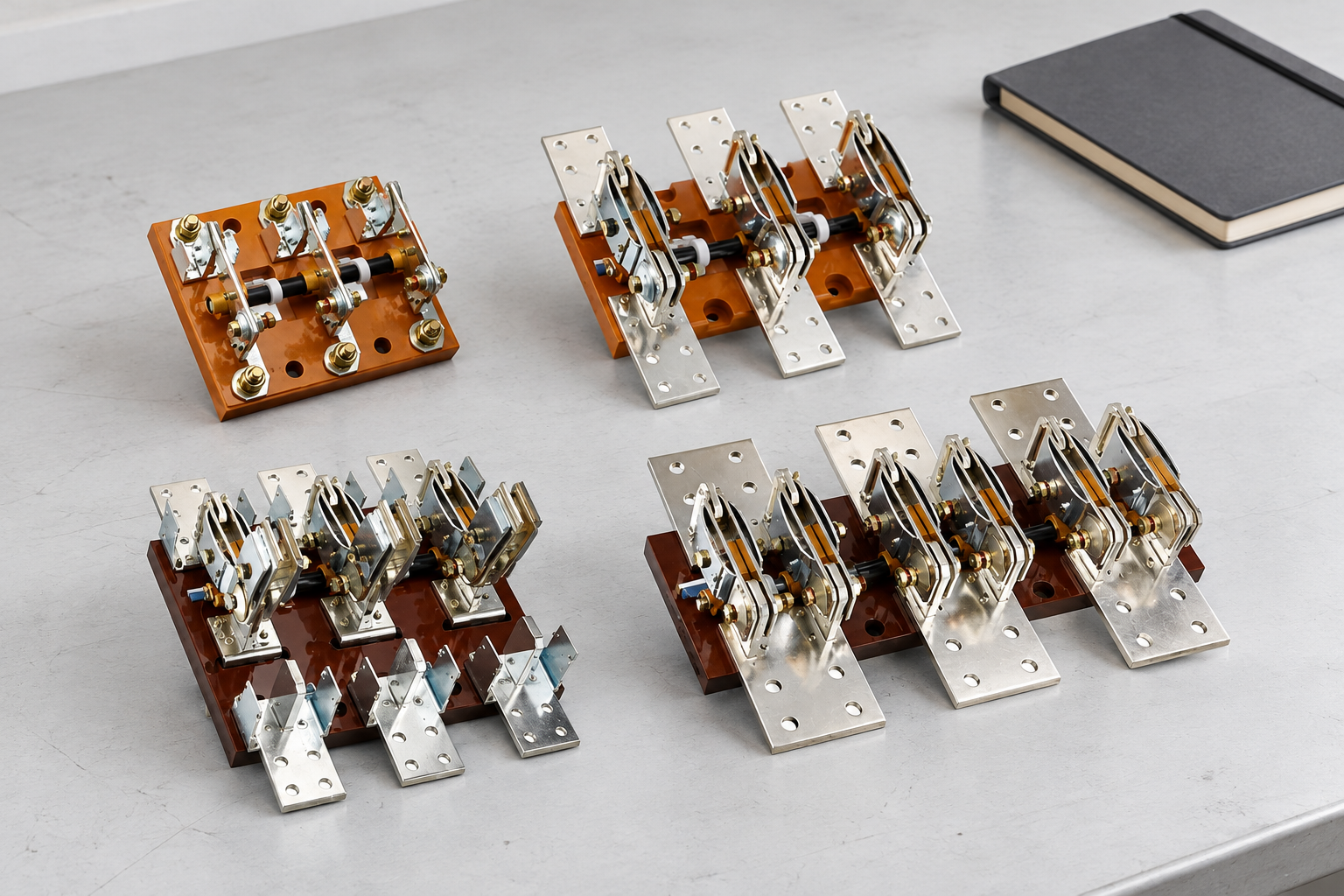
The SUTON HD(HS) open-type knife-switch family includes different operating constructions and applications. Its description distinguishes switches equipped with arc chutes for load interruption from other versions used only for isolation. It also describes central-handle and lever-operated arrangements with different installation contexts. These distinctions should survive the quotation process.
Do not copy a load-interruption statement from one version onto every knife switch in the range. Request the exact model designation and the manufacturer information that identifies its intended function. The offered construction, current, voltage, pole arrangement and operating method should all be traceable to the same documents. A photograph of exposed blades cannot supply the missing rating evidence.
The HD11FA anti-misoperation product gives an especially important counterexample: its published precautions expressly prohibit load operation. A locking feature or an anti-misoperation name does not turn that configuration into a general load-break switch. Retain that restriction in the equipment schedule and the approved operating procedure.
Review the load-disconnector family with equal care
The SUTON HGL(ETGL) load-disconnector page describes a spring-operated mechanism and a range of switching and isolation applications. It also states isolation-only use for specified larger ratings. Therefore, the words “load disconnector” in a family title should not be used to erase limits stated for individual sizes or configurations.
Ask the supplier to identify the applicable utilization category and operational rating for the offered model. Preserve the relationship between voltage, current and duty. A proposal may be suitable for carrying current and providing isolation while requiring a separate device to interrupt the load. That arrangement can be valid if the design and operating sequence explicitly provide for it; it should not arise accidentally from an incomplete quotation.
Compare the functions in a purchase schedule
| Review item | Evidence required | Assumption to reject |
|---|---|---|
| Construction | Exact blade, carrier and mechanism arrangement | Visible blades establish interruption duty |
| Load switching | Voltage, current and utilization category | Every member of a family has the same duty |
| Isolation | Declared function and installation conditions | A handle position proves every circuit is dead |
| Arc control | Actual approved product construction | Adding a part creates a new rating |
| Fault protection | Required fuse or breaker combination | A load switch provides all overcurrent protection |
| Operation | Exact manual and restrictions | A lock permits operation under load |
| Layout | Barriers and full operating envelope | Closed dimensions prove maintainability |
The table is a qualitative review aid rather than an operating instruction. It prevents two common mistakes: assuming every visible blade is suitable for load interruption, and assuming every device in a load-switch family has the same operating duty. Each accepted row should cite an exact document or approved drawing.
For a wider overview of isolation planning, use the isolator switch guide. For the load-category decision, the AC-22A and AC-23A comparison addresses the load characteristics that belong beside the model's declared rating. Neither a mechanism photograph nor a nominal current can replace that review.
Understand why switching arcs matter
Opening a current-carrying circuit can create an arc. The switching device must control interruption under the conditions for which it is declared. The applicable behavior depends on the load and circuit, and AC and DC applications cannot be treated as equivalent simply because their voltage numbers look similar. Do not infer a DC duty from an AC knife-switch description.
An arc chute is an identifiable construction feature, but its presence alone is still not a complete rating. The exact equipment must have the applicable declaration for the intended duty. This article intentionally gives no instructions for modifying contacts, adding arc-control parts or operating exposed equipment under load. Use the supplied product and its approved instructions rather than attempting to create a new switching capability in the field.
Preserve the distinction between switching and fault protection
A suitable load switch can interrupt its declared normal operating duty without being an overcurrent protective device. A disconnector's short-time withstand information describes another characteristic. A fuse or circuit breaker may be required to provide the necessary protection. The complete design should identify which device performs each function.
The switch-disconnector making and breaking capacity guide explains these adjacent current duties. When comparing quotations, avoid placing a switch's withstand figure next to a breaker's fault-interruption figure as though they were interchangeable. Ask for the approved protection combination and installation conditions for the proposed switch.
Do not turn visible separation into permission to work
Visible separation can help communicate a device state, but the work boundary may have additional sources. Auxiliary supplies, generators, photovoltaic systems and connected equipment can affect the electrical condition beyond the switch. The design must identify those paths, and the approved work procedure must address the relevant verification and control measures.
The HSE guidance on work near electricity supports checking the suitability of isolation and reliably confirming the intended electrical condition. That is a separate issue from the construction comparison in this article. A visible blade, a handle marking and a local lamp each provide limited information; none should be used as a universal substitute for the approved isolation process.
Consider barriers, covers and service access
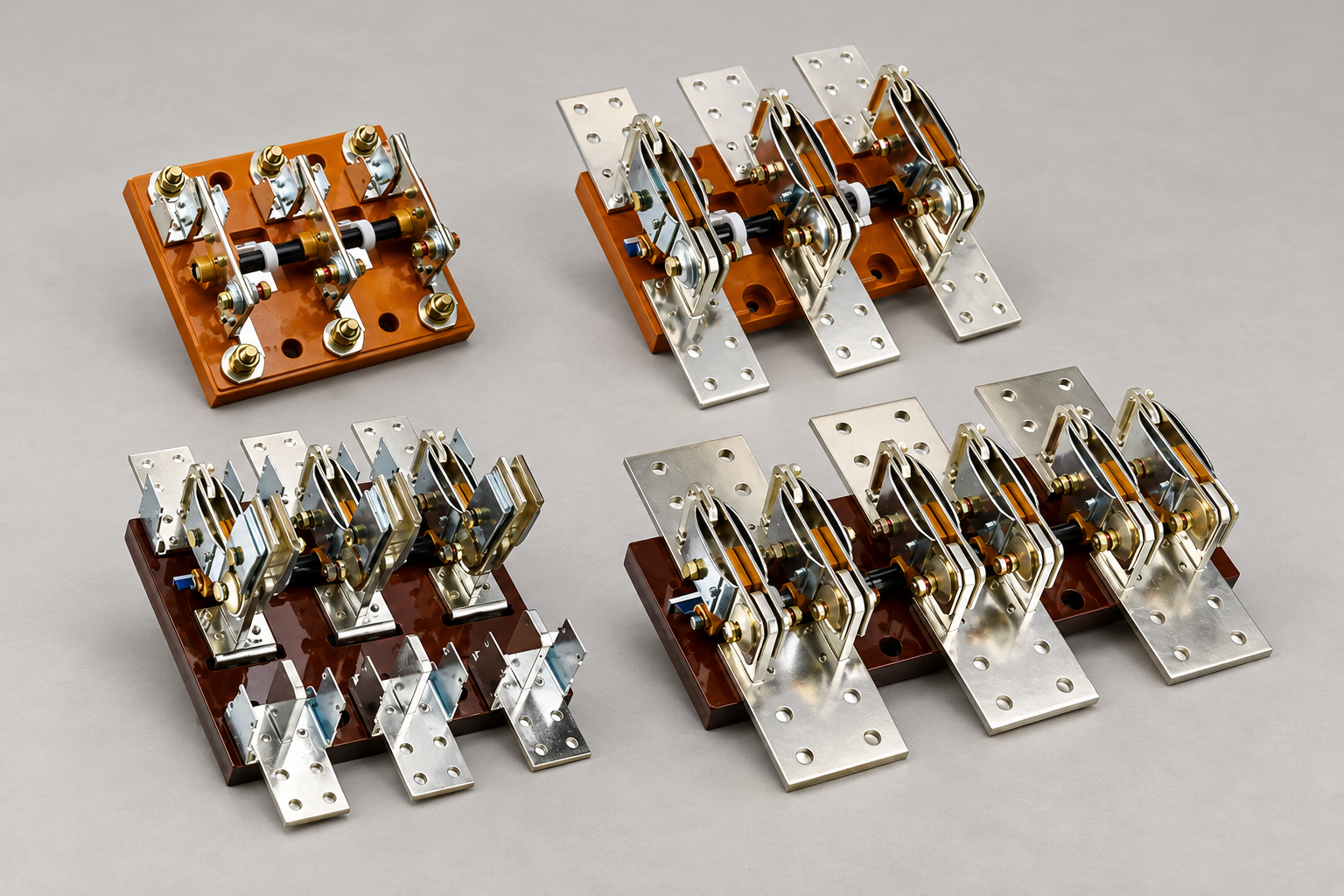
An open-type knife switch and an enclosed or covered construction create different panel-integration questions. Identify the required barriers, access restrictions, operating clearance and maintenance approach on the assembly drawing. Do not assign an ingress-protection rating from a photograph or assume that a protective cover addresses every exposure condition.
The exact product instructions should identify how the equipment is installed and maintained. Leave the required space for the mechanism and conductors. If a proposed layout requires removing a cover or altering a linkage to operate the switch, resolve the design before installation. Mechanical fit must support the approved electrical and access arrangements rather than undermine them.
Prepare a quotation that identifies the exact duty
Send SUTON the circuit voltage and type, load characteristics, normal current, switching frequency, required isolation function, fault conditions, pole arrangement and enclosure layout. Identify whether the load will already be interrupted by another approved device before the knife switch is operated. Ask for the exact construction and any applicable restriction to be stated clearly.
Require the supplier to distinguish standard features, optional accessories and unavailable functions. If an alternative model is proposed, compare it against the same function schedule. Do not approve a substitution merely because it has the same nominal current or a more substantial appearance. Keep the accepted operating restrictions with the equipment tag and the final manual.
Record the delivered configuration for future maintenance
Retain the order code, drawing revision, operating method, approved duty and protective arrangement. Include photographs taken under permitted inspection conditions so that replacement parts can be identified without guessing from a generic catalogue. Record which configuration was approved for load switching and which was restricted to isolation.
A later change in load type, source arrangement or operating frequency can require a new review. Replacing a motor feeder with a different application should not automatically carry forward the original switching assumption. The useful handover record explains what the equipment was approved to do, allowing the next engineer to identify which conditions have changed.
Frequently asked questions
Can every knife switch interrupt a load?
No. Confirm the exact configuration's declared duty. Some knife-switch products are isolation-only, and the HD11FA product precautions specifically prohibit load operation.
Does a large current rating prove load-breaking capability?
No. Current carrying, load switching, isolation and short-circuit duties are different characteristics. Verify the applicable operational rating and utilization category.
Is a visible open gap enough to authorize maintenance?
No. The work boundary, additional sources, securing against reconnection and the required verification must be addressed by the approved procedure for the actual installation.
Educational video
Lecture 35 Arc Interruption Theory in Circuit Breaker II by IIT Roorkee July 2018. This university lecture supports the arc-interruption principles relevant to load switching and arc chutes. It does not establish the internal design or rating of the illustrated SUTON product.