

Switch-disconnector making and breaking capacity describes the device's supported ability to close and open a circuit under specified conditions. It must be read with voltage, current, load duty and product documentation. Normal load switching, short-circuit making, short-time withstand and conditional short-circuit ratings are different quantities. None should be treated as a circuit breaker's fault-interrupting rating simply because the values are expressed in amperes.
For a panel buyer, the essential question is which declared quantity answers the actual duty. This guide separates the terms, explains the evidence to request, and shows how to avoid accepting a switch whose current headline conceals unsupported operating conditions.
Begin with the device's actual function
A switch performs a switching function, while a disconnector provides an isolation function within its supported scope. A switch disconnector combines the relevant functions. Identify the exact product type and declaration instead of assuming that every device marketed as an isolator supports the same load-switching operation.
The IET guide to protective, isolation and switching devices helps distinguish these functions. For a procurement decision, verify both the intended switching duty and the isolation requirement against the product documentation adopted by the project.
This distinction matters when replacing a device. An enclosure, shaft and terminal pattern can look familiar while the supported function differs. Do not infer load-breaking capability from physical resemblance, an OFF position or the informal name used by an operator.
Separate carrying current from opening a load
A current-carrying rating describes conditions with the conducting path established. Opening a load adds an interruption duty, and closing a circuit adds a making duty. The voltage, load characteristics and defined operation affect the stresses involved. One current number cannot describe all three situations without its conditions.
For an inductive load, a supported switching rating is particularly important. The current present during normal running does not alone describe what the contacts must handle when the device operates. Request the operational rating for the actual duty at the actual voltage.
The utilization-category comparison explains how category declarations help describe switching conditions. Record category, operational current and voltage together in the purchasing table. Avoid copying a thermal rating into the operational-current field because it is the easiest number to find.
Understand normal making and breaking evidence
Normal making and breaking declarations belong to stated test and service conditions. Read the manufacturer's terminology in that context. A statement that a switch can operate on a particular load does not establish every possible overload, motor-starting or fault operation.
Ask what operating sequence the supported rating covers. A motor maintenance switch used after stopping the motor has a different role from a device used repeatedly for direct process control. The accepted arrangement should state the intended role clearly enough that assembly and maintenance teams can recognize later changes.
Do not invent a conversion between operational current and a supposedly universal breaking-current number. If the supplier's documents leave the relationship unclear, request clarification with the actual circuit details. A transparent unresolved question is preferable to a numerical comparison that combines incompatible quantities.
Treat short-circuit making as a separate condition
Short-circuit making concerns closing under the specified fault conditions. It is different from clearing a fault that is already flowing. A declared short-circuit making quantity therefore does not authorize treating the switch as an automatic fault-interrupting protective device.
Read the associated voltage, test conditions and any coordination requirements. A peak-current quantity and an rms-current quantity are not interchangeable merely because both are displayed with a kA unit. Preserve the manufacturer's definition, units and conditions in the record rather than stripping the number from its label.
The panel designer should assess the available fault conditions at the installation point. This assessment supplies a project requirement; the product declaration supplies supported performance. Purchasing needs a comparison between the two under consistent conditions, not a guessed fault duty based on the upstream breaker's frame size.
Read short-time withstand with its duration
A short-time withstand declaration addresses carrying a specified current for a stated duration and under stated conditions. Its purpose differs from normal load interruption. Omitting the time from a comparison removes an essential part of the declaration.
A hypothetical offer might list a current with a one-second duration while another lists a different time. Those entries cannot be ranked by current alone. These example durations illustrate the comparison problem; they are not ratings assigned to any SUTON switch or permission to select one without a coordination assessment.
Keep time, current definition and conditions in separate fields. Ask the designer how the declared withstand relates to the actual protective arrangement and expected clearing conditions. A higher isolated number is not automatically a better documented solution for the panel.
Understand conditional short-circuit ratings
A conditional rating can depend on a specified protective device and arrangement. Identify that protective device precisely. The fuse category, breaker identity, rating and relevant settings may be part of the evidence, rather than optional installation suggestions.
Do not replace a named protective device with a convenient alternative solely because both carry the same nominal current. The original declaration may not support the substitution. Request a confirmed combination or obtain the appropriate design assessment before accepting a change.
The circuit breaker versus disconnect switch guide explains their different service roles. A protective device's contribution to a coordinated arrangement does not turn the switch itself into a breaker with independent interruption capability.
Use a ratings glossary in supplier comparisons
The following table organizes the questions without supplying unverified model values. Enter the declaration's exact label and units, and attach its conditions. This makes a disagreement between offers visible before the buyer starts comparing cost or delivery.
| Declared quantity | Question it answers | Conditions to retain |
|---|---|---|
| Operational switching | Can it make/break the specified service load? | Voltage, current, category and operating duty |
| Continuous carrying | Can it carry current under stated conditions? | Installation, thermal and conductor conditions |
| Short-circuit making | What closing-on-fault duty is supported? | Current definition, voltage and coordination conditions |
| Short-time withstand | What fault current can it carry for the declared time? | Current definition, duration and test conditions |
| Conditional short-circuit rating | What coordinated protective arrangement is supported? | Exact protective device and all stated limits |
| Isolation function | Does it provide the required isolation function? | Product declaration and complete installation requirement |
Where a document uses a different notation, preserve it and ask for its meaning. Avoid renaming every short-circuit quantity “breaking capacity” for convenience. That shortcut can hide whether the number describes making, carrying or the performance of a coordinated protective combination.
Verify the applicable product framework
The IEC 60947-3 publication scope identifies the low-voltage framework for switches, disconnectors, switch disconnectors and fuse-combination units. Confirm the edition and requirements adopted by the project, along with the exact product evidence supplied for that framework.
Do not transfer a circuit breaker's Icu or Ics declaration to an ordinary switch disconnector without checking the actual product type and documentation. Similar-looking catalog tables can describe different functions. A meaningful comparison starts with matching the duty, not matching the column's position in two brochures.
Similarly, AC evidence does not establish DC switching performance. If the circuit is DC, identify the supported voltage, pole arrangement and stated conditions for that application. Never infer a DC rating from the number of poles or from a device's appearance in an AC panel.
Work through an offer-review example
Consider a buyer replacing a main switch in a motor panel. The first offer highlights continuous current, the second gives an operational current under a motor-related category, and the third emphasizes a conditional short-circuit rating. These offers have not yet answered equivalent questions.
The buyer asks each supplier for the same operational duty at the panel voltage, the supported isolation function and the complete short-circuit coordination. The designer then compares the documented arrangement with the motor and fault requirements. Missing conditions remain unresolved rather than being compensated by arbitrary current oversizing.
Next, the assembly team checks the enclosure, mechanism and terminal requirements. The accepted product must fit the documented arrangement without unapproved changes. The result is an exact configuration and a traceable acceptance record, not a winner selected by whichever brochure prints the largest kA number.
Keep inspection separate from capacity testing
Routine inspection can verify identification, physical condition and the assembly against approved documents. It does not demonstrate a switch's making, breaking or fault capability. Do not improvise an energized opening test or fault test in a completed panel to prove a catalog rating.
The HSE guidance on work near electricity supports planning and controlling electrical work. Product performance evidence and safe commissioning have different purposes. Use competent personnel and the prescribed procedures for the checks that are actually permitted.
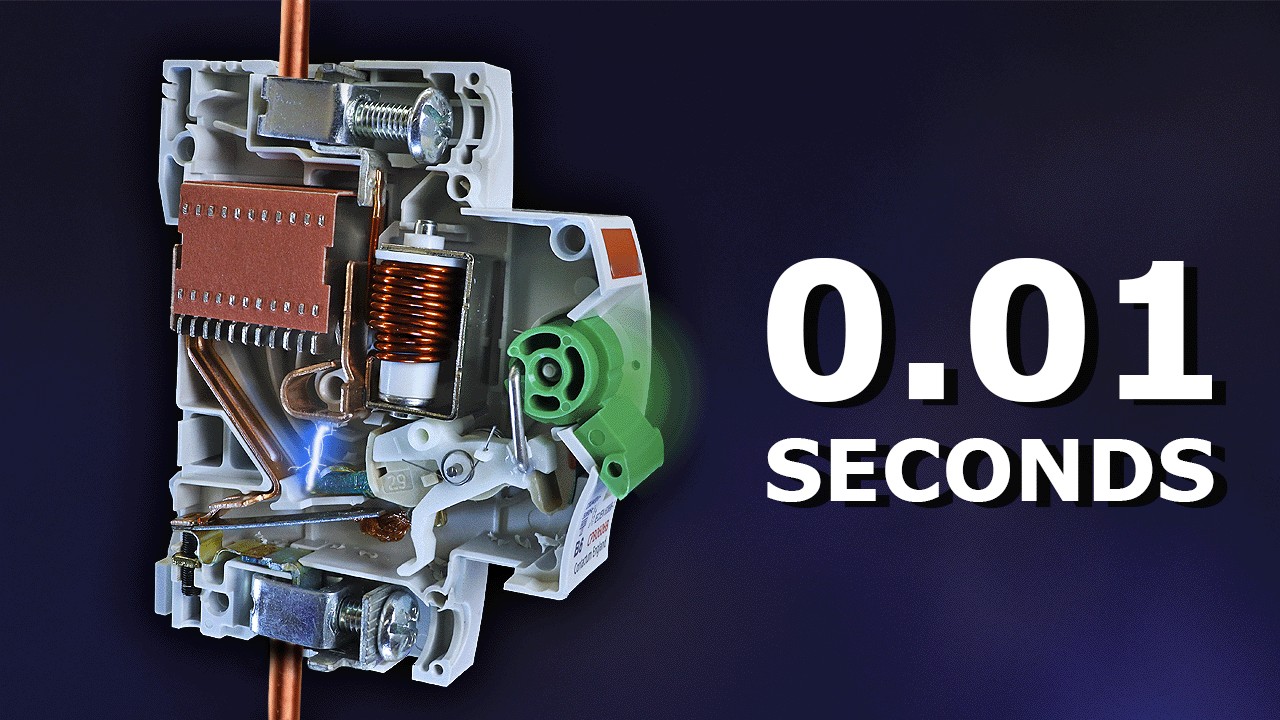
The educational video below discusses the limits of circuit breakers in protecting people from electric shock. It provides relevant safety background for understanding why switching equipment and protective equipment are not complete maintenance procedures. It does not establish any switch's capacity or authorize electrical testing.
Obtain supported SUTON ratings before ordering
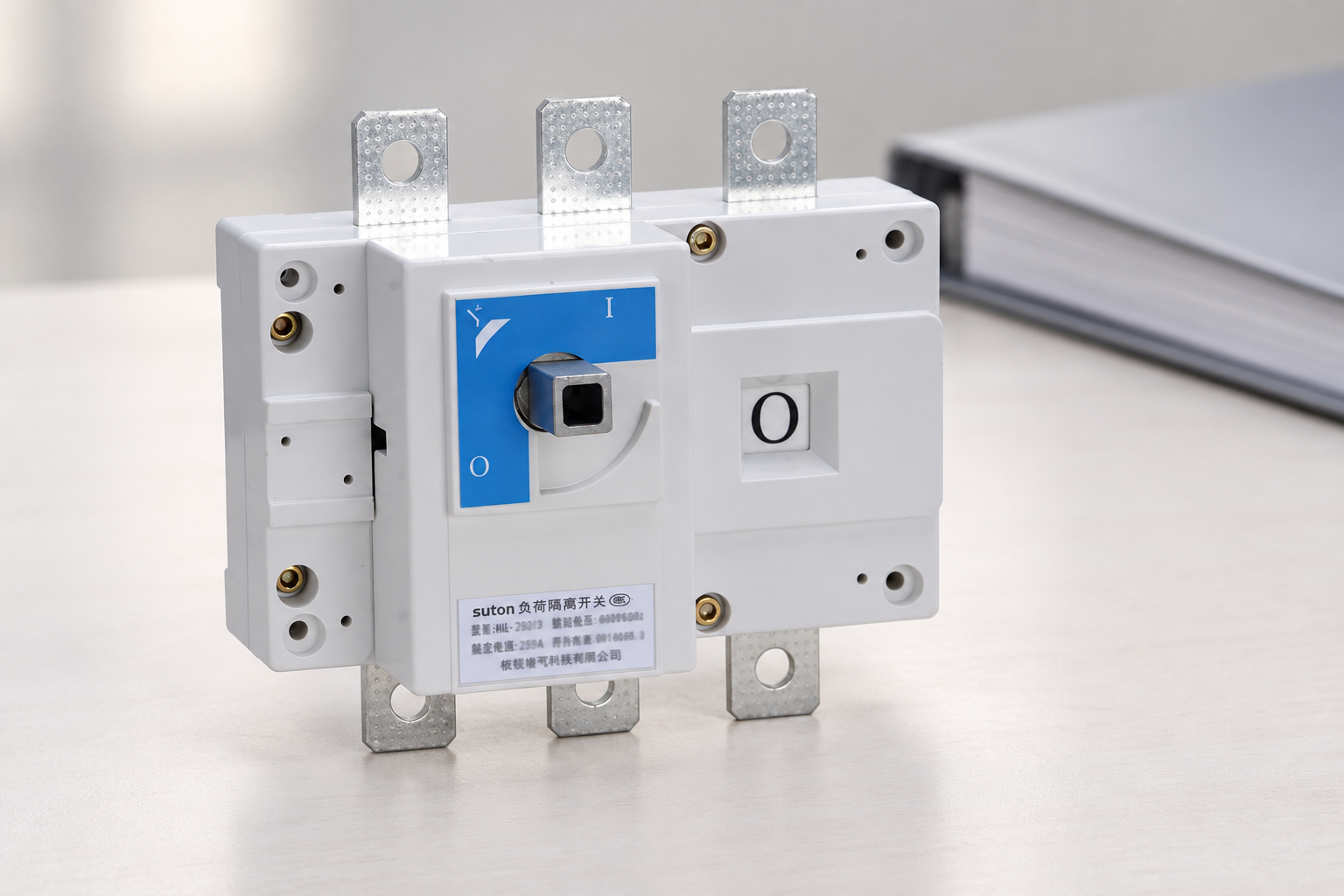
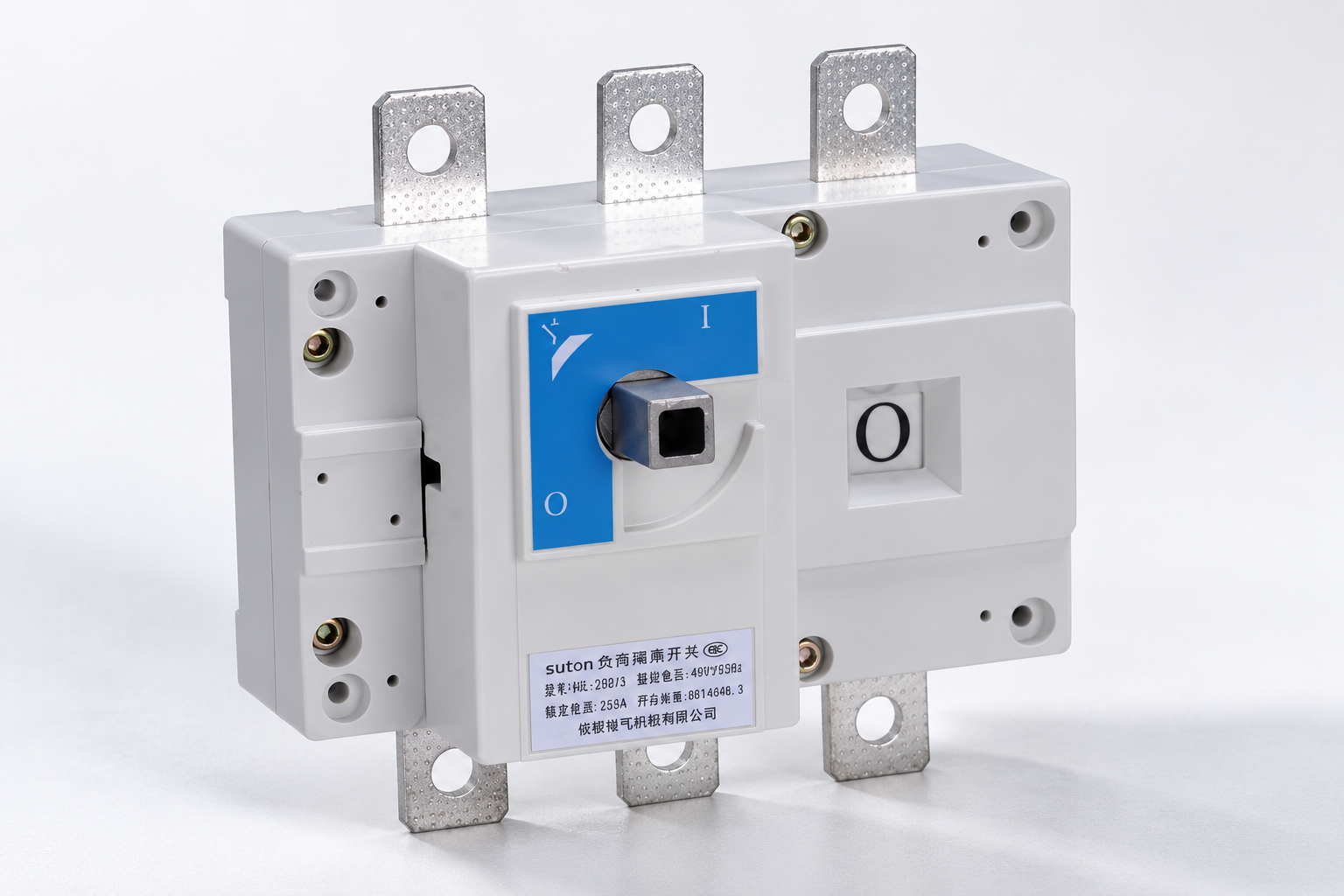
For the ETGL(HGL) load-break switch-disconnector family, request the exact model's operational ratings, utilization categories and short-circuit declarations with their conditions. The product illustration in this article shows the exterior reference family; it cannot establish internal interruption design or an unlisted rating.
Include voltage, load duty, available fault assessment, upstream protection and enclosure conditions in the inquiry. Use the motor-load sizing guide for motor-specific inputs and the panel-builder guide for the complete device-selection context.
Contact SUTON support for missing documents or ambiguous rating labels. Keep the accepted declaration and accessory configuration with the final drawings. Future substitutions should reopen the relevant checks whenever the protective device, duty or installation changes.
Frequently asked questions
Is short-circuit making capacity the same as fault interruption?
No. Making, carrying and interrupting a fault are different duties. Read the exact declaration and coordination conditions. Do not use a switch's making rating as proof that it independently clears a short circuit.
Can I compare withstand current without its time?
No. The stated duration and conditions are part of the declaration. Preserve them when comparing offers and have the designer assess the relationship to the actual protective arrangement.
Does a conditional rating support any upstream breaker?
Do not assume so. Obtain the exact supported protective-device combination and its conditions. A breaker with a similar nominal current is not automatically an approved substitute for the declared arrangement.
Educational video
Why Circuit Breakers DON'T Protect People (electric shocks) by The Engineering Mindset. Educational background on why switching or circuit protection is not a complete safe-isolation procedure. It does not establish switch ratings or provide a model-specific work instruction.