


At 100 amperes the breaker is infrastructure: frame, settings, selectivity, and the supply interface decide the order — the rating is the easy part.
Part 1. Which duty class does 100 amps serve?
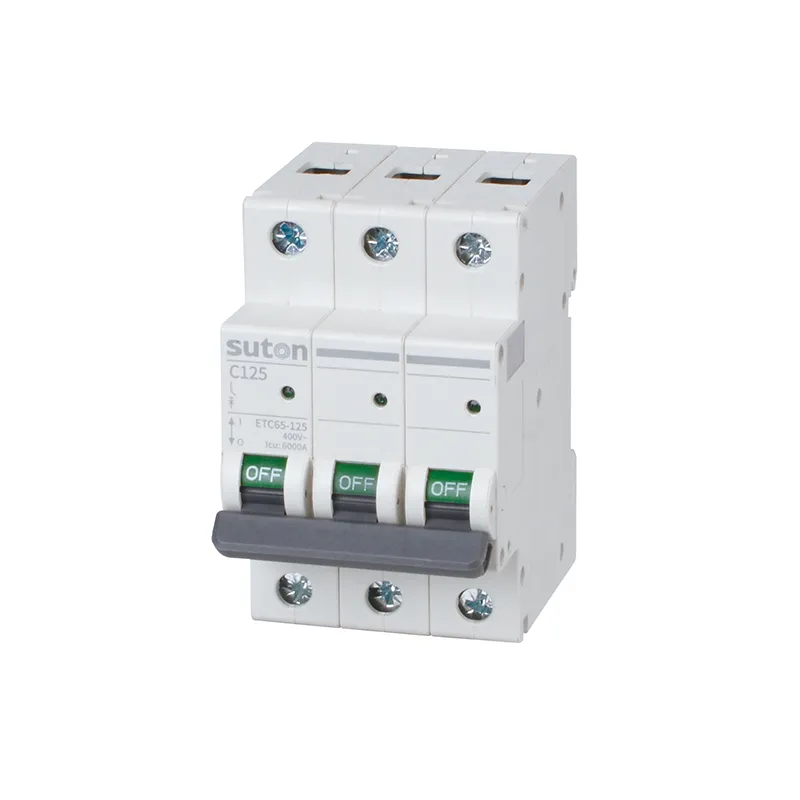
One hundred amperes marks infrastructure duty: the main device of a small board, or a feeder position in a larger one. Either way the device now sits between the supply and everything downstream, so its failure mode, maintenance access, and documentation follow incomer discipline. The isolation role that accompanies a main position is covered in the main switch selection guide, and board context in the circuit breaker panel guide.
Part 2. Where is the MCB and MCCB boundary at 100 amps?
This rating sits at the top of many modular ladders and the bottom of molded-case ranges, so both families appear in quotations.
| Decision driver | Modular top-end | Molded case (MCCB) |
|---|---|---|
| Breaking capacity vs fault study | modest fault levels | higher interrupting duty available |
| Protection settings | fixed characteristics | adjustable options on many frames |
| Physical format | DIN rail, modular widths | frame mounting, lugs, spreaders |
| Accessories and signaling | basic auxiliaries | richer trip and signaling ecosystem |
| Future capacity in the frame | at the ladder’s top | room within the frame family |
Molded-case fundamentals live in the MCCB breaker guide. Record the frame decision and its driver in the schedule; at this rating “either” is not an answer.
Part 3. How is the conductor coordinated with the breaker?
Conductor sizing at 100 A is a project calculation under the applicable installation rules — method, ambient, grouping, cable construction, run length, and parallel-conductor questions all participate, and no gauge table is quoted here as a universal rule. Infrastructure runs add their own checks: voltage drop across the feeder, fault-loop performance at the far end, and termination temperature limits at the device.
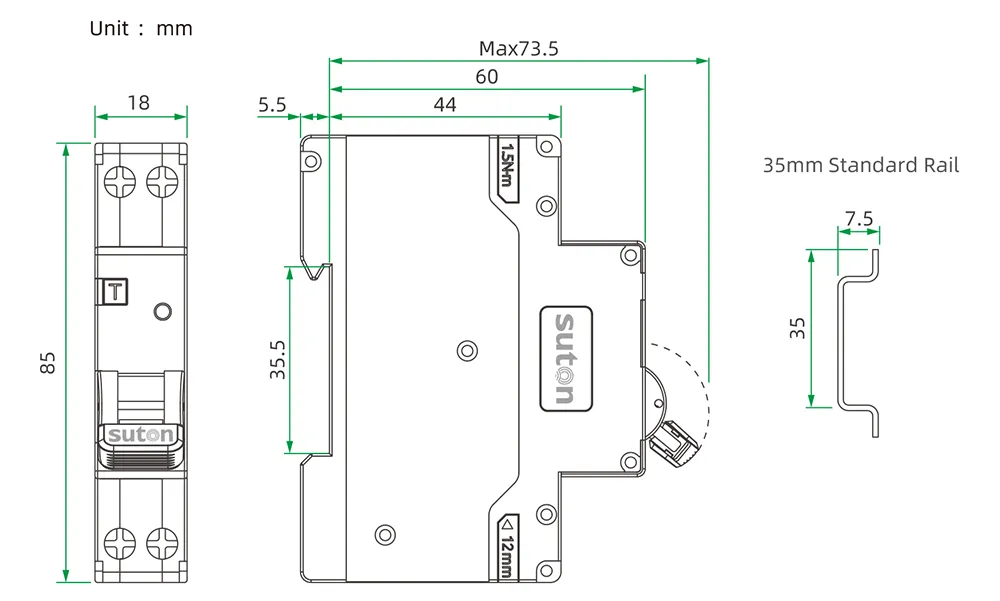
Terminals deserve explicit attention at this current. Lug type, conductor preparation, and torque values come from the device documentation, and the torque record belongs in the commissioning file.
Part 4. What settings does the protection duty need?
Many molded-case frames at this rating offer adjustable overload and short-circuit settings; some add electronic trip units with measurement and communication, as in SUTON’s intelligent-measurement family. Settings are design outputs, not installer preferences — the protection study fixes them, the commissioning record proves them, and any later change is a controlled event.
Where the device also serves metering or monitoring, define the data interface early: what is measured, where it reports, and who owns the configuration. Bolting communication onto an incomer after energization is far harder than specifying it in the RFQ.
Part 5. How are selectivity and source arrangements planned?
An infrastructure device must let downstream devices clear their own faults. Selectivity against the sub-circuits — and against the upstream protection — is demonstrated with manufacturer coordination data at the calculated fault levels, filed in the panel dossier.
Source arrangements complicate the picture: generator backup, transfer schemes, or parallel supplies change fault levels and switching sequences at the incomer. Where any of these exist, the 100 A device is selected within that scheme, not in isolation, and the transfer logic is reviewed as a system.
Part 6. What belongs in the RFQ and Fit Boundary?
Order the position, not the number.
| RFQ field | Why it matters |
|---|---|
| Duty: incomer or feeder, with the single-line diagram | fixes the role and discipline |
| Supply data and fault study | fixes frame and breaking duty |
| Frame decision with driver | fixes product family |
| Settings and trip-unit requirements | fixes protection behavior |
| Poles and neutral treatment | fixes arrangement |
| Selectivity expectations | demands coordination evidence |
| Metering and communication needs | fixes interfaces |
| Mounting, terminals, standards, quantity | fixes assembly scope |
Fit Boundary: this guide structures 100 A infrastructure selection inputs. It does not perform fault studies or protection studies, does not quote any jurisdiction’s service rules, and cannot plan an incomer replacement — supply-side isolation and utility coordination are site-specific engineering events. Close those with the design authority and the responsible parties first.
Part 7. Where can SUTON product routes fit?
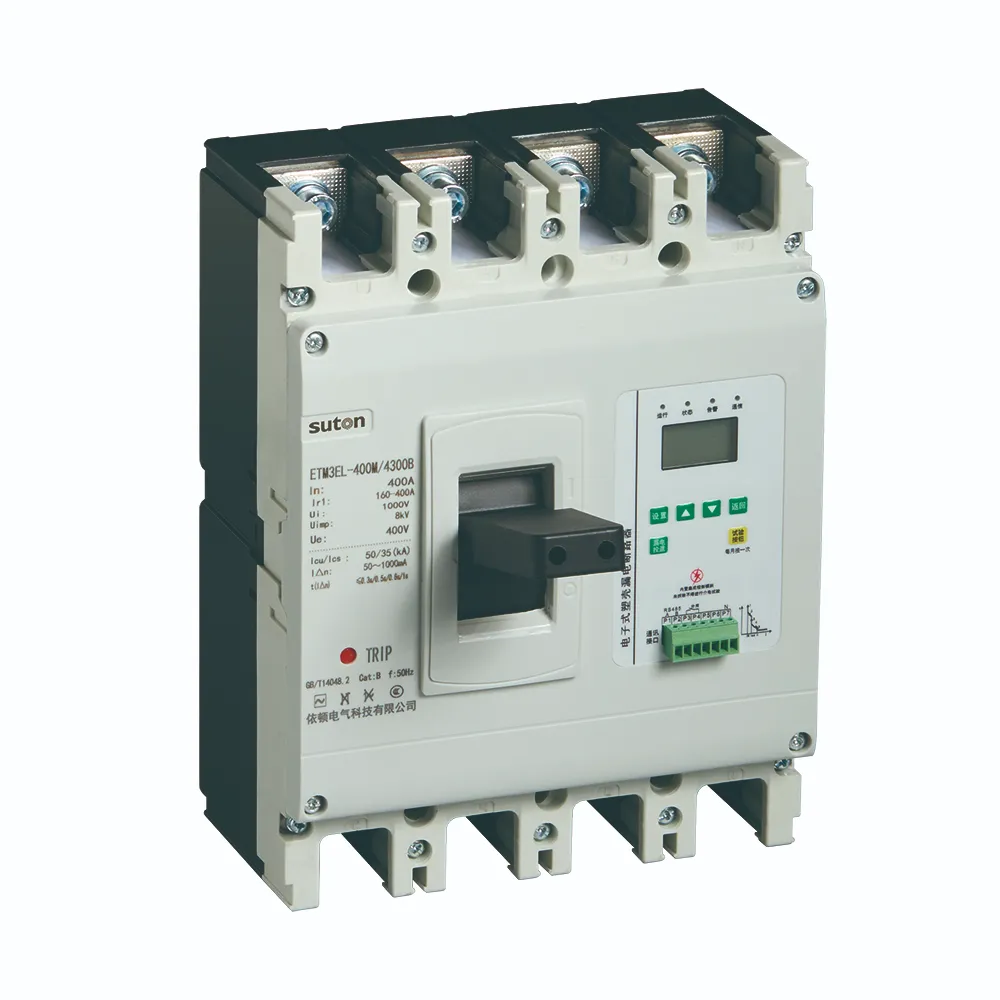
For a product recommendation starting point at this duty, review SUTON’s ETM1 series molded case circuit breaker route for feeder and main positions, and the ETM3E series intelligent measurement circuit breaker route where measurement and communication belong in the same frame. Frames, settings ranges, and breaking data are model-specific — confirm datasheets against the fault study, then send the single-line diagram through Contact SUTON for a documented review.
Incomer discipline in practice
Plan the outage before the order. An incomer swap needs supply-side isolation, a confirmed dead-work procedure, and a re-energization test plan; the device is often the cheapest line in that project. Purchasing should see the logistics plan next to the quotation, because delivery dates drive outage windows.
Keep the protection settings under change control. A settings sheet signed at commissioning, a copy in the panel dossier, and a rule that nobody adjusts a trip unit without a revised sheet — that is the entire system, and it prevents the classic drift where field tweaks quietly defeat the selectivity study.
Finally, revisit the fault study when the network changes. A new transformer, a generator, or a large motor upstream can move the duty at the incomer; the 100 A device that was adequate at design time must be re-verified against the new numbers, from records rather than recollection.
FAQ
What is a 100 amp breaker used for?
Infrastructure duty: the main device of a small distribution board or a feeder position in a larger one, selected with incomer discipline.
What wire size does a 100 amp breaker need?
That is a project calculation under the applicable installation rules — method, ambient, grouping, cable construction, length, and termination limits all participate; no universal table applies.
Is a 100 amp breaker an MCB or an MCCB?
Both families exist at or near this rating; the fault study, settings needs, and mounting context decide the frame, and the schedule should record the driver.
How is selectivity handled around a 100 amp breaker?
With manufacturer coordination data at the calculated fault levels, demonstrated against both downstream devices and upstream protection, and filed in the panel dossier.
What settings can a 100 amp molded case breaker have?
Depending on the frame: adjustable overload and short-circuit settings, and on electronic trip units, measurement and communication options — all fixed by the protection study.
What data belongs in a 100 amp breaker RFQ?
Provide the duty and single-line diagram, supply and fault data, frame decision, settings and trip-unit needs, poles, selectivity expectations, metering interfaces, mounting, standards, and quantity.