


The main switch is the panel’s primary isolation point for maintenance and emergency shutdown. Selection must match operating duty (switch-disconnector versus circuit-breaker incomer), prospective fault current, and the lockout/tagout practice your customer uses on site. Reference IEC and NEC requirements without stating that any export catalog device is automatically AHJ-approved. Panel builders should freeze incomer duty, fault level, and lockout provisions on the quotation cover sheet before mechanical design closes door cutouts and interlock rod paths.
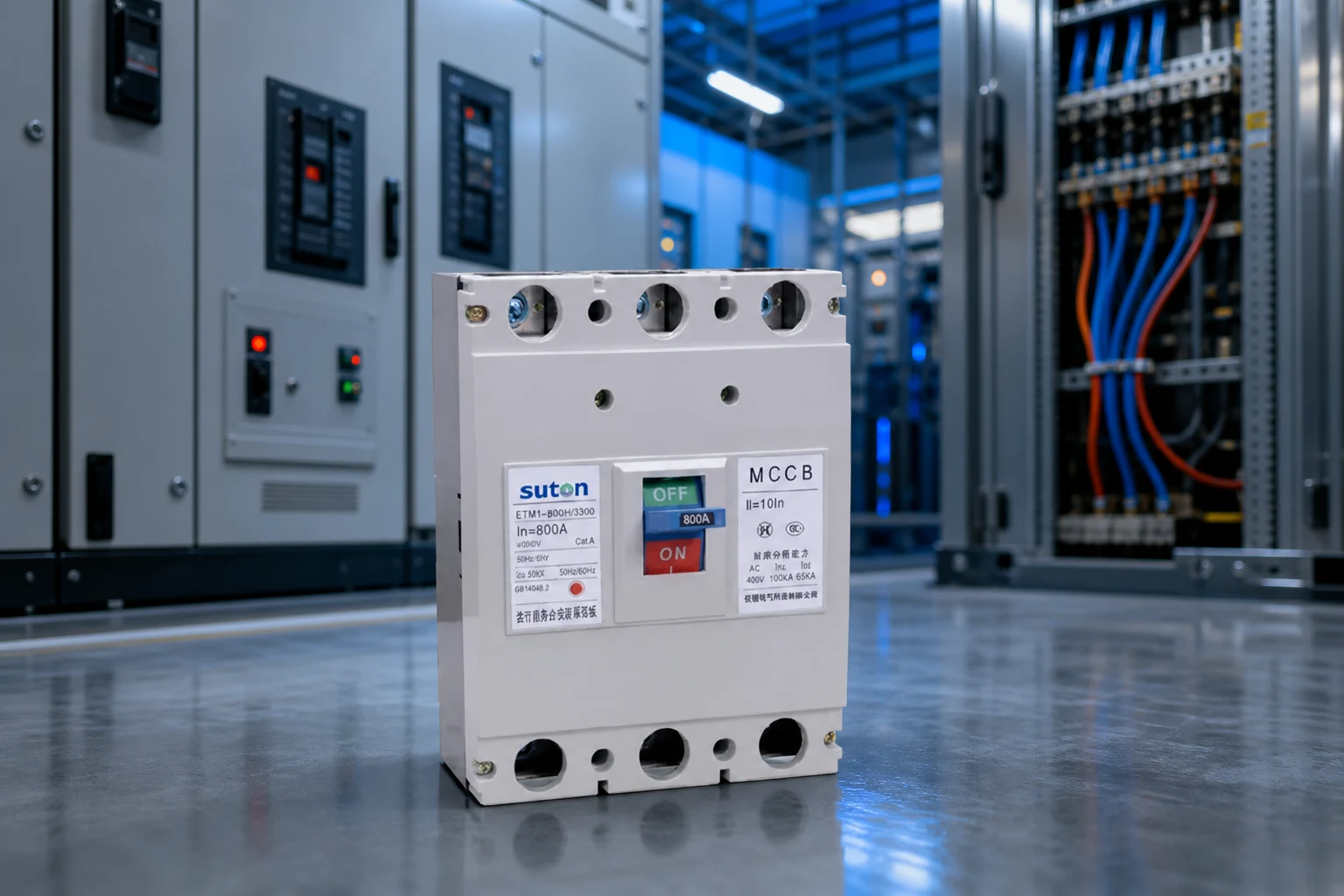
Part 1. What role does a main switch play in LV distribution?
A main switch (or main isolator) provides a visible break between the utility or upstream feeder and the panel’s outgoing circuits for maintenance and emergency shutdown.
Isolation versus overcurrent protection
Depending on specification, the incomer may be a load-break switch, a switch-disconnector per IEC 60947-3, or a molded case circuit breaker under IEC 60947-2. Isolation and overcurrent protection are related but not identical.
Service entrance equipment upstream of the panel may already include a utility-sealed device. The panel main switch still must be identifiable as the maintenance isolation point for downstream busbars and branch devices.
Accessibility and lockout expectations
Contractors worldwide expect clear labeling of the main isolation device, padlock provisions, and a single-line diagram that shows which handle removes energy from downstream busbars. Define whether the main handle remains accessible after enclosure doors are closed.
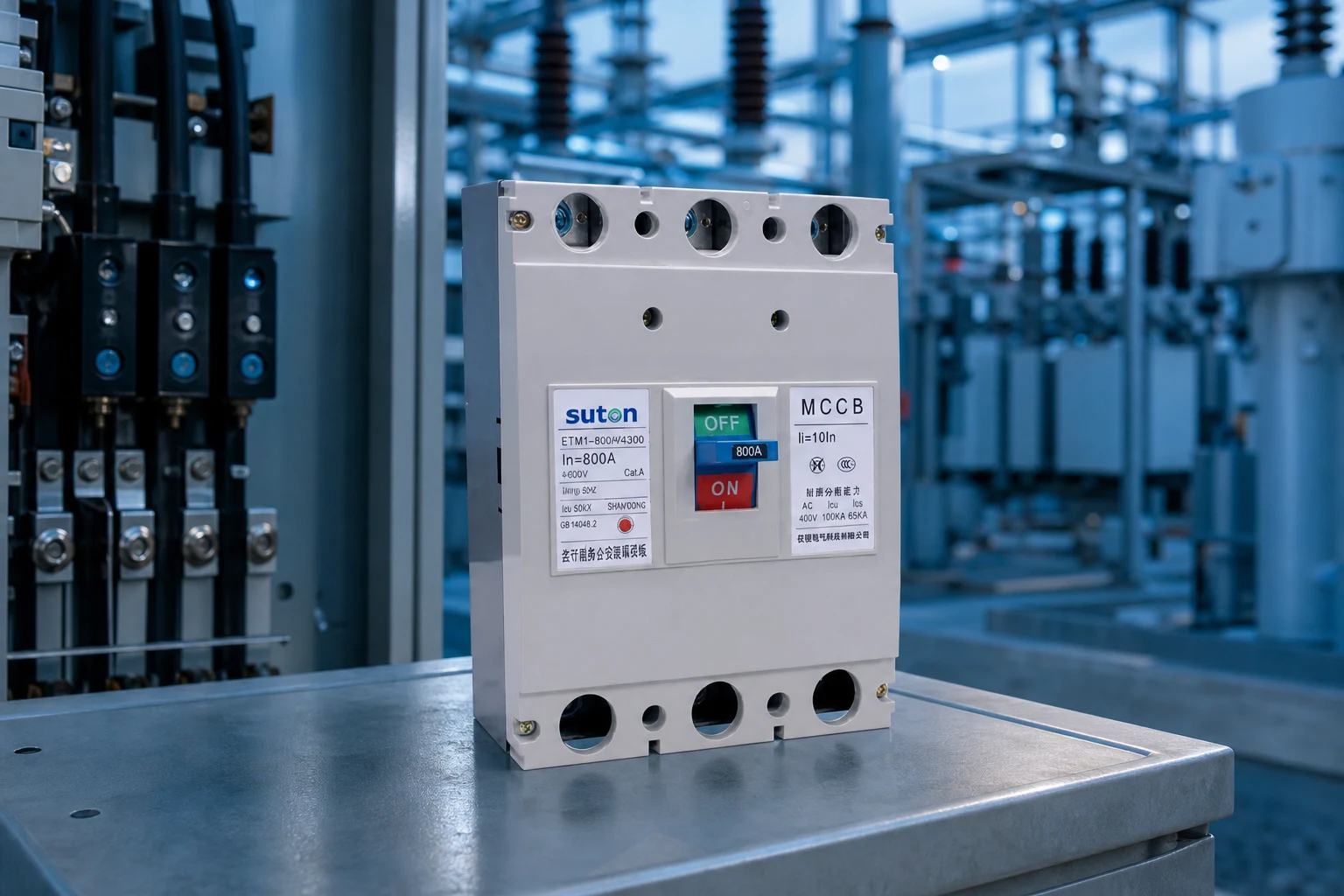
Part 2. How do switch-disconnectors differ from MCCB incomers?
Specifications should state whether the incomer must provide visible isolation only or also clear overcurrent faults on the feeder.
IEC 60947-3 switch-disconnector duty
A switch-disconnector emphasizes isolation duty with documented utilization category. Using a branch breaker as the only isolation point without engineering approval can conflict with maintenance procedures described in OSHA electrical safety guidance.
MCCB used as panel incomer
When the main device is a circuit breaker, define whether it protects the bus or only serves as an isolating incomer with separate protection downstream. Mixing roles without documentation confuses maintenance during outages.
Some specifications show a main switch symbol on the diagram but expect MCCB overload protection in the same device family. Clarify symbol intent with the consultant before freezing handle mechanisms and door cutouts.
Part 3. Which ratings matter for main switch selection?
Rated operational current must cover maximum demand including spare ways noted in the specification. Breaking capacity must exceed prospective fault current at the panel terminals.
Icu and Ics at system voltage
Main switches that only satisfy load current but not fault duty are a common retrofit liability. Request certificates that match the duty stated on the single-line diagram, not a generic catalog page.
Poles, neutral switching, and auxiliaries
Four-pole switching may be required when the neutral must be isolated for maintenance on certain generator or UPS configurations. List shunt trip, undervoltage release, or auxiliary contacts when BMS integration is required.
Temperature rise and enclosure ventilation can limit continuous current below catalog frame ampacity. Document derating assumptions when the incomer sits adjacent to high-density MCCB rows or busbar taps.
| Parameter | What to confirm | Typical source |
|---|---|---|
| Icu / Ics at system voltage | Withstands bolted fault | Fault study |
| Utilization category / duty | Isolation vs load-break vs breaker | Consultant spec |
| Pole configuration | 3P vs 4P, switched neutral | Single-line diagram |
| Lockout / handle provisions | Maintenance safety | Owner safety program |
Part 4. What lockout and labeling do maintenance teams expect?
Panel builders report that main switch isolation must be lockable and clearly labeled for maintenance crews—a recurring RFQ item that should appear on drawings before quotation.
Handle position indication
Include handle position indicators and any shunt-trip wiring in the as-built package so remote-opening circuits are traceable during future ATS or generator interlock upgrades.
Nameplate and single-line consistency
Photograph the main device nameplate and attach it to the test report—field teams match spares faster when frame and trip unit codes are visible. Unclear main-device labeling is a recurring source of delayed energization approvals on export projects.
Multilingual nameplates help export crews that maintain panels abroad. Align terminal markings with the single-line diagram feeder names so lockout steps in the O&M manual match the installed handles.
Part 5. How should the main switch coordinate with downstream protection?
Downstream MCCB and MCB stages should coordinate so that a branch fault clears locally without unnecessary loss of the entire panel.
Time-current coordination
Time-current curves from the manufacturer remain the practical tool—compare them at the prospective fault current stated in the study, not at an assumed generic value. IEEE 141 treats upstream fault level and cable impedance as prerequisites before comparing downstream curves.
Adjustable MCCB incomer settings
When the incomer is an MCCB-class device, coordinate adjustable trip settings with the protection study before shipment. Field changes to long-time or instantaneous adjustments without updated curves are a common source of selective coordination disputes after energization.
Spare ways and future expansion can push bus fault levels upward when upstream utility upgrades occur. Note whether the main device rating includes margin for stated expansion loads or only present connected load.
Part 6. How do generator and ATS feeds affect incomer duty?
Generator and automatic transfer schemes change which device is the maintenance isolation point and which sources can back-feed the panel bus.
Multiple source markings
Document handle positions, trip settings, and any interlocks with generators or ATS equipment on the as-built package. The main switch label must remain unambiguous when two feeders can energize the same bus.
Neutral switching on backup feeds
Review whether four-pole isolation is required when generator neutrals are switched separately from utility feeds—neutral switching errors are a common post-commissioning finding on export panels.
Parallel operation windows—when both utility and generator sources can briefly overlap—may require interlocked handles or electrical interlocks beyond a simple main switch rating table.
Part 7. Which standards and handover documents apply?
IEC 60947-3 covers disconnectors; IEC 60947-2 applies when the incomer is a circuit-breaker. Reference NFPA 70 and local installation rules in handover notes without implying automatic approval of a specific export SKU.
Utilization category evidence
Quote main-device accessories—extended handles, padlock attachments, and phase barriers—together with the enclosure so door clearance and interlock rods are validated in one coordinated mechanical review.
As-built isolation point
The as-built single-line diagram must show the isolation point for maintenance. Breaking-capacity certificates and utilization category data should ship before purchase order release when export acceptance is contractual.
Shipping incomplete utilization-category evidence for the main device is a common cause of technical hold at site acceptance. Bundle certificates with the installation manual index so field teams can match document revision to device serial.
| RFQ / handover item | Purpose | When to include |
|---|---|---|
| Breaking-capacity certificate | Proves fault-duty compliance | Before purchase order |
| Utilization category data | Confirms isolation vs load-break duty | Design phase |
| Handle / lockout dimensions | Fits enclosure and LOTO program | Mechanical review |
| As-built single-line diagram | Shows isolation point for maintenance | Before energization |
Part 8. Which load-break switches and MCCB incomers fit typical panels?
After operating duty, fault level, and lockout requirements are fixed on the single-line diagram, incomer selection narrows to load-break switches or molded-case breakers that match the enclosure platform and export documentation—not catalog photos alone.
ETGL(HGL) load-break switch-disconnector
The ETGL(HGL) series suits specifications that require a visible isolation point with load-break duty documented under IEC 60947-3. Confirm utilization category, pole count, and padlock provisions against the maintenance safety program.
ETM1 molded-case incomer
The ETM1 class fits higher ampacity incomers where adjustable protection and auxiliary contacts are required. Pair Icu/Ics ratings with the prospective fault current from the approved fault study.
When to involve factory engineering
Share the single-line diagram, utilization category requirement, and handle/lockout constraints before formal quotation. Factory engineering can align cutouts, interlock rods, and export test records with your panel BOM.
Provide the enclosure outline drawing and door swing clearance when requesting incomer handle extensions so factory-supplied rods do not conflict with internal phase barriers.
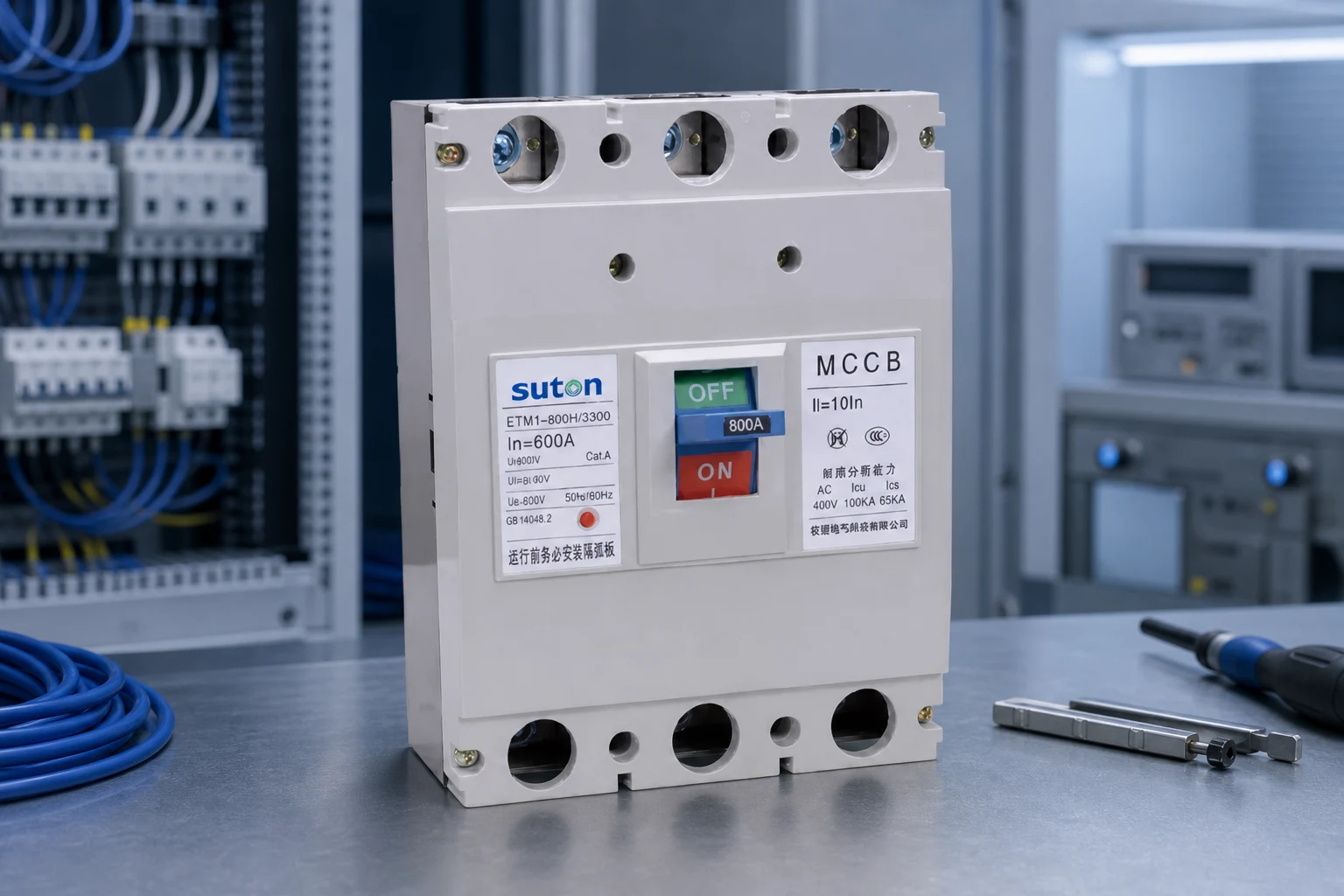
When your single-line diagram and load schedule are fixed, compare SUTON ETGL(HGL) Load Break Switch and SUTON ETM1 Series MCCB, explore application solutions, or review OEM/ODM capabilities. For datasheet alignment against your fault study, SUTON engineering support can review project parameters.
FAQ
What is a main switch used for?
It provides the primary isolation point between the incoming feeder and panel circuits so maintenance crews can de-energize the bus safely.
How do you select a main switch for a commercial panel?
Match frame current, breaking capacity, pole configuration, and operating duty (switch-disconnector vs breaker) to the fault study and single-line diagram.
What standards apply to main switches in LV assemblies?
IEC 60947-3 covers disconnectors; IEC 60947-2 applies when the incomer is a circuit-breaker. U.S. installations reference NFPA 70 (NEC) and OSHA safe-work practices.
How does a main switch coordinate with downstream breakers?
The main device must be rated for prospective fault current; downstream MCCB/MCB curves should clear branch faults without unnecessary full-panel outages.
What is the difference between a main switch and a main circuit breaker?
A switch-disconnector emphasizes visible isolation; a circuit-breaker incomer also provides overcurrent protection. Specifications should state which role is required.
What documents should contractors request for a main switch?
Request breaking-capacity certificates, utilization category data, handle/lockout dimensions, wiring diagrams, and as-built single-line drawings showing the isolation point.
References