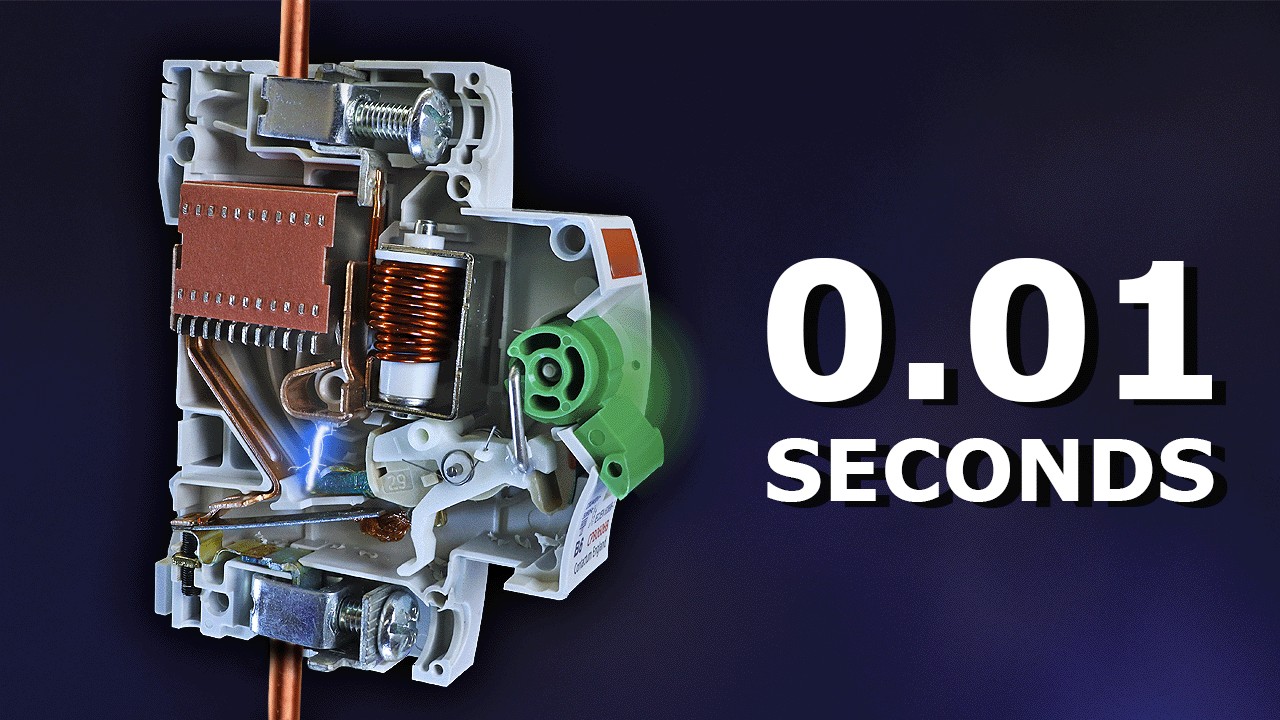


An automatic reclosing voltage protector can reconnect a circuit after the supply returns to its permitted operating range, but that recovery must fit the connected equipment's restart requirements. The essential safeguard is to distinguish restoration of electrical supply from permission for a machine or process to restart. Buyers should verify the exact protector's sensing, delay and output behavior, then review the load controller, interlocks and maintenance isolation. Automatic recovery is useful for suitable applications; it is not evidence that every connected load can safely resume operation without a person checking the conditions.
Define what automatic recovery means for this circuit
Begin with the actual sequence. A voltage-related condition is detected, the protector's output changes, supply conditions later recover, and the output may reconnect under the device's documented logic. That sequence does not necessarily include a machine starting immediately. The downstream controller may require an operator command, retain a restart restriction or keep an interlock open. Write the complete sequence from supply disturbance to permitted equipment operation.
Ask whether the project needs recovery after an overvoltage or undervoltage event, after a supply interruption, or after another kind of protective trip. These are different conditions. A voltage protector should not be described as a general fault-reset mechanism unless its documented functions justify that statement. In particular, do not infer automatic restoration after short circuits, residual-current trips or arc faults from a product name describing voltage recovery.
Keep the intended benefit concrete. A suitable unattended load might resume service after a temporary supply disturbance, while a machine with hazardous movement may require a controlled restart. The responsible engineer should decide which behavior is acceptable. The procurement document should describe the permitted sequence, prohibited restart conditions and evidence needed to demonstrate that the installed arrangement follows them.
Distinguish a low-voltage protector from a utility recloser
Search results for automatic reclosing often discuss utility feeders, protection relays and repeated attempts to clear transient network faults. Those topics should not be copied into a low-voltage product specification. A distribution-network recloser, a circuit-breaker motor operator and an automatic-reset voltage protector have different architectures and application requirements. The words automatic and reclosing do not establish that they share the same fault-handling strategy.
For a low-voltage supply application, use the exact device documentation to identify what it senses, what causes output interruption and what causes reconnection. Do not import a utility protection sequence, number of attempts or timing setting into a DIN-rail voltage protector. Also avoid assuming that a recovering voltage condition means an interrupted load has been checked for every other electrical or mechanical fault.
The voltage protection overview covers the surrounding selection questions. This article focuses on the separate restart review: what happens after the protector restores its output, and which safeguards must remain in control. Maintaining that distinction prevents a recovery feature from being treated as a substitute for a complete protection or machine-control design.
Review reconnection delay alongside load restrictions
A recovery delay can help avoid immediate output reconnection, but its significance depends on the documented starting event and reset behavior. Confirm whether timing begins when voltage enters the permitted range, after a separate qualification period, or under another specified condition. Ask what happens if voltage becomes unacceptable again before the interval ends. A number called delay is incomplete without this sequence.
The protector's recovery timing and the load's minimum off-time are separate requirements. A compressor controller, for example, can require a restart restriction determined by the equipment manufacturer. A protector delay does not automatically replace that restriction. The installed controller must preserve the required behavior across interruptions, manual operations and restoration of its own power. See the reconnection-delay guide for the timing review itself.
Repeated supply instability deserves attention. Obtain the device's documented behavior for successive unacceptable-voltage events, and define how the system reports repeated interruptions. If the actual arrangement causes repeated restart attempts or equipment cycling, investigate the supply and load requirements. Do not solve persistent instability simply by increasing a delay without evidence that the result meets the complete application requirements.
| Review condition | Evidence needed | Safeguard to retain |
|---|---|---|
| Supply recovery | Documented thresholds and recovery sequence | Load permission remains separate |
| Repeated disturbance | Timing reset and event behavior | Prevent unreviewed repeated restarts |
| Machine restart | Controller and interlock instructions | Required acknowledgment preserved |
| Maintenance | Applicable isolation procedure | Automatic recovery excluded from safe-isolation assumptions |
| Output duty | Exact ratings and approved arrangement | Load suitability independently established |
Preserve the equipment's authority to restart
Electrical supply restoration should not bypass the machine's normal start command, guard conditions or other required interlocks. A contactor, drive or controller may lose its state when power is interrupted. Its behavior after restoration therefore needs its own review. Determine whether the controller remains stopped, returns to a previous operating state, requests acknowledgment or automatically resumes a programmed process.
Consider the consequences of a restarted load rather than only the electrical event. Fans can move air into a work area, pumps can transfer material, conveyors can move stored product and actuators can change position. Even a load without hazardous motion can create process consequences when several devices recover in a different order. The application review should include people, equipment and the process affected by supply restoration.
The HSE work-equipment guidance describes protection from work-equipment hazards. They are not a product certification for a voltage protector and do not prescribe a universal recovery delay. Use the applicable local requirements and the equipment manufacturer's instructions when designing the restart arrangement. The point is to retain the required safeguards whenever power returns.
Separate operating shutdown from maintenance isolation
An output that has opened because of unacceptable voltage can reconnect later if the recovery conditions are met. Therefore, a temporarily de-energized load is not necessarily isolated for maintenance. A person who begins work based only on a voltage fault or an extinguished indicator can face unexpected energization. The maintenance procedure must account for automatic restoration and every relevant source of hazardous energy.
The HSE equipment-maintenance guidance addresses unexpected startup and release of stored energy during servicing and maintenance. Apply the site's actual isolation procedures and the requirements applicable to the work. A protective device, a software OFF command or a monitoring display should not be represented as a universal substitute for a lockable isolation arrangement and verification.
Electrical work has additional requirements. The HSE electrical-safety guidance addresses electrical isolation and precautions in their applicable context. Qualified personnel should establish the procedure for the particular installation. This article does not provide instructions for live testing, improvised wiring or defeating an automatic recovery feature during maintenance.
Verify what the output is permitted to switch
The output's permitted duty matters as much as its recovery logic. Obtain the exact device's ratings and approved arrangements for the intended load. A continuous-current number alone does not establish suitability for motor starting, compressor switching or a particular control circuit. Confirm whether the protector directly supplies the load or is part of a documented contactor or controller arrangement.
An added contactor does not automatically solve the application. Its coil supply, drop-out behavior, restart logic and switching duty must be coordinated with the controller and protector. The system may include auxiliary power, separate control circuits or stored energy that remains present when one output opens. A complete drawing and sequence review is more useful than assuming every downstream component simply loses all power together.
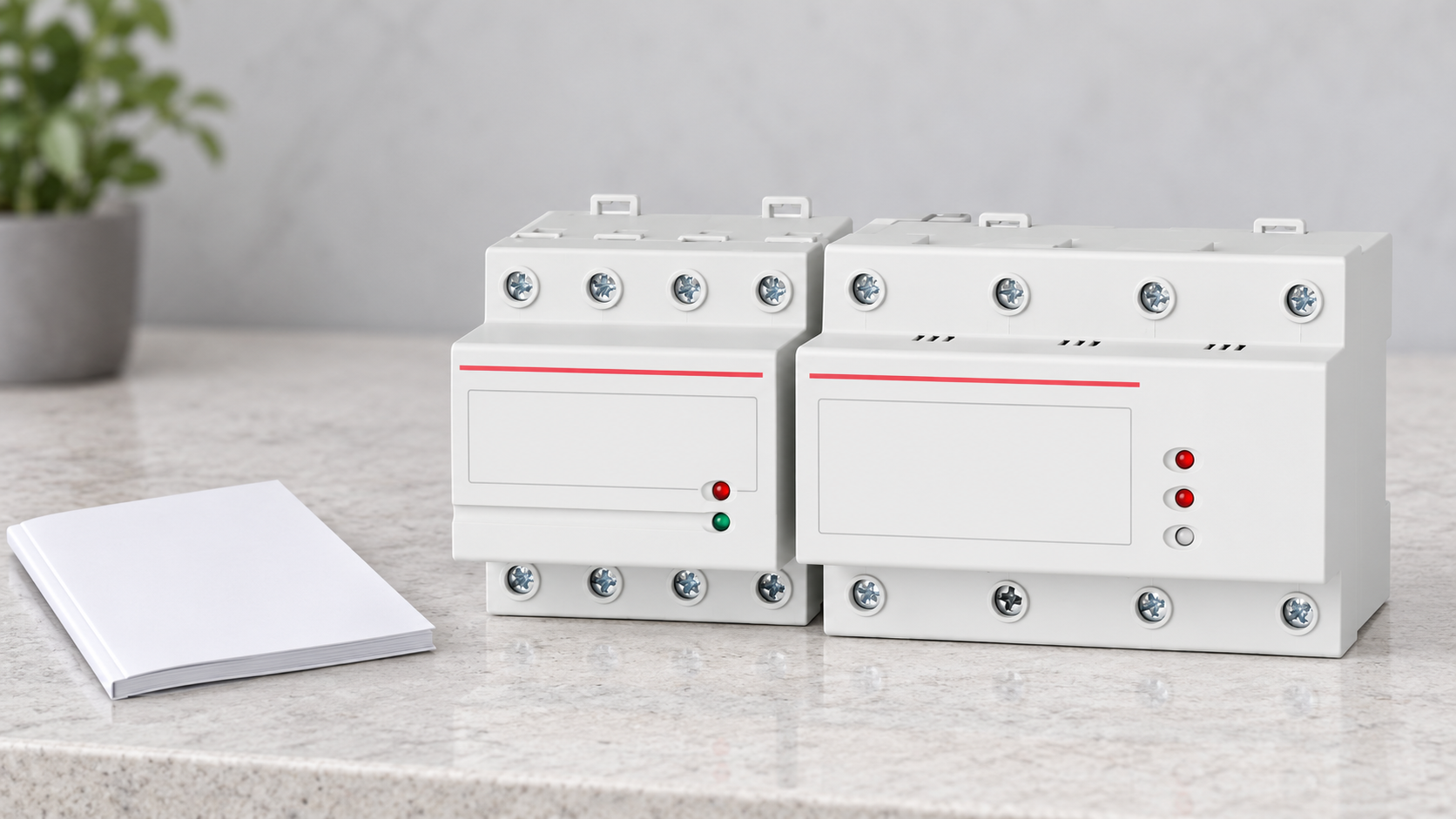
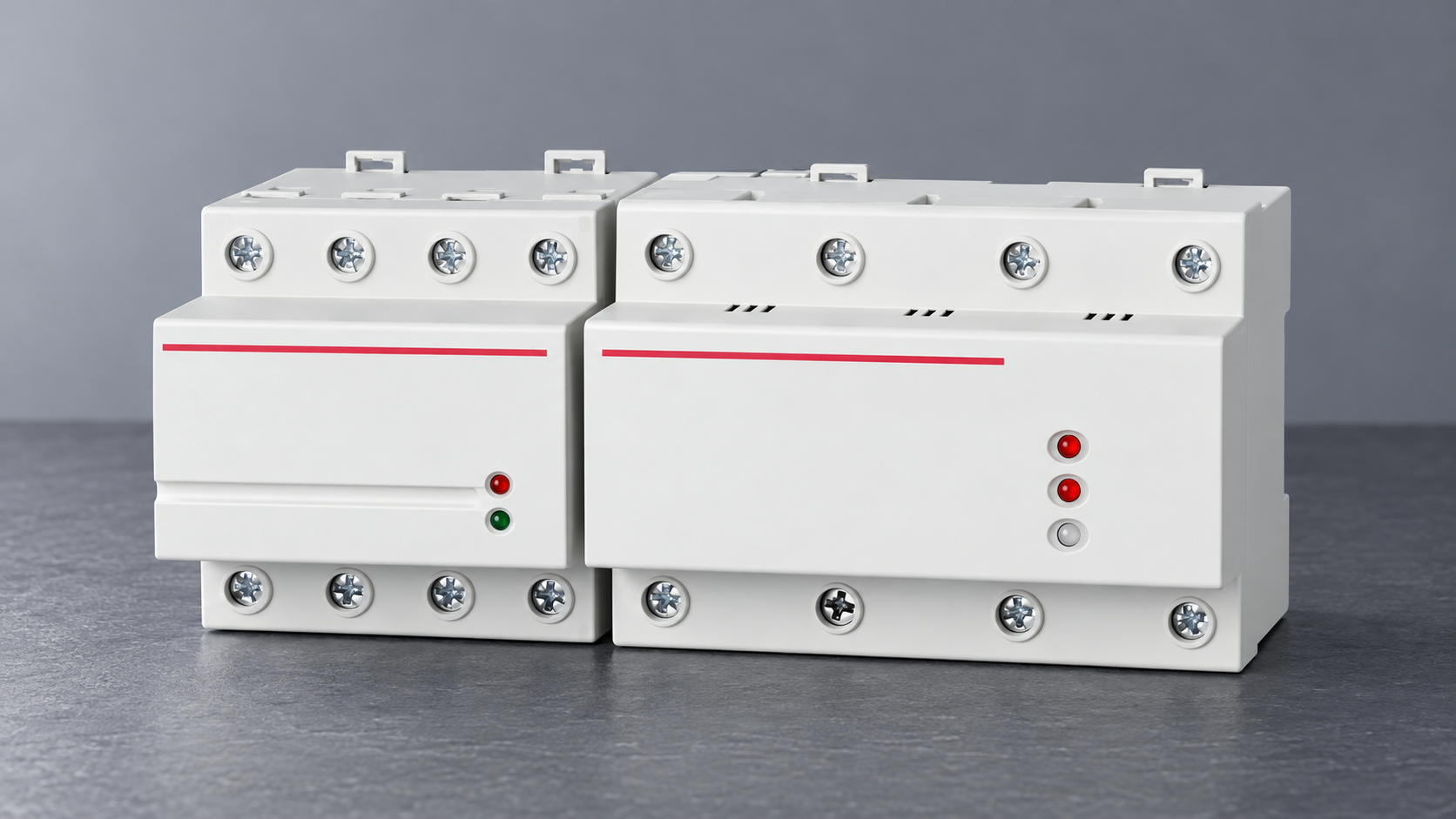
For multi-phase equipment, check which voltages are monitored and how output interruption affects the load. Do not assume phase-sequence, phase-loss or imbalance supervision from the number of poles or terminal screws visible in a photograph. These functions need explicit product evidence. The safeguard review must match the supply arrangement and the equipment's documented protection requirements.
Review the actual SUTON product evidence
The DZ47-125V1 automatic-reset overvoltage and undervoltage protector is a relevant product family for this inquiry. Confirm the exact ordered configuration and obtain its instructions before approving the application. The exterior reference images in this article identify the actual family; they do not prove a timing setting, restart safety function, adjustable threshold or suitability for switching a particular compressor or motor.
Ask SUTON for the declared supply arrangement, monitored quantities, operating thresholds, timing sequence, output duty and installation requirements. Where several variants appear under one family name, keep their specifications separate. Obtain a written match between the quotation and the required behavior, rather than relying on a general product photograph or a specification for a visually similar device.
Review the voltage-protector response and accuracy article for how sensing and interruption evidence differ from recovery timing. Those questions complement this restart review. A device that detects a supply problem correctly still needs a compatible downstream arrangement before its automatic return can be accepted for the application.
Commission the sequence under an approved procedure
Create an acceptance table before testing. Each row should identify the initial state, approved event, expected protector output, expected controller state and observation used to verify the result. Include restoration after a voltage event, restoration of controller power and behavior when a required interlock remains open. Test conditions must follow equipment instructions and an approved safe method; do not improvise repeated live power cycling.
Record the timing endpoint precisely. Observing an indicator is different from observing the actual output or the load state. The agreed method should distinguish them, and the test record should state what was measured. Where a timing value is required, use a suitable instrument and an observation method that supports the necessary resolution. A casual video of an indicator changing is not automatically a verified switching-time test.
Preserve configuration identifiers, controller settings, wiring revisions and acceptance results in the project handover. If a load, controller or protector is replaced, review whether the original recovery behavior still applies. Automatic reconnection should remain a known, documented operating feature throughout the installation's life, rather than becoming an unexpected behavior discovered during an outage or maintenance activity.
Frequently asked questions
Does automatic reconnection mean the connected machine can restart automatically?
No. Supply recovery and permission for a machine to restart are separate decisions. The load controller, interlocks, equipment instructions and application risk review determine whether operation may resume and whether an operator acknowledgment is required.
Can a voltage protector reclose after every kind of electrical fault?
That must not be assumed. Confirm the exact device's documented fault functions and recovery conditions. A product described for overvoltage and undervoltage recovery does not automatically provide short-circuit, residual-current or arc-fault reset functions.
Is an open voltage-protector output sufficient for maintenance isolation?
No universal isolation claim follows from an open output. Automatic restoration and other energy sources must be considered under the site's applicable maintenance and electrical-work procedures. Qualified personnel must establish and verify the required safe condition.
Educational video
Why Circuit Breakers DON'T Protect People (electric shocks) by The Engineering Mindset. This video is educational background only. For voltage recovery it explains electrical-shock protection limits; for metering and communication it explains active and apparent power and power factor. It does not establish a SUTON rating, metering accuracy, protocol or approved installation procedure.