


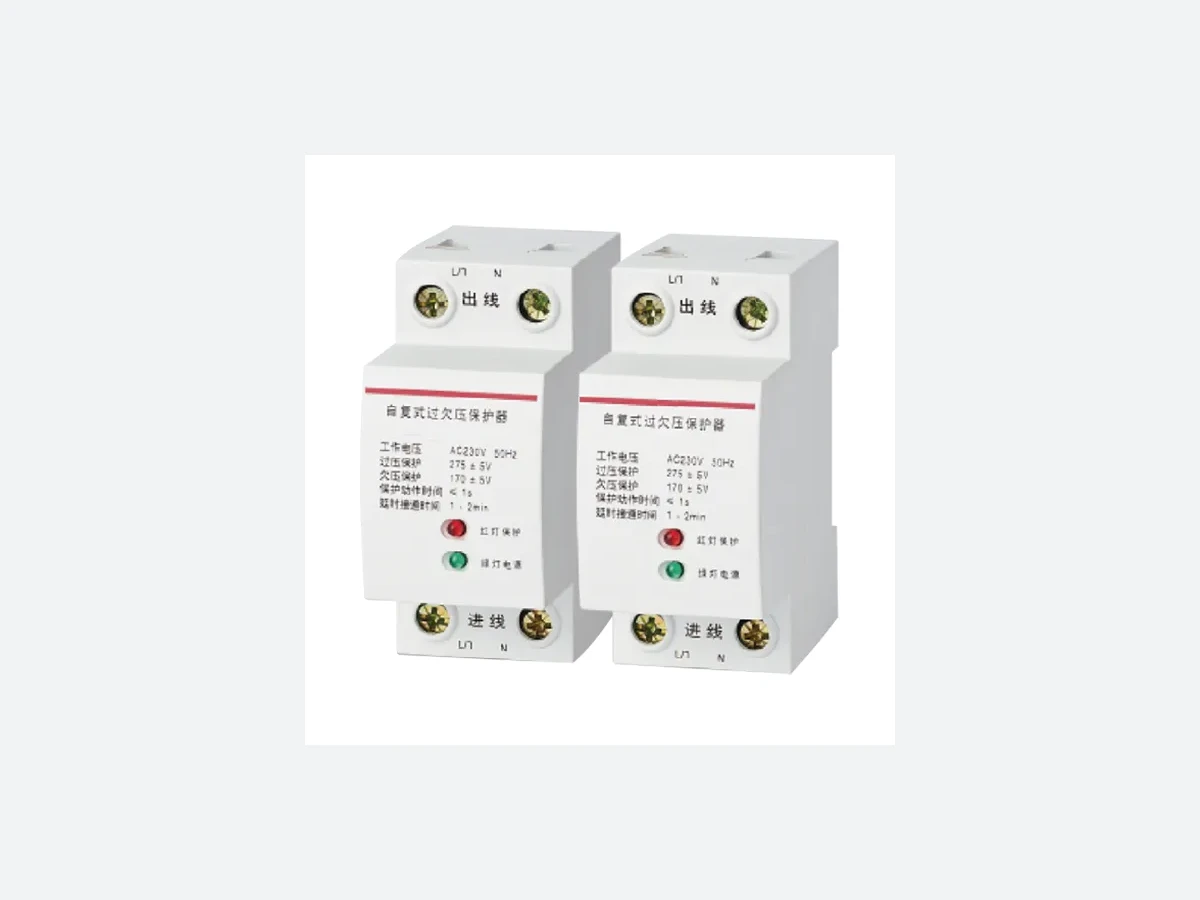
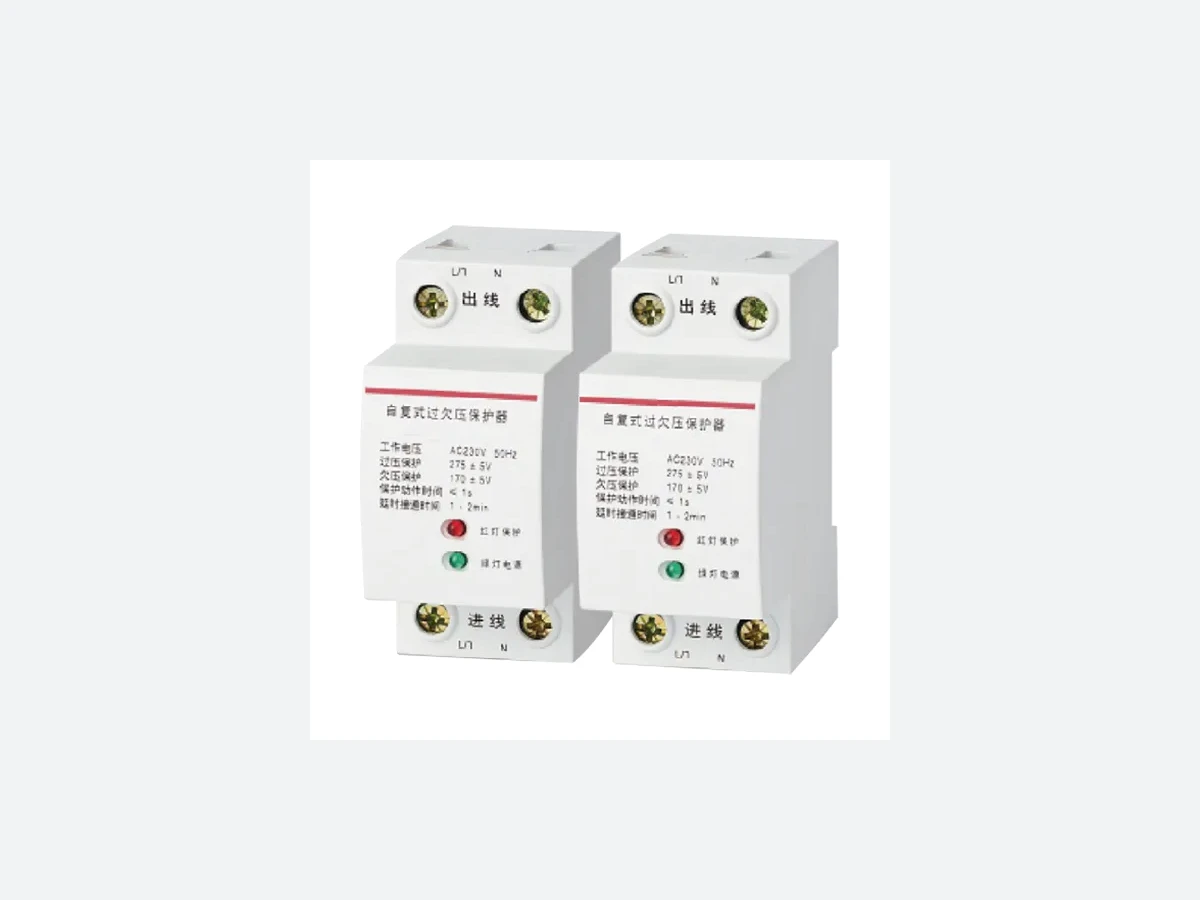
An automatic reset overvoltage and undervoltage protector monitors abnormal supply conditions and restores operation according to its defined reset logic. It is a voltage-protection device, not a substitute for overcurrent protection or a complete power-quality design.
Part 1. What does automatic reset mean?
Automatic reset means the device can return to service after the supply condition has returned to the permitted range and the configured logic allows restoration. The exact threshold, delay and reset behaviour must come from the selected model documentation.
Part 2. Which supply inputs must be defined?
Record nominal system voltage, phase arrangement, frequency, load sensitivity and the abnormal conditions the project is trying to manage. Do not copy a threshold from another model. The approved electrical design remains the authority.
| Input | Why it matters | Evidence to send |
|---|---|---|
| Supply arrangement | Identifies the device context | Single-line diagram |
| Normal voltage | Establishes the monitoring baseline | Electrical schedule |
| Recovery rule | Defines when restoration is acceptable | Control narrative |
| Load consequence | Sets the restart risk | Load list and sequence |
Important: A voltage protector does not prove that downstream equipment can restart safely. Confirm the reset sequence, coordination and operating instructions before energization (IEC 60947-2).
Part 3. How does it differ from other protection?
Overvoltage and undervoltage monitoring addresses supply magnitude. A circuit breaker addresses a different protective duty, while surge protection addresses transient events. A panel may use several functions, but each must have a defined role in the schematic.
Part 4. Which panel checks affect integration?
Check rail position, terminal access, upstream and downstream devices, control wiring, enclosure space and the restart indication path. Cableizer documentation can help structure circuit inputs, but it does not select the final model.
Part 5. What should be included in a quotation?
Send with the RFQ: supply arrangement, normal voltage, abnormal condition, reset rule, load consequence, panel layout, quantity and required documents.
| Buyer input | Why it changes comparison |
|---|---|
| Product family and supply arrangement | Determines the candidate route |
| Normal and abnormal voltage data | Defines the monitoring question |
| Reset and restart sequence | Exposes operational risk |
| Panel layout and wiring constraints | Checks build feasibility |
| Quantity and required documents | Makes offers comparable |
Part 6. Where can a SUTON route fit?
SUTON publishes DZ47-63V1 and DZ47-125V1 product routes. They are starting points for a modular-panel inquiry, not proof of a project-specific setting or compatibility. Send the approved drawing, supply data, reset narrative and quantity through Contact SUTON.
FAQs
Is automatic reset the same as automatic restart?
Not necessarily. Reset behaviour and the downstream load restart sequence must be defined separately.
Does this replace a circuit breaker?
No. It addresses voltage monitoring and reset logic; the project still needs its required protective devices.
Which settings should be requested?
Request the exact model document, threshold, delay and reset conditions rather than assuming values.
What should a buyer send?
Send supply data, schematic, load consequence, panel layout, quantity and documentation requirements.
Can this device set a project threshold by itself?
No. The exact setting must come from the selected model documentation and approved design.
Does reset logic remove the need for commissioning?
No. The restart sequence must be reviewed and tested under the project procedure.