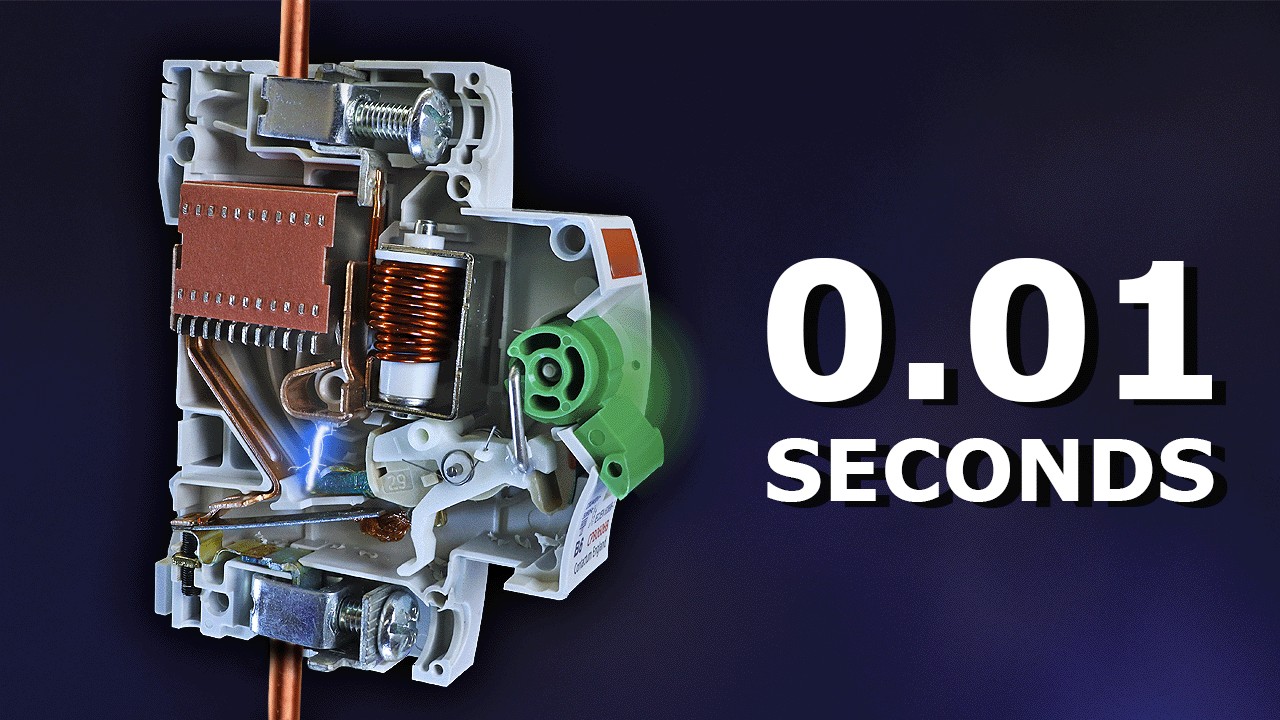


A voltage protector reconnection delay is the waiting period before an automatic-reset protector restores its output after acceptable supply conditions return. Choose it from the connected equipment's restart requirements, the protector's documented timing logic and the installation's restart assessment. It is different from fault detection time, a compressor's minimum off time and a machine's permission to restart. There is no universal setting that safely covers every load. A longer timer may reduce rapid repeated reconnections, but it cannot correct an unstable supply, establish safe isolation or replace an equipment controller.
Define the event that starts the timer
Start with a timing diagram rather than a number on a quotation. Ask what the device measures, which condition opens its output and what condition begins recovery. Some equipment distinguishes initial power-up delay from recovery after a voltage trip. Other equipment may use a fixed recovery interval. The purchase specification should identify each function separately, including its timing start and end events. Do not infer the behavior from a display countdown or the phrase automatic reset.
A useful sequence is normal operation, unacceptable measured voltage, output interruption, return to an acceptable range, recovery qualification and output restoration. This describes a review framework, not the internal algorithm of every product. The manufacturer must confirm whether acceptable voltage needs to remain continuous throughout the waiting period and what happens when another disturbance occurs. If a fresh excursion does not restart qualification, a device might reconnect soon after a later disturbance. That behavior matters when the supply repeatedly moves across a threshold.
Keep three different timing requirements separate
Fault response describes how quickly an unacceptable condition produces the defined output action. Recovery qualification describes how long the supply must satisfy the declared recovery condition before the output returns. Equipment restart control determines whether the load is allowed to run. These requirements can coexist, but none automatically proves the others. A buyer comparing two quotations should ask for three named functions rather than selecting whichever brochure contains the longest time.
The distinction is especially useful for a control panel that feeds several loads. A voltage protector may restore panel supply while a compressor controller continues to inhibit its contactor. A fan may resume through its own controls, while a machine requires deliberate operator action. Restored electrical supply does not mean every connected load should start together. Review the complete sequence and retain the controller's own protective logic instead of bypassing it to make the panel restart sooner.
Choose the delay from load requirements
Begin with the exact equipment manual, the supply design and the consequences of interruption. Determine whether the load has a minimum off-time requirement, a start sequence, retained control memory, an automatic restart function or a required manual acknowledgement. A display panel, a refrigeration compressor and a powered conveyor do not have the same restart needs. When equipment documentation is incomplete, ask the equipment supplier for a written requirement before approving the voltage protector's setting.
For refrigeration, the relevant requirement can be compressor-specific and controller-specific. A generic voltage protector delay should not be presented as proof of anti-short-cycle protection. The refrigeration controller may measure elapsed time from actual compressor shutdown rather than from voltage recovery. It may also apply operating restrictions unrelated to supply voltage. Confirm how the two timers interact and which controller owns restart permission. Avoid importing a setting from another installation merely because its compressor has similar power.
For machinery, assess what automatic restoration could energize or move. The HSE introduction to machinery safety describes the need to manage risks associated with equipment and its energy sources. This is general safety context, not approval of a particular timer. A waiting period cannot substitute for the control measures required by the machine's assessment. Where a restart decision belongs to the operator, a voltage protector must not silently defeat it.
Use a timing review table
| Review item | Evidence to obtain | Decision supported |
|---|---|---|
| Timing start | Defined acceptable-voltage recovery event | Timer meaning established |
| Repeated fault | Documented reset or qualification behavior | Recovery sequence understood |
| Load restart | Equipment and controller instructions | Separate restart restrictions retained |
| Supply transfer | Approved transfer and control sequence | Timing interaction evaluated |
| Acceptance | Method and output observation endpoint | Recorded behavior matches requirement |
Treat each row as an evidence request. The table contains no recommended universal seconds or minutes because those values depend on the selected equipment and the specified function. Record both the setting and its meaning. A time described only as delay is incomplete procurement information. Ask the supplier to identify whether the interval concerns fault detection, initial energization, stable-voltage qualification or output restoration.
If the load already has a controller, document its retained state after an interruption. Does it remember an incomplete minimum off time? Does its clock restart when control power returns? Does the output remain inhibited until a sensor or interlock is healthy? These questions prevent a panel-level timer from being mistaken for the equipment's actual restart safeguard. They also explain why the same panel recovery setting can behave differently with two downstream controllers.
Review repeated disturbances and changing supplies
A single outage followed by a stable supply is the easy case. The more useful review considers several short interruptions, repeated threshold crossings and a supply transfer. Ask whether the protector resets its timer, preserves a prior count or starts a separate initial-power-up sequence. Verify the documented behavior for each event. Do not create these disturbances on a live installation as an informal experiment; use an approved test arrangement and qualified personnel.
Generator operation can introduce another sequence. The generator may need its own stabilization and transfer logic before the protected circuit receives supply. The voltage protector then applies its documented recovery behavior, and downstream equipment may add another waiting period. Adding the nominal intervals together is only valid if the actual sequence is sequential and each start condition is known. Some functions overlap, while others begin only after the preceding output closes. Use the circuit and control diagrams to establish the real sequence.
An excessively long delay can have operational consequences too. It can postpone alarms, interrupt process availability or extend the time before refrigeration returns to service. These consequences should be assessed alongside electrical protection. The solution is not to select the shortest setting indiscriminately. It is to choose a documented delay that satisfies the equipment's requirements while making interruption and recovery visible to the operator or maintenance team.
Review the actual SUTON product documentation
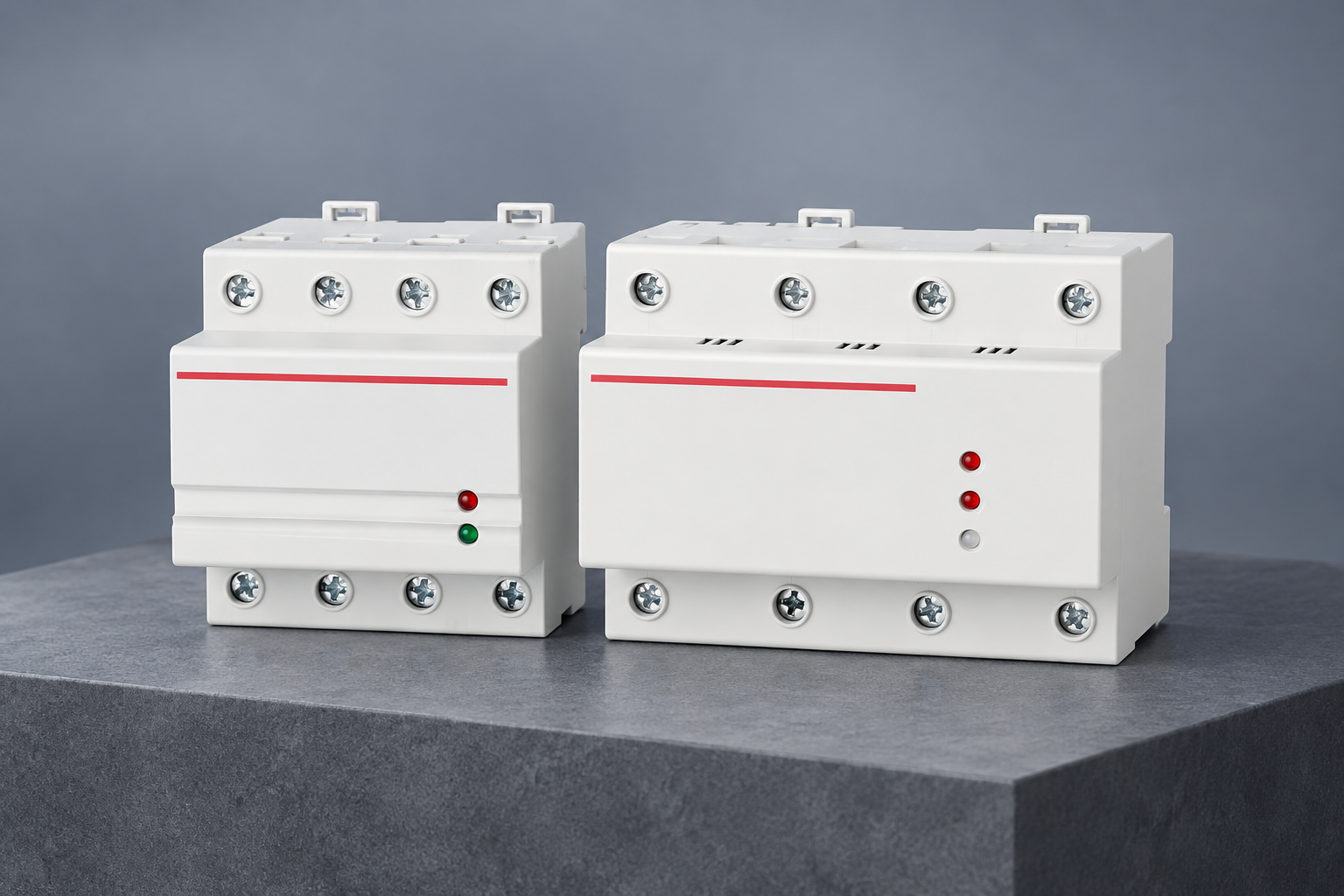
The SUTON DZ47-125V1 automatic-reset overvoltage and undervoltage protector is a relevant product family for this discussion. Its exterior illustration identifies the product under review; it does not establish an adjustable timer, an exact recovery duration or compressor suitability. Request the current instructions for the exact variant and verify the applicable supply, output duty, timing sequence and installation requirements before ordering.
For the broader functional overview, see the automatic-reset voltage protector guide. Compare the timing distinctions with voltage protector response time and accuracy. When the installation includes several supply configurations, use the single-phase and three-phase selection review to frame the sensing and switching questions. Those articles cover complementary decisions rather than supplying an unverified setting for this product.
Plan a controlled acceptance check
Define the acceptance method before the equipment arrives. The record should identify the exact protector, approved configuration, timing function, simulated event, observation endpoint and acceptance criterion. An observed indicator change is not necessarily equivalent to interruption or restoration at the specified output. Include the relevant controller and load sequence when the requirement concerns equipment restart rather than the protector alone.
Qualified personnel should use the manufacturer's instructions and an appropriate controlled method. The HSE guidance on work with electrical equipment provides general context for planning electrical work. It does not describe a SUTON test procedure. Avoid exposing terminals, bypassing interlocks or provoking voltage faults on occupied equipment to measure a countdown. Record the tested behavior and clearly separate it from conditions that were not evaluated.
Keep the installation's maintenance isolation procedure independent of automatic output opening. The protector can restore its output when conditions recover. The HSE safe working practices publication supports the broader need for planned electrical work and safe isolation. A tripped indicator, an open contact or an unfinished recovery timer must not be treated as permission to touch the circuit.
Troubleshoot delayed recovery without bypassing protection
If supply has returned but output remains unavailable, compare the observed sequence with the manual. The measured voltage may not yet meet the recovery condition; a new excursion may have restarted qualification; a separate controller may still inhibit the load. Record the indication, event history and controller state before changing anything. A delay that is behaving as documented should not be shortened simply to conceal another fault.
Distinguish output restoration from successful equipment operation. If the protector has restored supply but the load does not run, review the equipment's own interlocks and fault records through its approved procedure. Repeatedly cycling power can erase useful evidence or create further start attempts. An unresolved discrepancy belongs in the commissioning record with a responsible person and corrective action, rather than being closed by bypassing the protector.
Prepare the enquiry and handover record
Send the supplier the supply configuration, load types, controller details, restart requirements and intended recovery sequence. Request the exact variant, current manual, timing diagram and output-duty evidence. Specify which settings must be retained in the commissioning record and who may change them. Where the proposed device cannot provide the required documented behavior, resolve the control design before purchase.
At handover, retain the approved setting, functional explanation, acceptance results and remaining limits. Operators should understand why the circuit may remain off after voltage appears normal and which indication identifies a separate equipment inhibit. A well-documented delay is easier to maintain than an unexplained number. Future changes to loads or controllers should trigger a review of the recovery sequence instead of inheriting the old timer without assessment.
Frequently asked questions
What reconnection delay should I use for a voltage protector?
Use the exact load and controller requirements together with the protector's documented recovery logic. There is no universal delay for all equipment. Confirm the timer's start condition, its behavior after another disturbance and whether separate restart controls must remain active.
Is reconnection delay the same as compressor minimum off time?
No. Recovery delay may start when voltage becomes acceptable, while a compressor controller may measure from compressor shutdown. Confirm both functions and their interaction from the equipment instructions; a voltage protector's timer alone does not prove anti-short-cycle protection.
Can I work on a circuit while its recovery timer is running?
No. An automatic-reset protector can restore its output. Follow the installation's approved isolation and verification procedure with qualified personnel. An indicator or recovery countdown is not proof of a safe condition for electrical work.
Educational video
Why Circuit Breakers DON'T Protect People (electric shocks) by The Engineering Mindset. This video explains electrical-shock protection limits; it supports the safety-function distinction here, not an exact SUTON rating, protector response time, feed direction, fuse selection or maintenance procedure.