

NH fuse size selection for a fuse switch-disconnector requires two separate decisions: the approved physical fuse system and the electrical protection needed by the circuit. An NH size designation is not an ampere rating, and a fuse that fits between the contacts is not automatically suitable. Start with the exact switch model and its approved fuse list, then verify voltage, utilization class, current, power loss and fault performance against the installation design. For purchasing teams, the useful result is an agreed fuse part number and supported assembly, rather than a size chosen from a photograph or an approximate frame-current table.
Separate the mechanical size from the protection requirement
The physical system determines contact geometry, body envelope and the interface with the holder. The electrical selection determines what the fuse must carry and interrupt. These decisions interact, but neither replaces the other. A buyer may receive several offers described as an NH fuse of the same current. Their voltage ratings, characteristics, losses or construction may differ. Conversely, different current ratings can exist within a physical size. Do not derive a single allowable current from the size number without the relevant documentation.
The IEC industrial fuse standard scope identifies industrial fuse systems intended for authorized persons. Its public description establishes the document's subject; it does not provide a complete interchangeability table or confirm a particular SUTON combination. Obtain the actual fuse and switch documentation for the selected equipment. Where project specifications name an edition or national adoption, record it in the purchasing package so that comparisons use the same basis.
Begin with the exact holder and approved combination
Record the complete fuse switch-disconnector code, mounting arrangement, pole count and accessory version before requesting replacements. A product family name can cover several assemblies. Ask which fuse systems, sizes and exact fuse-link references are supported, including any restrictions on current or power dissipation. A general catalogue photo cannot answer these questions. If an old panel has an incomplete label, use the panel records and the equipment supplier to identify it before ordering a substitute.
For a replacement, capture the installed fuse marking and its approved drawing through the site's safe maintenance process. Do not remove a cover or approach exposed parts simply to improve a purchasing photograph. The person collecting evidence needs the site's authorization and electrical safety procedure. If records conflict with the installed component, treat that as a discrepancy requiring engineering review rather than selecting whichever code is easiest to buy.
Check voltage, current and application class separately
The circuit's operating voltage and applicable fault conditions must fall within the supported fuse and assembly limits. An AC rating does not establish a DC capability. Similarly, a proposed fuse current does not prove that a holder can carry that current inside the final enclosure. Ambient temperature, adjacent heat sources and installation restrictions can affect the supported arrangement. Ask for the applicable conditions rather than assuming the free-air catalogue value describes a closed distribution board.
The application class is part of the protection decision. General-purpose cable protection and a motor circuit with separate overload protection have different requirements. A short-circuit-focused fuse application cannot simply be treated as complete overload protection. The designer must select the required function from current manufacturer data and the project rules. This article deliberately avoids a universal class recommendation: the correct answer depends on the load, conductor and protective devices, not only the NH dimensions.
Build a compatibility record before comparing prices
| Selection question | Evidence to obtain | Insufficient substitute |
|---|---|---|
| Physical fuse system | Exact supported fuse size and contact drawing | Visual fit |
| Electrical application | Voltage, class and circuit design | Size number |
| Current and heat | Supported current, losses and enclosure conditions | Frame-current label |
| Protection | Exact fuse characteristics and circuit assessment | Same nominal current |
| Replacement | Approved part code and instructions | Generic equivalent description |
Use this table as a request for evidence, not as a replacement for a manufacturer-approved selection. A supplier response should identify the exact document and combination it supports. Statements such as standard size, equivalent current or commonly used are insufficient when they leave the contact interface, losses or protection function unresolved. Ask the supplier to distinguish confirmed compatibility from an assumption that still needs approval.
Compare like-for-like quotations using the complete fuse code, required quantity, supported holder and acceptance documents. A cheaper substitute can add redesign or review work if its losses or characteristics differ. This does not mean a substitute is always unsuitable; it means the purchasing decision should follow the documented technical review. Keep the rejected alternatives and the reason for rejection so a later reorder does not restart the same uncertainty.
Review heat and power dissipation in the assembly
A fuse produces heat while carrying load. The switch contacts, conductors and neighboring components also contribute to the enclosure's thermal conditions. Supported fuse power loss is therefore relevant even when the size and current appear correct. Request the permitted fuse losses and installation conditions for the exact assembly. Do not invent a temperature-rise calculation from a photograph, and do not assume a different fuse brand has identical losses because its label current matches.
If the assembly has been modified, review the changed conditions with the responsible designer. Smaller enclosures, different ventilation, new cable routing or a nearby heat-producing device can affect the original arrangement. Record the load and conditions assessed in the acceptance file. A thermal inspection can help identify an abnormal installation after commissioning, but it cannot establish an undocumented compatibility claim or authorize operation outside supported limits.
Inspect the documentation and exterior safely
The HSE switchgear safety guidance addresses selection, use, care and maintenance. Apply the site's authorized process when inspecting the actual panel. For procurement, distinguish an exterior identification check from electrical testing or fuse replacement. A visible OFF indication alone does not establish that all energy sources have been controlled or that the equipment is safe to touch. Alternate supplies and stored energy need their own assessment.
Request a clear drawing showing the supported fuse interface and access arrangement. Confirm the specified carrier or extraction equipment, replacement instructions and inspection criteria where these apply. Do not add an unlisted tool or method because it seems convenient. If the selected arrangement requires specialist access, include that requirement in the maintenance plan and spare-parts handover instead of leaving it for the first fault event.
Apply the evidence to a SUTON enquiry
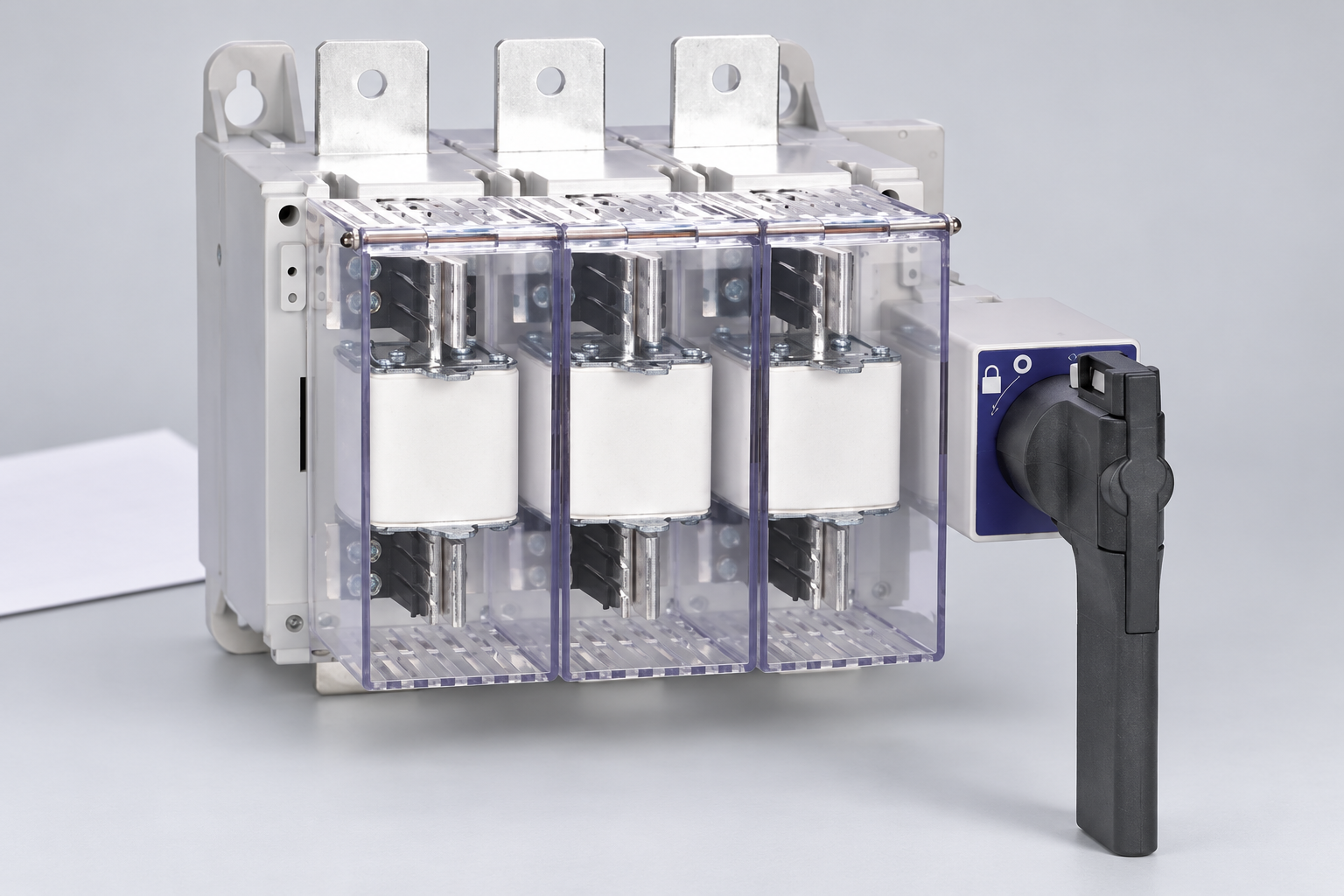
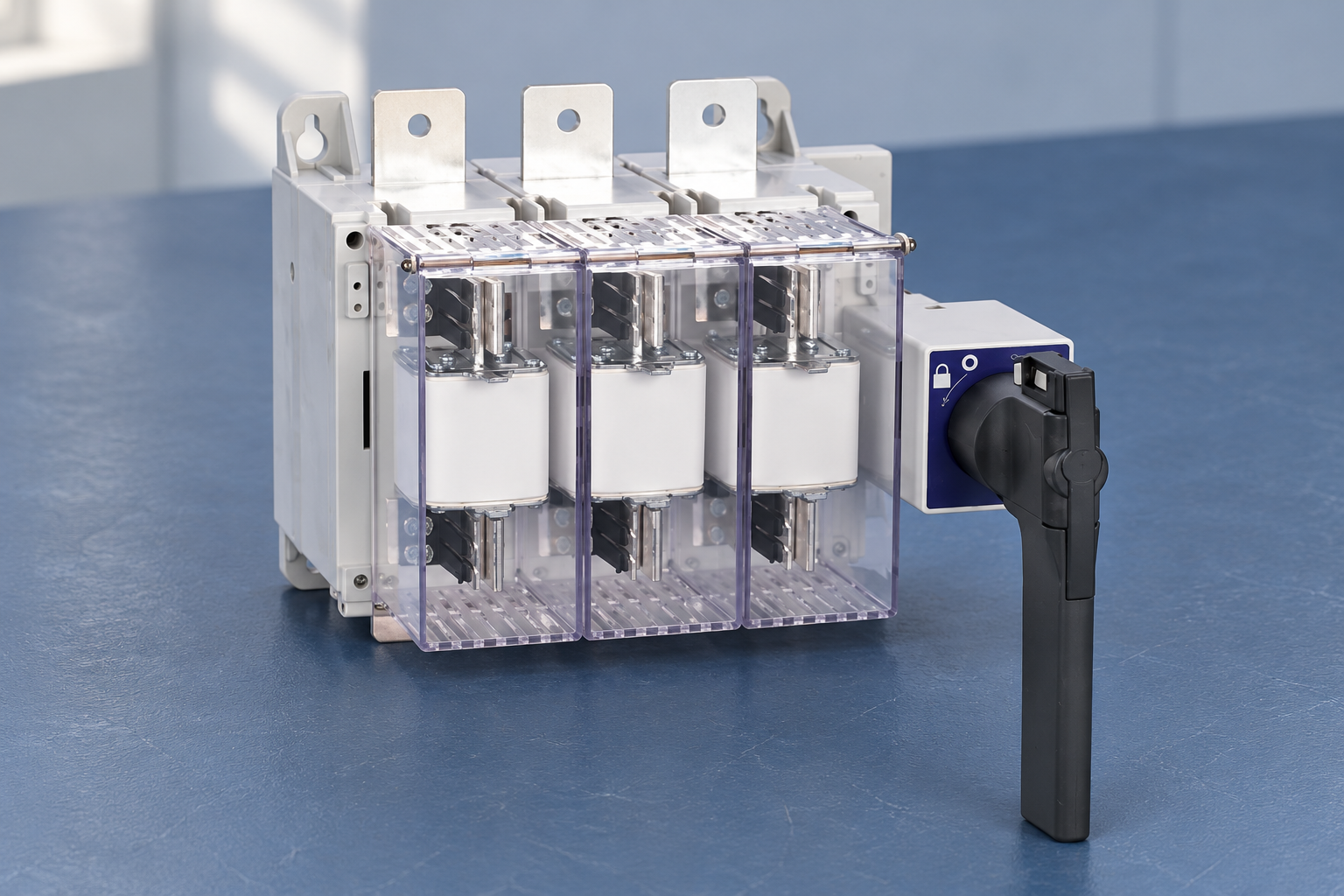
The SUTON ETGLR fuse switch-disconnector page is the product reference for this article. The illustration shows its exterior and three fuse positions; it does not certify an NH size, approved fuse code or replacement procedure. Send SUTON the full circuit and assembly requirements and ask for the supported product and fuse combination. Require explicit confirmation if the project specification calls for a particular physical fuse system.
Include circuit voltage and AC or DC duty, expected load, conductor protection requirements, prospective fault assessment, enclosure conditions and the intended maintenance arrangement. Add the exact existing code for replacements. Where the required data are unavailable, identify the missing item in the enquiry. A supplier can then answer a bounded question instead of guessing from a photograph of an assembled panel.
Keep protection and selectivity reviews connected
Selecting a mechanically compatible fuse is only one stage. Its behavior must also be checked against downstream devices and the protected circuit. The IET discussion of device coordination provides background on the distinction between protection and discrimination. It is not a ready-made approval for a mixed fuse and breaker pair. Use device-specific data, settings and the actual fault study for the selected combination.
For the switching function, read fuse switch-disconnector utilization categories. For the circuit context, use AC-22A versus AC-23A switch duty. These reviews answer different questions from physical NH fit. Keep each decision visible in the engineering file so that a successful check in one area is not mistaken for complete circuit acceptance.
Control spare parts and future substitutions
After acceptance, create a spare-parts record with the exact approved fuse code, switch model, permitted alternatives and document revision. Specify whether alternatives are already approved or require a new review. Avoid a spare description consisting only of current and physical size. Warehouse staff should be able to distinguish similar-looking parts without making an engineering decision at the shelf. Retain the accepted packaging information and supplier traceability as the project requires.
A later substitution should reopen the affected checks: interface, voltage, class, losses, protection and coordination. Do not carry over an old approval simply because a substitute is described as equivalent. If the equipment documentation changes, review whether the original decision remains applicable. For help assembling the request, contact SUTON with the evidence package and the exact unresolved compatibility question.
For the overall equipment review, use the disconnect-switch guide for panel builders as the parent selection framework. Apply this article to its specific NH fuse compatibility evidence requirements.
Frequently asked questions
Does an NH size number identify the correct fuse current?
No. The physical designation and electrical current rating answer different questions. Use the approved holder documentation to establish the mechanical system, then have the circuit designer select voltage, current, application class and protection performance. Neither the size number nor the holder's family current alone establishes the correct fuse for a particular feeder.
Can I replace a fuse with another brand of the same size and current?
Only after the relevant compatibility and protection checks. Verify the exact interface, voltage, class, losses and supported assembly, then review the effect on circuit protection and coordination. A same-size, same-current label is useful identification information, but it is not enough to approve interchangeability or preserve an earlier study automatically.
Does a photograph prove the ETGLR supports a particular NH fuse?
No. A photograph illustrates visible construction and helps identify the product family. It cannot establish the approved fuse system, dimensions, losses, application limits or safe replacement procedure. Request the specific SUTON assembly documentation and supported fuse list before selecting a link or defining a maintenance spare.
Educational video
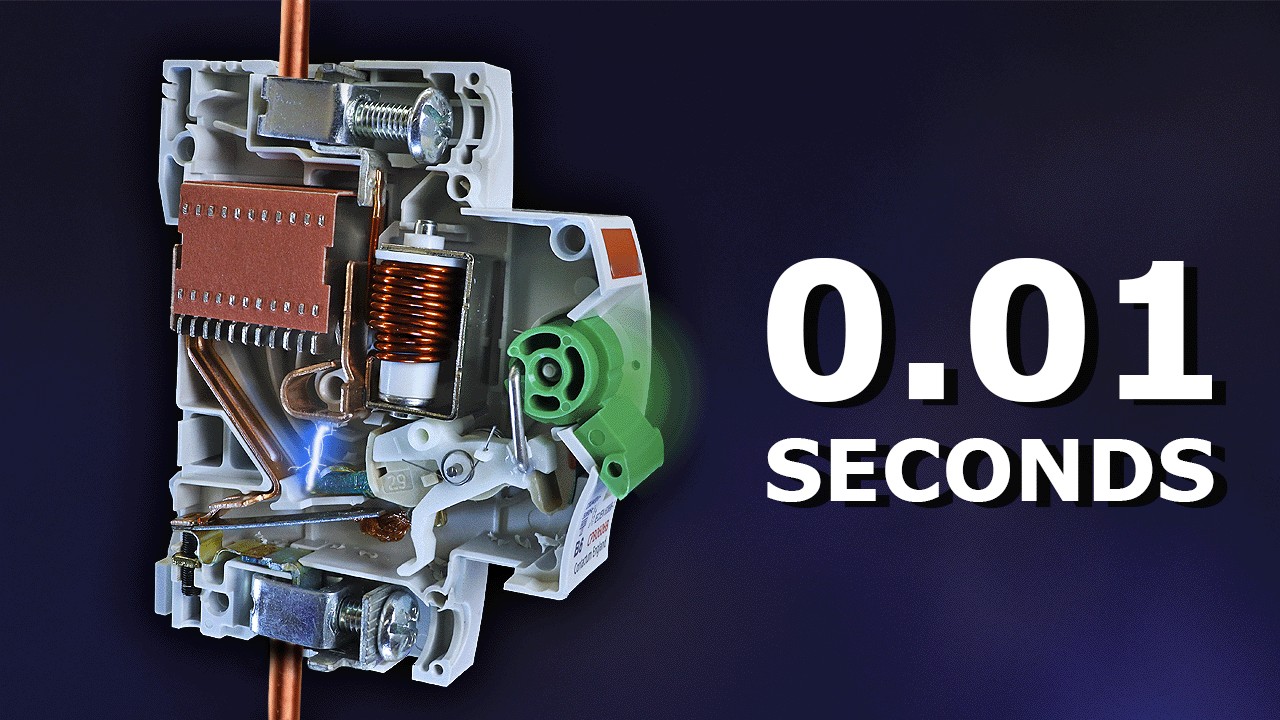
Why Circuit Breakers DON'T Protect People (electric shocks) by The Engineering Mindset. This video explains electrical-shock protection limits; it supports the safety-function distinction here, not an exact SUTON rating, PV connection, fuse selection or installation procedure.