


Pollution degree describes the contamination and condensation conditions relevant to electrical insulation. It is not a cleanliness score, an IP rating or permission to expose a switch disconnector to any industrial environment. Selection requires the conditions around the actual insulation to match the declared product and assembly requirements. For a panel builder, the useful question is how dust, moisture, condensation and maintenance conditions will affect the installed equipment. This guide explains how to review pollution-degree information for low-voltage switch disconnectors, using SUTON's covered HD11F/HS11F knife-switch family as a real product reference rather than assigning a universal environmental approval.
Define the environment around the insulation
Start with the equipment's location inside the completed panel. Outdoor weather, the room environment and the microenvironment around an insulating surface are related but not identical. An enclosure can provide protection from some external influences, while internal contamination or condensation can still require attention. Record the expected conditions instead of describing the site only as “factory use.”
Identify likely dust, moisture, temperature variation and any process contamination. Include normal operation, shutdown and maintenance conditions. A cabinet that remains warm in service can experience a different condition during an overnight shutdown. The design should consider the relevant installation conditions rather than treating a clean inspection on delivery day as proof of lifetime suitability.
Understand the basic classification without copying test limits
NI's explanation of pollution degree distinguishes nonconductive contamination, temporary conductivity from condensation and more persistent conductive conditions. The important concept is the effect of the environment on insulation, not simply how much visible dust is present. A visually clean surface can still experience moisture-related conditions.
Do not apply spacing examples from a measurement instrument or printed-circuit board directly to a switch disconnector. Such examples have their own voltage, material and test context. The classification helps frame the question, while the applicable product and assembly evidence establish the actual requirements. This article does not give a universal creepage distance or a field method for reclassifying equipment.
Keep pollution degree separate from IP protection
IP protection concerns specified ingress-protection characteristics of an enclosure or product. Pollution degree concerns environmental conditions relevant to insulation. One label cannot simply be converted into the other. A protective cover over a switching mechanism does not, by itself, establish an IP rating for the complete panel or prove a particular insulation microenvironment.
If an enclosure is intended to control contamination, ask for the assembly-level design evidence and the conditions that must be maintained. Consider cable entries, ventilation, door seals and access arrangements. Do not infer the result from the appearance of a transparent cover, a thick molding or a metal cabinet. Each feature has a defined purpose that should be supported by the relevant documentation.
Read the covered knife-switch product information precisely
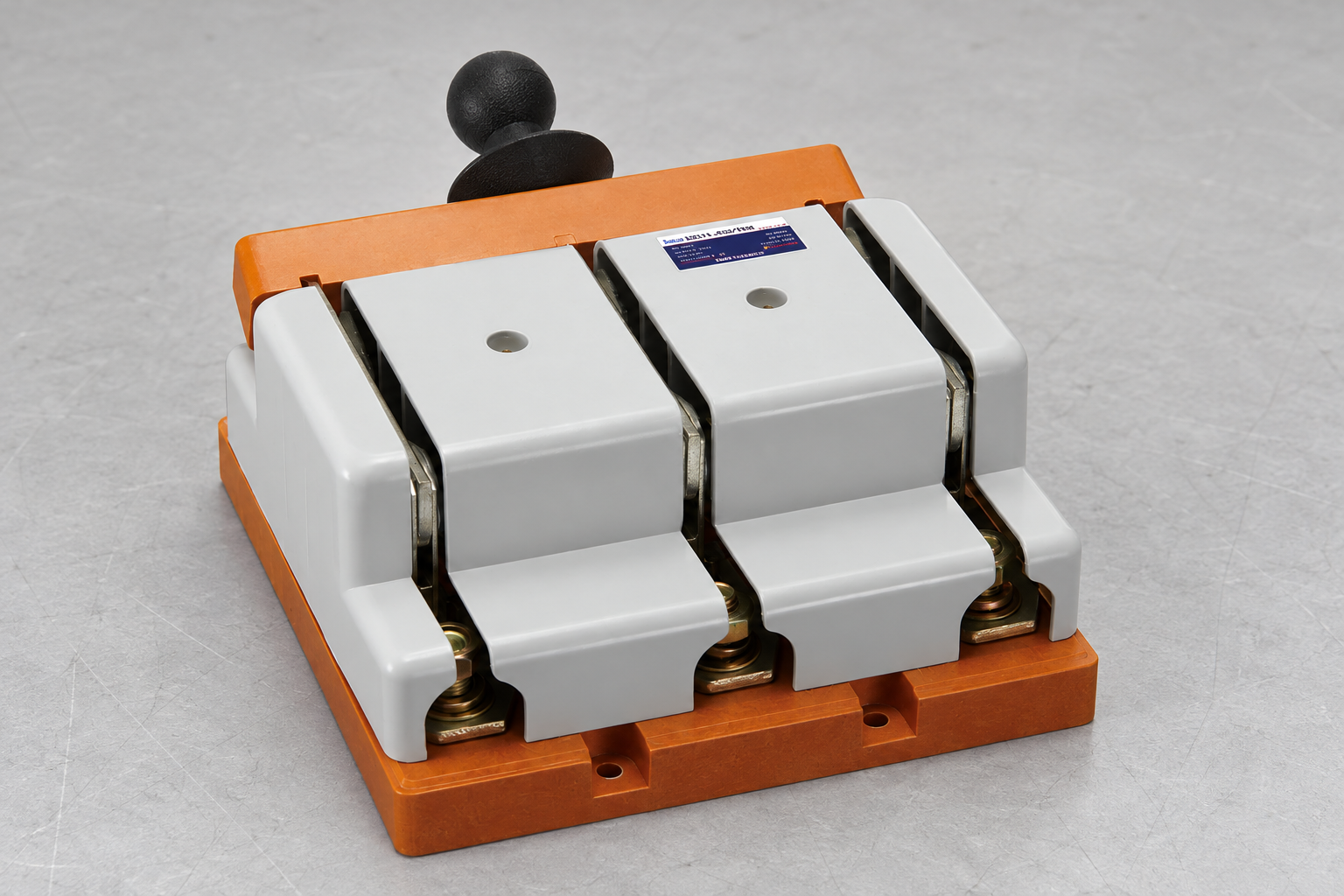
The SUTON HD11F/HS11F covered knife-switch page describes protective covers and gives normal service and installation conditions, including a stated pollution degree. It also lists conditions concerning ambient temperature, altitude, humidity, vibration and the surrounding medium. These statements are useful inputs to a model-level inquiry, not a complete approval for every site.
The cover is a real construction feature and can improve protection against unintended contact according to the product description. Do not extend that statement into claims about a sealed enclosure, outdoor exposure, an arbitrary IP code or resistance to aggressive chemicals. Ask the supplier to confirm the exact model's suitability for the actual conditions and to identify any additional enclosure or installation requirements.
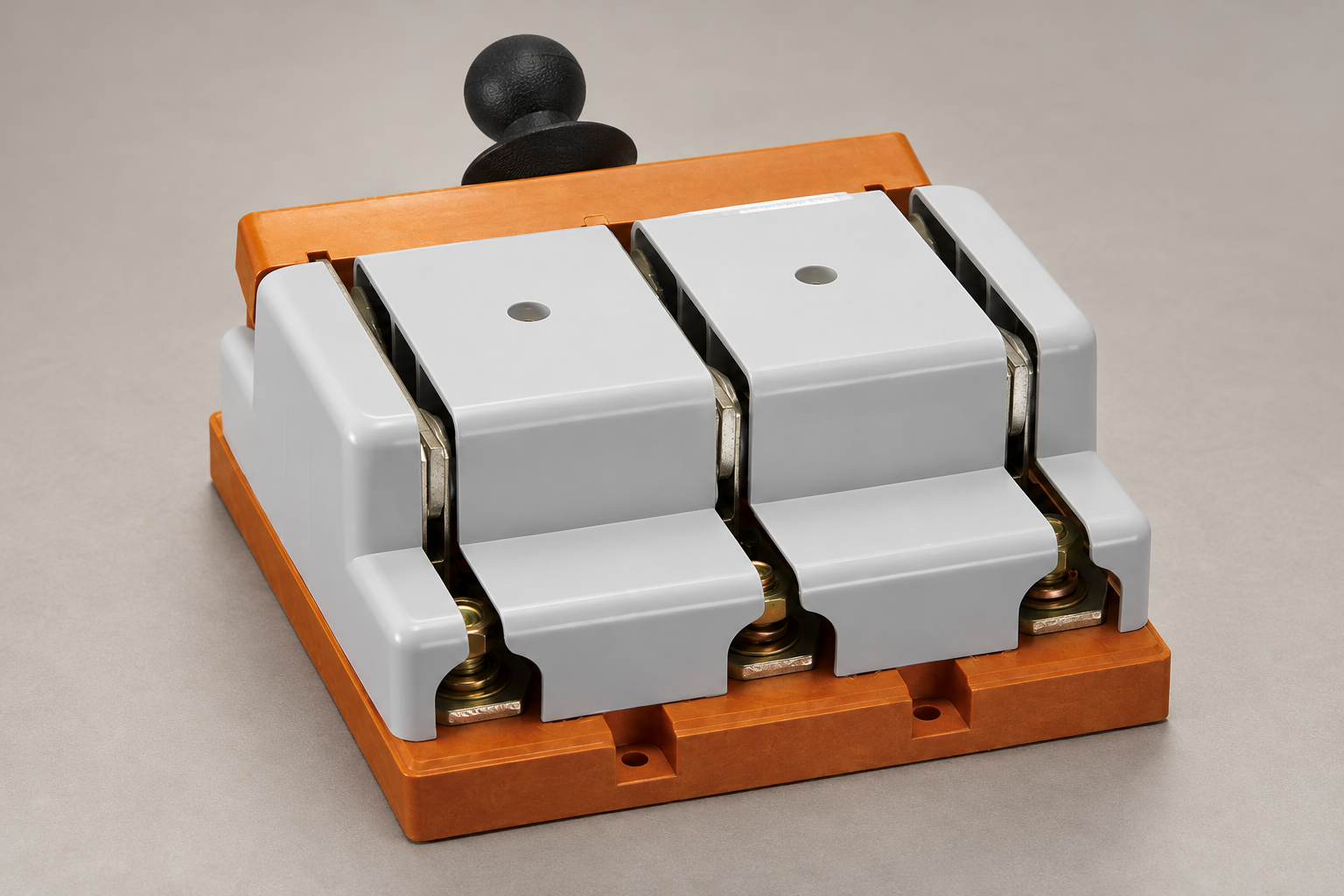
The product illustration in this article preserves the actual covered-switch exterior. It does not depict an environmental test or prove an insulation classification. Retain the product document and the complete installation design as the evidence for the intended application.
Use an environmental review schedule
| Condition | Information to collect | Review boundary |
|---|---|---|
| Dust | Type and expected contamination around insulation | Visible quantity alone does not classify it |
| Condensation | Expected changes during operation and shutdown | A dry delivery inspection is insufficient |
| Enclosure | Ingress controls and installation details | An IP label is not a pollution-degree conversion |
| Product | Exact declared service conditions | A protective cover is not universal approval |
| Insulation | Applicable product and assembly evidence | Do not borrow spacings from unrelated equipment |
| Maintenance | Approved inspection and cleaning method | An improvised solvent can change the condition |
| Change control | New site or enclosure arrangement | An old approval may not cover new exposure |
This qualitative schedule helps a buyer translate a site description into answerable questions. It does not replace the applicable classification or design method. Ask the supplier to respond to each relevant condition for the exact offered code, and retain the accepted limitations with the panel documentation. Where information is missing, keep the question open rather than assigning a convenient default.
The isolator switch planning guide covers the equipment's role and boundary. This article adds the insulation-environment review. The two decisions should agree: a mechanically suitable isolation point can still require a different enclosure or product arrangement if the environmental conditions are outside the declaration.
Review condensation as a condition rather than a photograph
Condensation depends on environmental changes and the equipment's thermal condition. A dry photograph does not establish that it will never occur. Record the installation's expected temperature changes and humidity conditions, including startup, shutdown and periods without normal internal heating. The responsible design should identify any necessary controls and how they are maintained.
Avoid an unsupported remedy such as assuming that adding a heater, ventilation opening or coating automatically creates a lower pollution degree. Those changes can affect other aspects of the assembly and need an appropriate assessment. Request manufacturer guidance where the proposed environment differs from the published normal conditions. Do not present this article as a design for condensation-control equipment.
Keep material and spacing decisions within their proper scope
The IEC 60664-1 overview identifies insulation coordination as including clearance, creepage and solid-insulation considerations. Those are related aspects of a complete design, not interchangeable labels. Pollution degree is one part of the relevant assumptions; voltage, material characteristics and other conditions also matter.
The busbar clearance and creepage guide addresses an adjacent assembly topic. Its values or examples must not be transferred to a different switch construction without the applicable method and evidence. A buyer should request the actual product's declaration and the assembly builder's verification rather than attempting to approve a switch by measuring a photograph.
Consider access and maintenance effects on the environment
The accepted environmental condition must be compatible with how the equipment will be used and maintained. Doors left open, damaged seals, obstructed ventilation or contamination introduced during work can change assumptions in the original design. Identify the inspections and maintenance actions required by the actual instructions and the site's conditions.
Keep cleaning methods specific to the product materials. Do not assume that a solvent or abrasive suitable for another device is acceptable on this switch's insulating surfaces or protective covers. If damage, contamination or tracking is suspected, obtain an authorized assessment under the approved isolation procedure. A wipe-clean appearance is not proof that damaged insulation has recovered its declared performance.
Avoid substituting unrelated environmental claims
A supplier may provide a flame-retardancy statement, a material description, a corrosion claim or an enclosure protection code. Each can be relevant, but none automatically answers the pollution-degree question. Record which requirement each piece of evidence addresses. If a quotation uses a general phrase such as “industrial grade,” request the exact conditions and limitations behind it.
The HSE introduction to electrical safety emphasizes suitability for intended use and operating conditions. In procurement terms, that means matching the actual application rather than collecting favorable labels. The manufacturer and assembly builder should identify the supported arrangement for the site; do not combine unrelated claims into an invented approval.
Preserve the review through substitutions
When another switch is proposed, compare environmental declarations as well as voltage, current and dimensions. A substitute with the same physical size may have different installation conditions or cover arrangements. Request the exact documents before accepting it. Preserve the enclosure and maintenance assumptions that formed part of the original approval.
If the panel is later moved to a different room, process area or climate, review whether those assumptions remain valid. A previous indoor installation record should not silently become approval for a new outdoor or contaminated location. Link the environmental schedule to the equipment tag and installation drawing so future changes are visible to the responsible engineer.
For the adjacent enclosure topic, the enclosed busbar IP-rating guide explains ingress-protection questions. It complements the environmental discussion without converting an enclosure code into a pollution degree.
Prepare an inquiry that includes the real conditions
Send SUTON the exact switch role, electrical duty, pole arrangement, enclosure design, installation altitude and relevant temperature, humidity and contamination conditions. Identify any expected condensation, conductive dust or corrosive medium and ask for a written model-specific response. Include the required maintenance access and any additional environmental evidence the project needs.
The final approval should identify the offered model, accepted conditions, enclosure responsibilities and required instructions. Avoid approving an exception solely because a similar product has been used elsewhere. A useful response states where the published conditions apply and what must change when the proposed application falls outside them. That gives both the panel builder and the maintenance team a practical, traceable basis for using the equipment.
Frequently asked questions
Is pollution degree the same as an IP rating?
No. They address different characteristics. Review insulation-environment assumptions and ingress protection using their respective evidence for the actual product and assembly.
Does a protective cover prove outdoor suitability?
No. Confirm the exact environmental and enclosure requirements. A cover's appearance does not establish a sealed assembly, an IP code or approval for weather exposure.
Can a spacing value from another device be reused?
Do not assume it applies. Voltage, materials, construction and the applicable design method matter. Use the actual product and assembly documentation for the proposed condition.
Educational video
Mod-01 Lec-16 Dielectric (Insulating) Solids by nptelhrd. This NPTEL university lecture explains solid dielectric principles. It supports the insulation discussion and does not assign voltage ratings or test procedures to a particular SUTON product.