
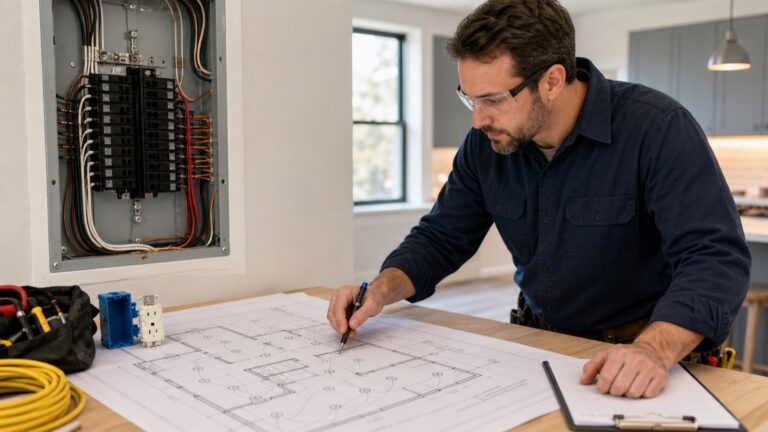
How Many Outlets per Circuit Breaker? A Design Method
There is no universal outlet count that is safe for every circuit. The answer depends on local rules, circuit rating, conductor, expected simultaneous load


There is no universal outlet count that is safe for every circuit. The answer depends on local rules, circuit rating, conductor, expected simultaneous load
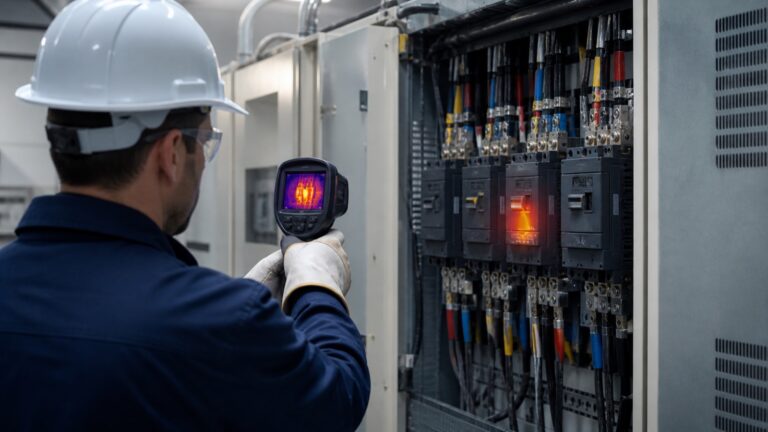
A hot, tripping breaker can indicate overload, a loose or damaged connection, unsuitable conductor termination, high ambient temperature, harmonic or inrus
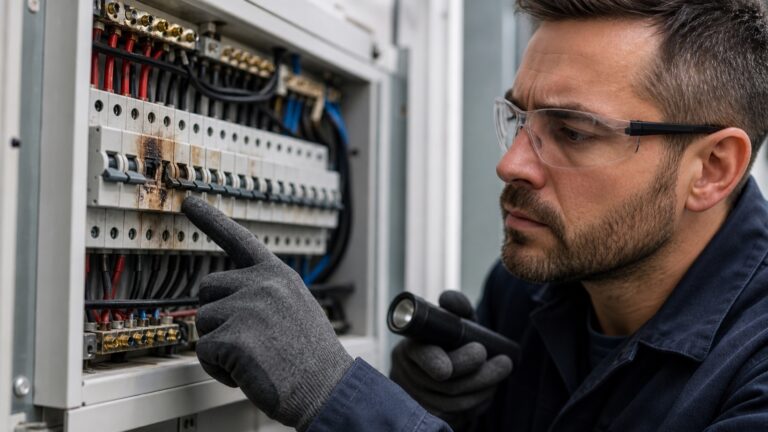
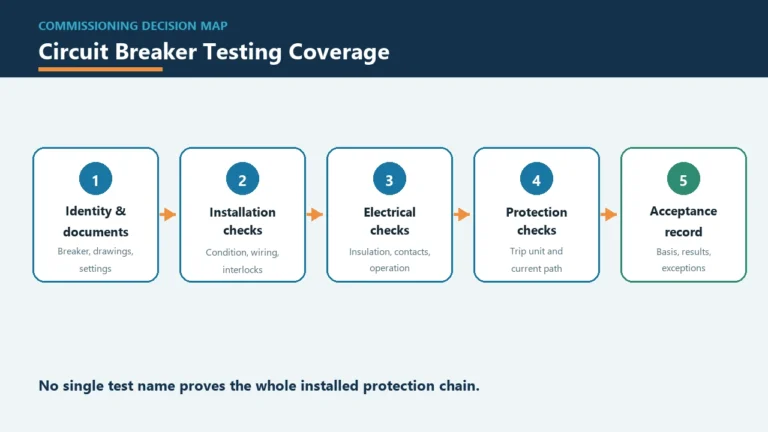
A breaker may be defective when it cannot reset after the fault is removed, has visible heat damage, will not carry a verified normal load, or fails approv

A multimeter can support continuity, voltage, and resistance checks, but the safe method depends on whether the breaker is isolated, removed, or installed.
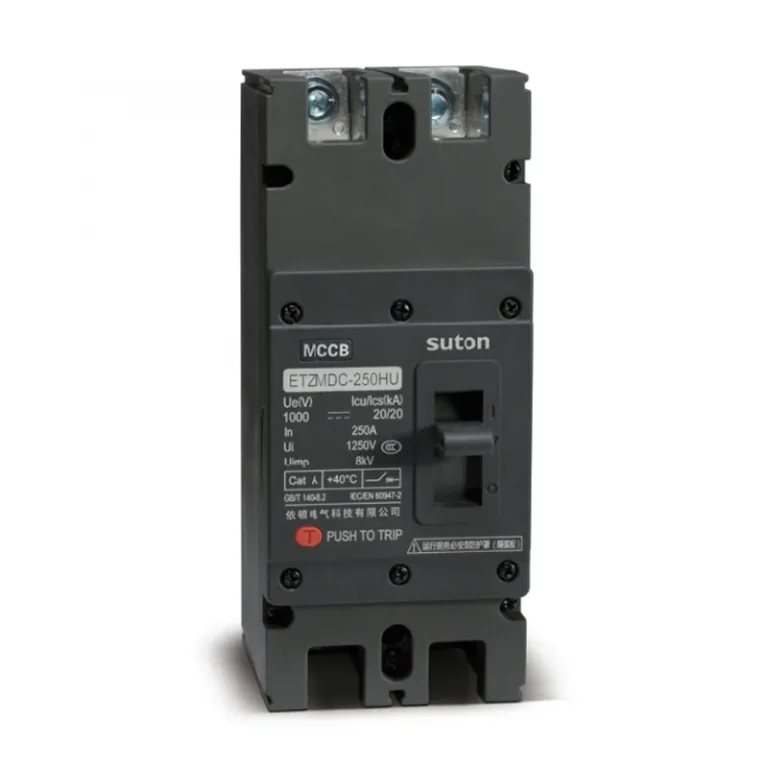
Compare AC vs DC circuit breakers by arc interruption, voltage rating, poles, polarity, time constants, PV applications, and documentation requirements.
Plan circuit breaker selectivity with fault levels, time-current curves, settings, manufacturer tables, test records, and clearly defined operating objectives.
Understand circuit breaker breaking capacity, available fault current, voltage, standards, cascading evidence, and the records needed before panel approval.
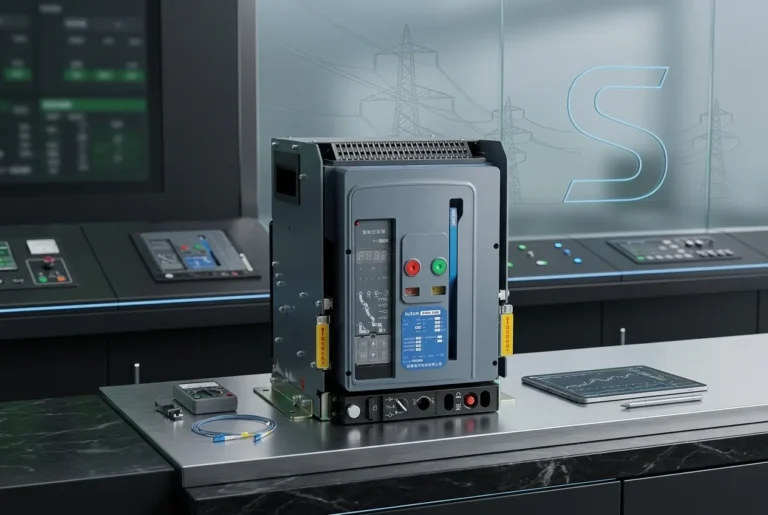
Compare MCCB vs ACB for LV feeders and incomers by service strategy, trip unit, installation, maintainability, fault duty, and coordination evidence.
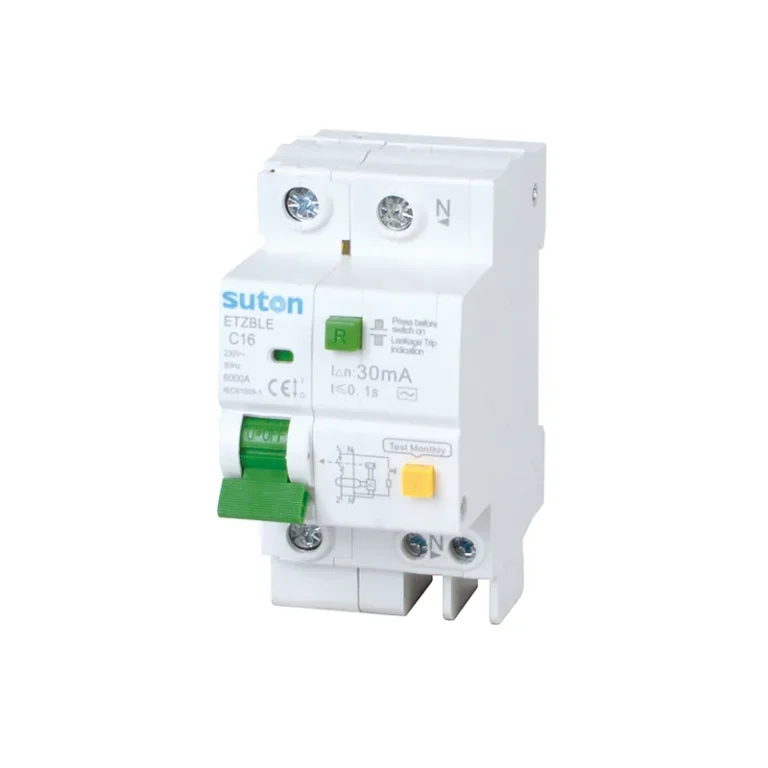
Compare RCCB vs RCBO by protection function, upstream overcurrent protection, circuit grouping, fault isolation, testing, and panel documentation.
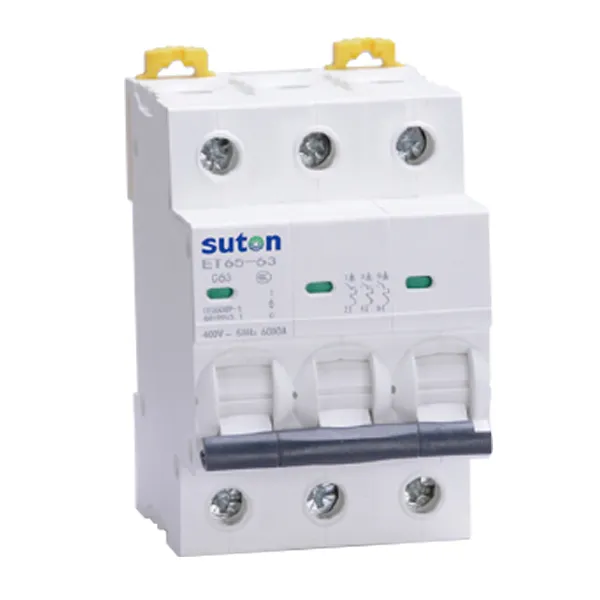
Compare MCB vs MCCB by application, adjustability, fault duty, panel role, documentation, and supplier inputs before selecting an LV protective device.
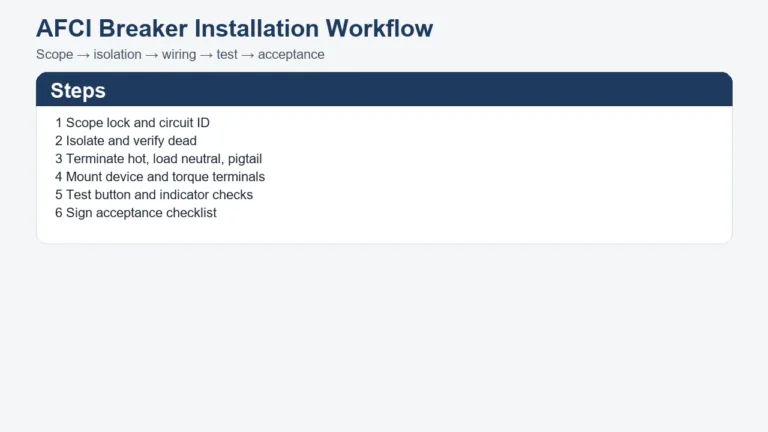
AFCI breaker installation for panel builders: isolation, load-neutral wiring, DIN-rail torque limits, test-button checks, and acceptance checklist fields.
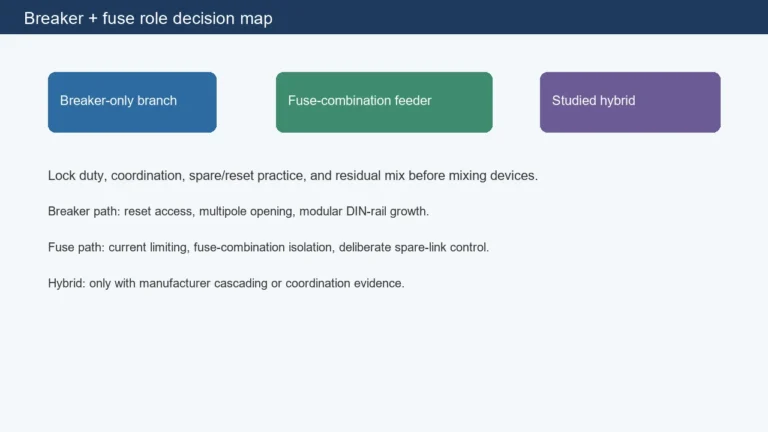
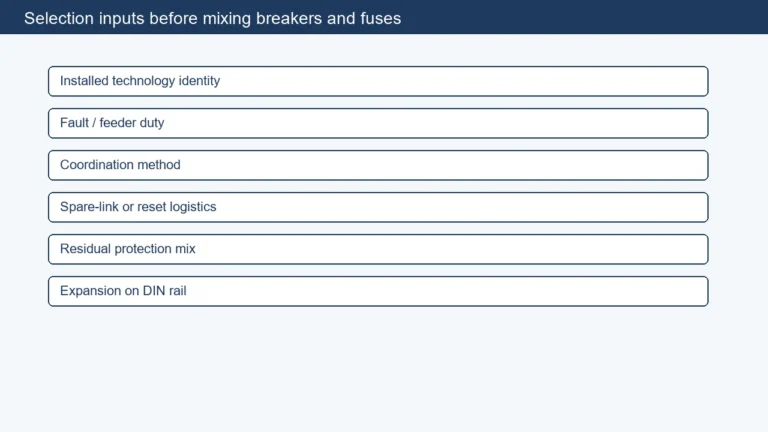
Breaker fuses mix breakers and fuse links in LV panels. Lock duty inputs, spare discipline, coordination boundaries, and modular DIN-rail routing.