


A home circuit breaker is a modular MCB or RCBO that protects individual branch circuits in a residential or light-commercial consumer unit—chosen by rated current, trip curve, pole count and whether that circuit needs integrated leakage protection. Contractors quoting a board should start from the circuit schedule, not from a single amp rating on the drawing alone.
For the wider device map, see the circuit breaker types guide. For operating principles, pair this page with the circuit breaker guide.
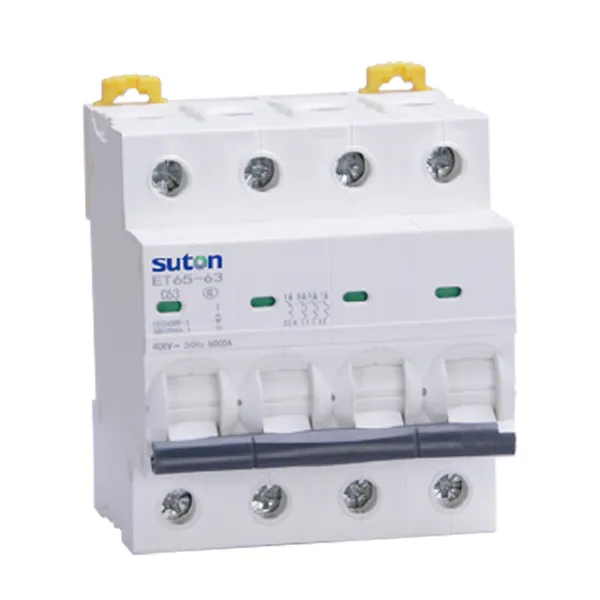
Part 1. What counts as a home circuit breaker in a consumer unit?
In distributor and contractor language, home circuit breaker usually means the modular devices on a DIN rail inside a consumer unit or small distribution board—not the molded-case incomer on a large commercial switchboard.
Typical scope includes:
- lighting and socket final circuits in houses, apartments and small retail units;
- HVAC and appliance feeders where current stays within modular frame limits;
- garage, outbuilding and landlord boards that reuse residential form factors.
The device still must meet the same engineering inputs as any LV breaker: voltage, rated current In, breaking capacity at the point of installation, and coordination with an upstream main switch or sub-main.
| Consumer unit zone | Common home circuit breaker class | Primary selection driver |
|---|---|---|
| Socket / general power | MCB or RCBO | Curve, leakage need, module width |
| Lighting | MCB | Curve B or C, pole count |
| Hob / shower / AC feeder | MCB or RCBO | In, curve, possibly larger frame |
| Upstream grouping | RCCB or RCBO bank | Leakage sensitivity, selectivity |
Use the distribution board sizing guide when the project moves from individual breakers to full enclosure layout.
Part 2. When is an MCB the right home circuit breaker?
MCBs remain the default home circuit breaker for overload and short-circuit protection on branch circuits where earth-leakage protection is provided elsewhere—or not required for that circuit in the project specification.
Panel builders should verify:
- Rated current In at or above design load with engineering margin.
- Breaking capacity Icn/Icu appropriate for prospective fault current at the consumer unit terminals.
- Curve matched to load inrush (see Part 4).
- Poles aligned with switching requirements for line and neutral.
SUTON publishes the DZ47 Series Miniature Circuit Breaker for modular residential BOMs. Compare module width and curve options in the datasheet before you freeze a consumer unit schedule.
Part 3. When should you specify an RCBO instead?
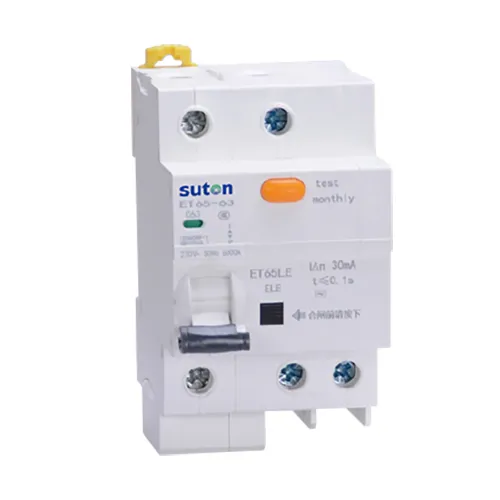
An RCBO combines overcurrent and residual-current protection in one module. It is the right home circuit breaker choice when a circuit needs both functions and panel space favors integration over a separate MCB + RCCB pair.
Specify RCBO when:
- socket circuits require individual leakage protection per project spec;
- cable runs are long or environmental conditions increase leakage risk;
- you want selective tripping at the circuit level while keeping a grouped upstream RCCB for other branches.
When the protection function is leakage-only at group level, an RCCB upstream of MCBs may be cheaper. Read the dedicated residual current circuit breaker guide before mixing RCCB, RCBO and AFCI requirements in one schedule.
Public RCBO example: DZ47LE Series Miniature Circuit Breaker.
Part 4. Which trip curve fits home lighting and socket loads?
Trip curve errors are a leading cause of nuisance tripping in residential commissioning.
| Load type | Typical curve starting point | Watch-out |
|---|---|---|
| General lighting | B or C | LED inrush on cheap drivers |
| Socket outlets | B or C | Multi-plug loads, vacuum cleaners |
| Small motors (garage door, fan) | C | Inrush duration vs magnetic trip |
| Heavier single-phase loads | C or D | Verify against manufacturer inrush data |
Curve choice is not a substitute for correct In. An oversized breaker reduces protection; an undersized curve trips on normal startup.
Document the assumed load category in the RFQ so the factory can confirm curve and frame.
Part 5. How do main switches and branch home circuit breakers differ?
A main switch (or load-break switch) provides isolation and sometimes serves as the panel’s visible disconnect—it is not a substitute for branch overcurrent protection unless specifically rated and coordinated for that dual duty.
Branch home circuit breakers protect individual outgoing circuits. The main device upstream must:
- carry the sum of diversified load current;
- have a breaking capacity at least equal to the panel’s prospective fault current;
- coordinate with downstream devices so faults clear at the lowest safe level.
For main-device selection language, see main switch selection for LV distribution panels. Do not confuse an isolator with an MCB on a final circuit.
Part 6. How do you plan module layout in a home board?
Module planning turns a circuit schedule into a buildable DIN rail layout.
- List every outgoing circuit with In, curve, poles and RCBO/RCCB need.
- Sum module widths including spares—contractors often reserve 20–25% free modules for future circuits.
- Place upstream RCCB or surge devices where the wiring schematic requires short cable runs to protected groups.
- Verify busbar rating against both thermal load and short-circuit duty; the busbar limits the assembly even if each breaker is individually rated.
- Check enclosure depth for RCBO bodies and wiring bend radius.
Fit Boundary
- Suitable when: you have a completed circuit schedule, prospective fault current at the board and a defined leakage strategy.
- Not suitable when: only a total dwelling load is known—expand to per-circuit data or mark the BOM as preliminary.
- Confirm before RFQ: number of ways, IP rating, indoor/outdoor enclosure (enclosure SKU may be RFQ/hold if not on public catalogue), neutral bar arrangement.
Part 7. Which SUTON modular lines fit home circuit breaker BOMs?
| Need | SUTON starting point | Notes |
|---|---|---|
| Branch MCB | DZ47 MCB | Final-circuit density |
| Branch RCBO | DZ47LE RCBO | Combined overload + leakage |
| Group RCCB / RCBO context | Modular DIN rail products | Full modular range |
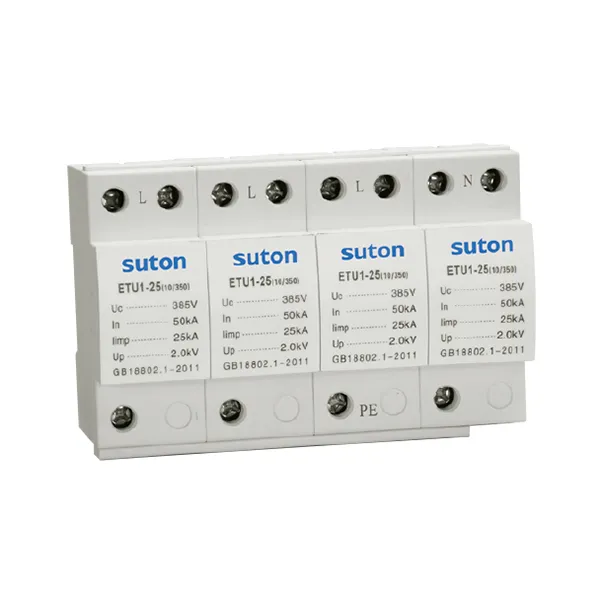
| Surge at consumer unit | ETU1 SPD | Add with short-circuit backup per spec |
Browse Products when a dwelling package mixes modular branches with a molded-case sub-main.
RFQ checklist: circuit schedule table, voltage, prospective fault current at board, main switch specification, module count, curve per circuit, RCBO/RCCB strategy, quantity and target market. Submit via Contact SUTON.
FAQ
What is a home circuit breaker?
A modular MCB or RCBO that protects an individual branch circuit in a residential or light-commercial consumer unit.
Should I use an MCB or RCBO in a home consumer unit?
Use an MCB when overload/short-circuit protection is enough and leakage is handled upstream; use an RCBO when that circuit needs integrated leakage protection in one module.
Which trip curve is right for home lighting and socket circuits?
Lighting and general sockets often start on curve B or C; motor-like or high-inrush loads may need C or D—confirm against actual load data.
What is the difference between a main switch and branch home circuit breakers?
The main switch isolates the whole board; branch breakers protect individual outgoing circuits. They serve different positions in the single-line diagram.
How many modules does a typical home circuit breaker layout need?
Add the module width of every device plus spares—commonly 20–25% free modules for future circuits after you total MCBs, RCBOs, RCCBs and SPDs.
What should distributors send in a home circuit breaker RFQ?
Circuit schedule, voltage, fault level at the board, In and curve per circuit, leakage strategy, module count, enclosure notes and quantity.