


60 amp wire size is a feeder-review question, not a universal gauge selection. A 60 A label must be read with the source arrangement, receiving panel, conductor construction, route, installation conditions, load duty, voltage-drop objective, protective-device role, terminal constraints and the rules governing the actual project.
That distinction matters most when the feeder serves another panel or a distant load. Ampacity and voltage drop are separate engineering checks, so a responsible enquiry documents both the thermal installation conditions and the electrical path rather than using the breaker label as the entire design brief.
Part 1. Why is a 60 A feeder not a one-number wire-size decision?
The word “feeder” changes the decision path. It usually links a source assembly to another distribution point, so the review must cover both ends of the path as well as the conductor between them. A chart result that omits the receiving panel, route and installation method cannot stand in for the final project design.
This is why real buyer questions pair 60 A with a garage panel, a detached shop or a remote building. The amp label remains relevant, but it does not reveal the route length, the conductor construction, the termination arrangement or the required voltage performance at the receiving end.
| Feeder decision area | Information to establish | Risk avoided |
|---|---|---|
| Source side | source assembly reference, available protective position and design duty | Treating an upstream label as a complete feeder specification |
| Receiving side | panel role, incoming terminals, enclosure and downstream loads | Selecting a cable before confirming how it interfaces with the panel |
| Conductor path | material, construction, route and installation arrangement | Copying a short-route example to a different thermal environment |
| Project context | location, governing rules and acceptance responsibility | Applying another market’s rule set by default |
The existing 60 amp breaker selection guide concentrates on the breaker-side question. This page instead collects the route and panel-interface inputs that make a feeder request reviewable.
Part 2. Which source and receiving-panel details define the feeder?
Start with two drawing references: where the feeder begins and where it ends. Identify the voltage system and circuit arrangement used by the project, then record what the receiving assembly must supply. These fields give the design authority a defined path to assess instead of a vague request for “wire for a 60 amp panel.”
The buyer should also state whether load data, diversity assumptions or future expansion are already defined by the approved design. If they are not defined, leave them as open design decisions; do not turn a commercial estimate into an unsupported capacity promise.
| Interface field | Buyer should provide | Why it matters |
|---|---|---|
| Source assembly | single-line reference and protective-device role | Clarifies where the feeder starts |
| Receiving assembly | panel reference, intended loads and incoming connection constraints | Clarifies what the feeder must serve and connect to |
| System arrangement | project voltage and circuit configuration | Supplies calculation context without assuming a national convention |
| Load basis | stated load duty and approved diversity information, if available | Separates project demand from a nominal feeder label |
| Responsibility | party that owns cable design, panel build and acceptance | Prevents an unassigned design decision |
This input set comes directly from the buyer-language in remote-panel Q&A: the questions supply a distance, a destination panel and a conductor material because those facts determine what can be reviewed.
Part 3. Which conductor and installation inputs affect ampacity review?
Record conductor material, cross-section, insulation designation and core arrangement before discussing a final selection. The installation description is equally important: containment, grouping, enclosure conditions, ambient exposure and the number of loaded circuits affect the thermal context used for current-carrying-capacity analysis.
Important: A feeder cable cannot be accepted from its nominal amp label alone. The responsible design authority must verify actual installation conditions, conductor data, protective-device coordination, terminals and applicable local rules. Cableizer’s ampacity documentation explains the need for conductor and thermal inputs.
Cableizer’s ampacity documentation makes the useful boundary clear: ampacity work is tied to conductor and thermal variables. The article does not publish a value because it has no project installation data and no authority to apply a local rule table.
Part 4. How should a long route be assessed separately?
Route length does not merely add metres to a quotation. It creates a voltage-drop review that is separate from thermal current-carrying capacity. The receiving panel may be remote, but the intended load behaviour and project performance requirement still need to be stated before the route can be assessed.
Use a drawing-based route where possible. A straight-line site estimate may omit vertical changes, containment detours or the return path assumptions needed by the design method. State the project’s voltage-drop objective or governing reference instead of importing a generic percentage from a different market.
| Route review field | Buyer should provide | Decision protected |
|---|---|---|
| Physical route | drawing-based length and containment path | Makes route assumptions visible |
| Electrical arrangement | voltage system and circuit configuration | Gives the reviewer the necessary circuit context |
| Operating load | duty and behaviour expected at the receiving panel | Avoids assessing an undefined load profile |
| Performance target | project voltage-drop objective or rule reference | Avoids inventing an acceptance value |
Cableizer’s voltage-drop documentation treats voltage drop as a separate calculation subject. That is why a remote-panel request requires route and load context even when a nominal 60 A rating has already been stated.
Part 5. How do protection and terminal constraints fit the feeder decision?
Feeder selection has to close at the components, not just on a calculation sheet. The protective-device role, conductor terminations, enclosure space and receiving-panel incoming connection all need to align with the approved design. A cable that looks suitable in isolation may still be unsuitable if the proposed termination or protection arrangement does not match the design documentation.
Use protection and terminal coordination as a design-review boundary, not as a claim that any one public product or cable automatically satisfies the requirement.
For a wider feeder comparison, the 150 amp breaker guide covers a larger nominal breaker requirement. The contrast is useful: changing the rating does not remove the need to document route, terminals and governing rules.
Part 6. When should a buyer review a SUTON molded-case route?
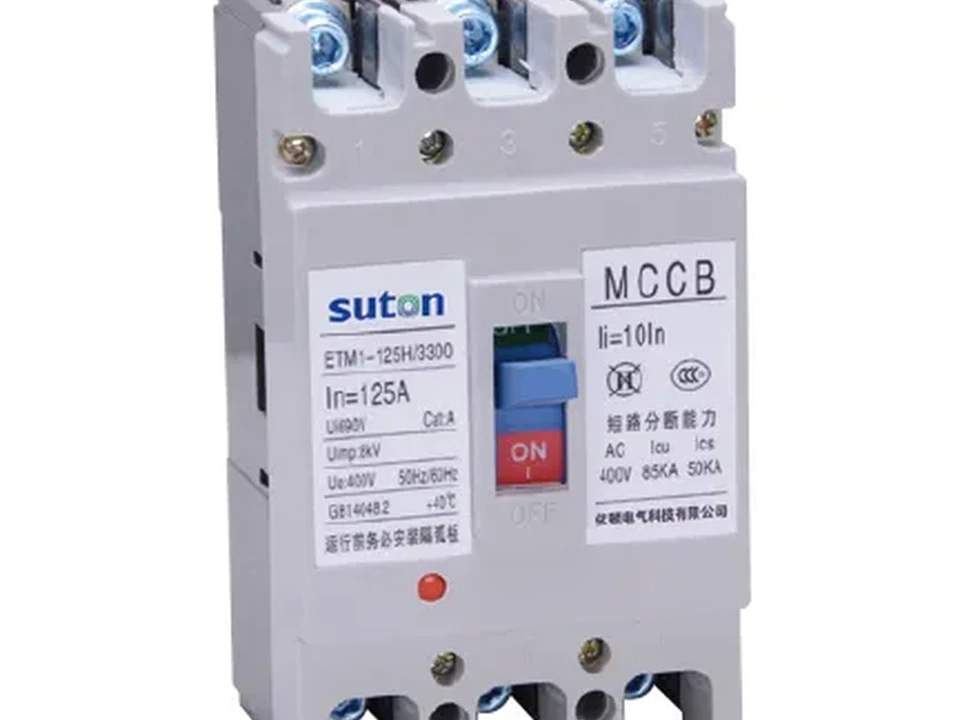
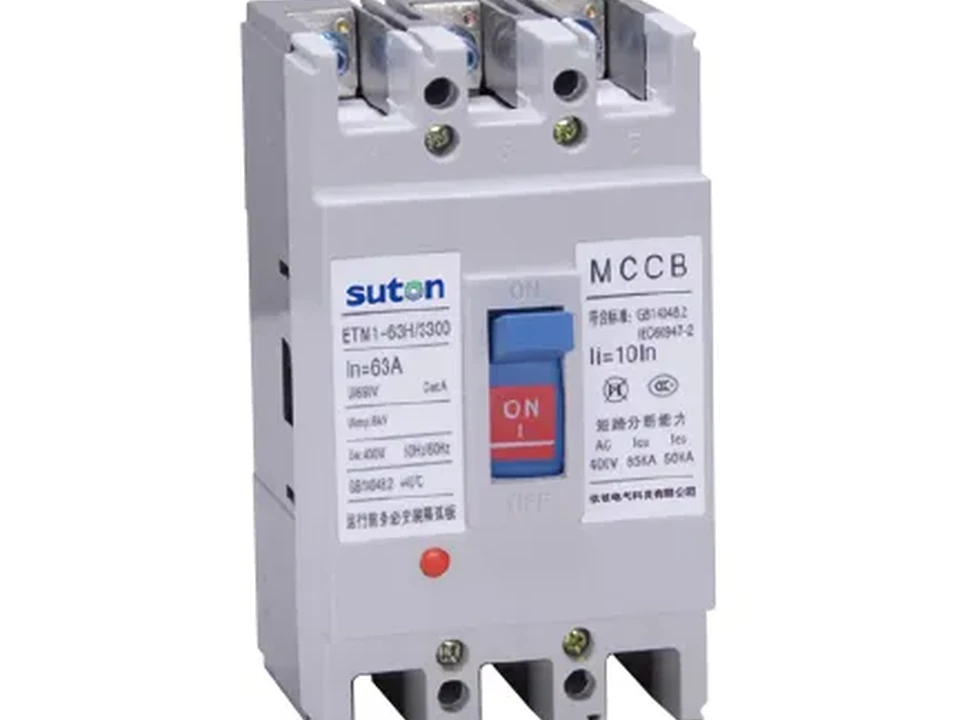
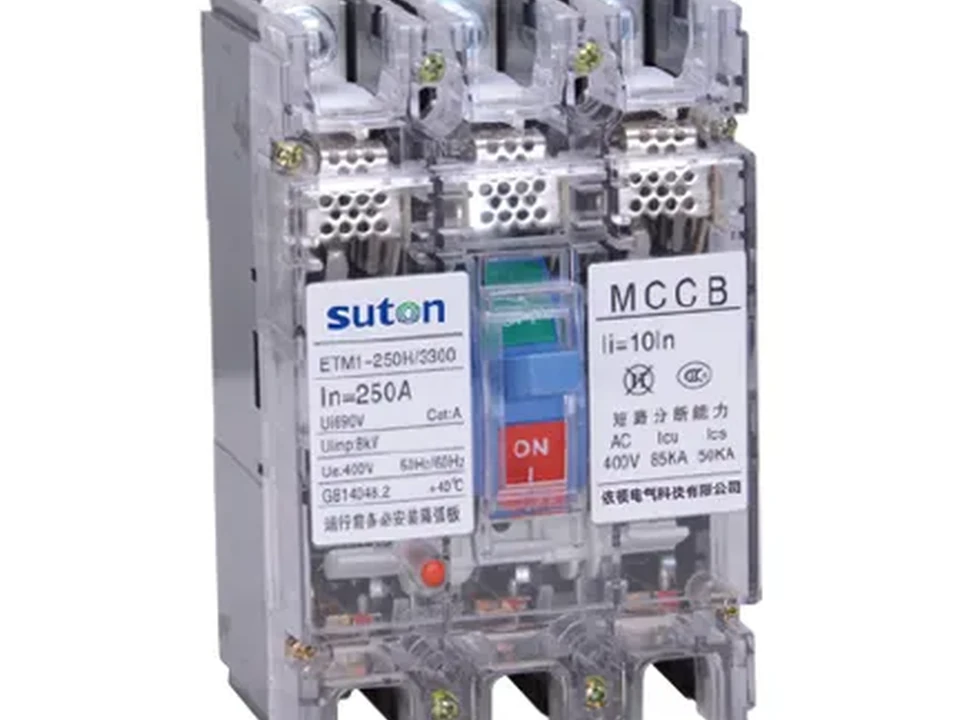
Once feeder inputs are complete, the buyer can discuss a suitable product family. SUTON publishes molded case circuit breakers and an ETM1 Series Molded Case Circuit Breaker route.
The public route is a starting point for product-family discussion, not a feeder design conclusion. Confirm the required pole arrangement, protective duty, terminal capability, approved design and applicable product data before deciding that a model belongs in a specific 60 A feeder.
Send feeder details for product-route discussion with both single-line references, conductor construction, route and installation description, load information, voltage-drop objective, terminal constraints, location and governing rules. This guide supports a B2B review request; it does not replace a qualified local feeder design.
FAQs
Is 60 A enough to select a feeder conductor?
No. It is only one input. A feeder review also needs the source and receiving assemblies, conductor construction, installation conditions, route length, load duty, voltage-drop objective, terminals and governing project rules.
What differs between a feeder and a branch-circuit review?
A feeder review has to define both distribution interfaces as well as the conductor route. The receiving panel, its intended loads and its incoming connection constraints are therefore central inputs.
Why do source and receiving-panel details matter?
They show where the feeder begins, where it ends and what connection conditions apply. Without those details, an amp label cannot establish the relevant protective role or terminal arrangement.
Does distance change a 60 A feeder review?
Yes. Distance introduces a voltage-drop review. Use the actual drawing-based route, system arrangement, load behaviour and project performance target rather than a generic long-run example.
Is voltage drop the same as ampacity?
No. Ampacity concerns thermal current carrying under stated installation conditions; voltage drop concerns electrical performance along the route. A feeder review should keep the two checks distinct.
What belongs in a 60 A feeder RFQ?
Provide the source and receiving-panel references, system arrangement, conductor material and construction, route and installation method, ambient and grouping conditions, load basis, voltage-drop objective, protective-device role, terminal constraints, location and governing rule set.