


A 200 amp breaker selection is complete only when “200 A” is tied to a specific device class, frame, pole arrangement, system voltage, trip unit, conductor-protection basis and fault duty. SUTON’s public ETM1 table includes 200 A, but the rating alone does not identify the final configuration.
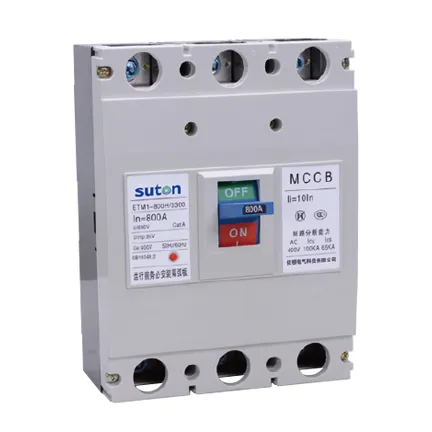
Confirm that the requirement is for a breaker
Search results often mix a 200 A MCCB with a 200 A panel or service. A panel rating describes an assembly boundary; a breaker rating describes a protective device under stated conditions. Record which object the project actually requires before comparing products.
The circuit-breaker types guide helps separate MCB, MCCB and ACB roles. At 200 A in an LV feeder or incomer application, an MCCB is commonly the relevant class, but the project design remains controlling.
Keep frame, rated current and trip behavior separate
| Selection field | Required evidence | Common error |
|---|---|---|
| Rated current | protected circuit design and available device rating | treating 200 A as the complete model |
| Frame | manufacturer frame table and physical panel constraints | assuming frame rating equals the trip rating |
| Poles | system earthing and switching/protection requirements | copying a pole count from another project |
| Voltage/frequency | actual system data | checking current while ignoring voltage scope |
| Trip unit | overload, short-circuit and optional ground-fault requirements | assuming every family member has the same functions |
| Breaking capacity | prospective short-circuit calculation | using a catalogue maximum without matching the selected grade |
| Coordination | upstream/downstream device study or manufacturer table | claiming selectivity from rating differences alone |
| Environment | ambient, altitude, enclosure and connection conditions | ignoring correction or derating needs |
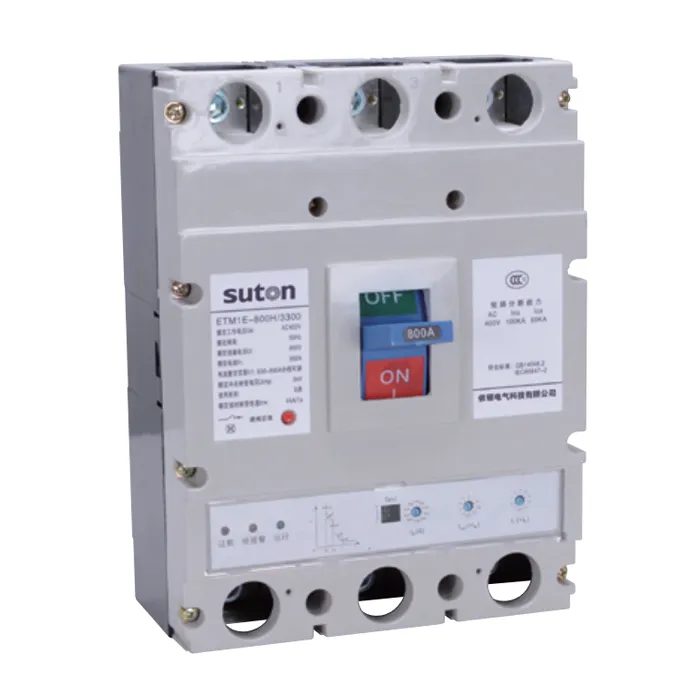
The live 125 amp breaker guide covers a lower adjacent feeder rating. It should not be used to interpolate 200 A performance; the selected frame and device data must be checked directly.
Check conductor protection before approving 200 A
The conductor calculation establishes a protection boundary. Material, cross-section, insulation class, installation method, grouping, ambient temperature and applicable rules can all change the allowable current.
Do not use a universal wire-size table from a general article as the project record. Attach the actual conductor calculation to the MCCB selection, and revisit it if the rating or trip setting changes.
Prepare the 200 A MCCB handoff
Include:
- circuit role—feeder, incomer, motor circuit or other duty;
- design current and load profile;
- conductor and installation data;
- system voltage, frequency and poles;
- required frame and fixed/adjustable trip arrangement;
- prospective short-circuit current;
- required Icu/Ics or equivalent project criteria;
- coordination and service-continuity requirement;
- ambient, altitude and enclosure conditions;
- operating mechanism, terminals and accessories;
- standard, certificate and test-evidence requirements.
This record lets engineering and procurement evaluate the same device rather than two different interpretations of “200 amp breaker.”
Start the 200 A MCCB review with ETM1
The SUTON ETM1 Series MCCB public table includes 200 A. The page describes the ETM1 family as covering 10–1250 A, for 50 Hz AC systems with rated operating voltage up to 690 V, and lists IEC 60947-2 and GB/T 14048.2 as applicable standards.
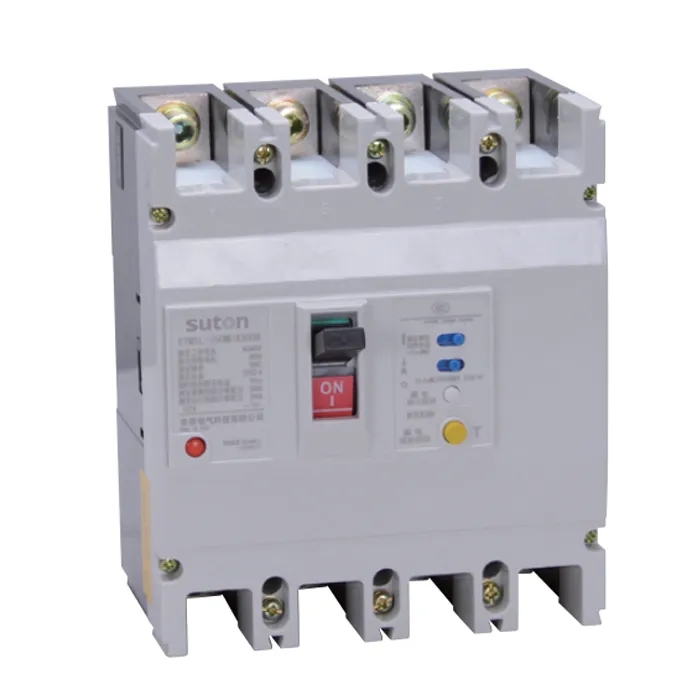
Use the molded-case circuit-breaker category to compare verified function paths. ETM3E measurement functions or ETM1L residual-current protection are separate family decisions; do not assume they are included in a base ETM1 200 A request. Ask SUTON to confirm the exact frame, poles, breaking-capacity grade, trip arrangement and documentation before releasing the BOM.