


Use this disconnect switch guide to turn a short request into an engineering review with traceable panel inputs.
Related reading: Circuit Breaker Guide and MCCB Breaker Guide.
Part 1. What is a disconnect switch in an LV panel?
A disconnect switch provides a visible or documented isolation means so work can proceed under the approved safety procedure. It is selected for isolation duty, poles, voltage, current, short-circuit withstand or conditional rating, enclosure, operator access and locking provisions.
| Decision input | Why it matters | Send with quote |
|---|---|---|
| Isolation location | Incomer, feeder, machine or maintenance point | Yes |
| Poles / load type | AC/DC and switched conductors | Yes |
| Withstand / fuse combination | Fault duty at the isolation point | Yes |
| Locking / enclosure | Safe working and access rules | Yes |
Important: a disconnect switch is not automatically a circuit breaker; protective and isolation functions must stay distinct unless the design specifies a combined device — source: IEC product/assembly selection practice.
Part 2. How does isolation differ from overcurrent protection?
Isolation creates a safe working boundary. Overcurrent protection clears overload and fault current according to its marked characteristics. Keep both roles named on the single-line diagram.
Part 3. Which application inputs control selection?
Record utilization category, making/breaking needs if any, available fault duty, earthing arrangement, ambient conditions, operator position, padlocking, emergency access and whether the device must be operable under load.
Part 4. What installation details change the result?
Door interlocks, handle projection, shaft length, terminal shrouds, cable entry and maintainable clearances affect whether the isolator can be used as intended.
Part 5. How should commissioning verify isolation points?
Prove open position indication, locking facility, terminal integrity, earthing continuity where required, and that the isolation point matches the procedure used by the panel owner.
Part 6. Where can SUTON product routes fit?
Send with the inquiry: State isolation location, poles, voltage, current, fault duty, utilization category, enclosure, locking, standards and quantity. Fit Boundary: this guide documents isolation inputs; it does not certify a safe working method or approve a device without project procedure and datasheet review.
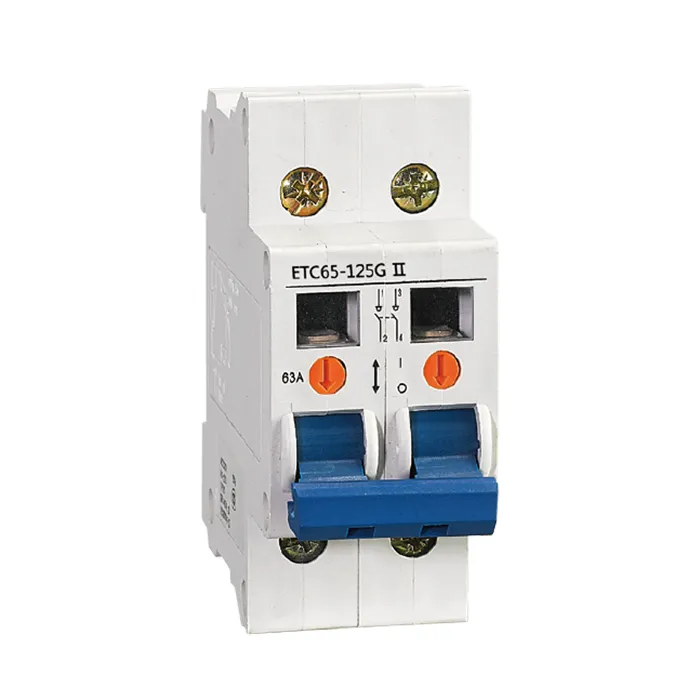
Review SUTON’s DZ47-125G miniature switch disconnector and modular DIN rail products as public isolation category routes only. Confirm isolation markings and instructions against the drawing, then send the isolation schedule through Contact SUTON for model-level discussion.
Verification workflow
Before comparing quotations for disconnect switch, create a controlled worksheet that maps this exact phrase to the approved drawing, duty profile, protective roles, interfaces, environment and acceptance criteria for the disconnect topic family. Reject look-alike substitutions that only match a familiar label.
When installing the chosen disconnect switch hardware, reconcile markings, terminals, accessories, wiring diagram and test instructions against the released schedule for this article topic. Retain the disconnect switch inspection pack in the panel dossier so future maintenance starts from evidence rather than assumptions.
FAQ
Is a disconnect switch the same as a breaker?
Not by default. Isolation and overcurrent protection are separate duties unless the design specifies a combined device.
What determines poles and switching?
The conductors that must be isolated, the supply arrangement, and the approved safety procedure.
Does every isolator break load current?
No. Confirm utilization category and load-break requirements before ordering.
Why record fault duty at the isolation point?
Withstand or fuse-combination ratings must match the available fault conditions.
What should commissioning prove?
Open indication, locking, terminations, and alignment with the authorized isolation procedure.
What belongs in a disconnect switch RFQ?
Include location, poles, ratings, fault duty, enclosure, locking, standards and quantity.