


A circuit breaker is an automatic switch that interrupts current when overload, short-circuit or defined fault conditions exceed safe limits—using thermal, magnetic or electronic elements that can be reset after the fault is cleared. For panel builders, the device is selected by location in the diagram, rated current, breaking capacity and coordination with upstream protection.
Readers comparing device classes should also review circuit breaker types for panel builders for the MCB/MCCB/ACB map.
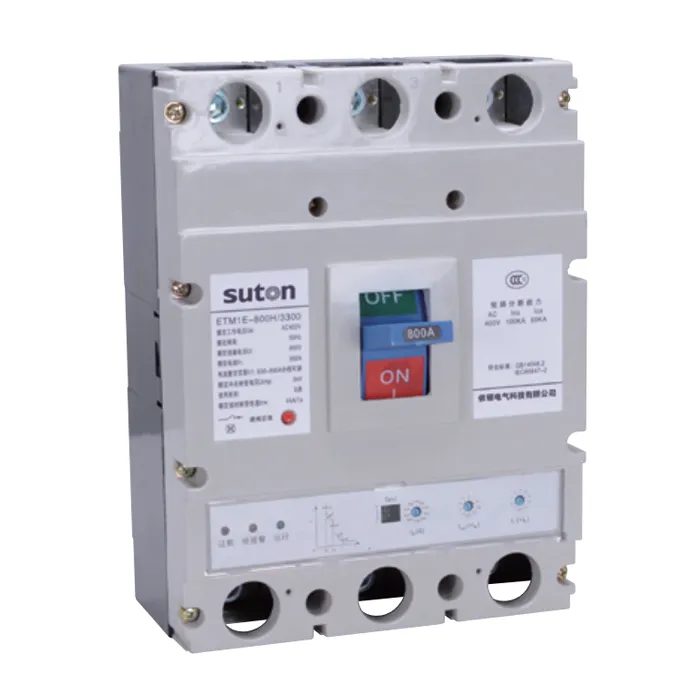
Part 1. What does a circuit breaker do in a distribution panel?
In every LV board, a circuit breaker is both a switching device and a protective device. Under normal load it carries rated current. When current or fault energy rises beyond the device’s calibrated limits, the trip unit releases the mechanism and separates contacts to stop energy flow.
That behavior protects:
- conductors from sustained overheating;
- downstream equipment from damage during short circuits;
- maintenance teams from re-energizing a known fault when the handle shows tripped status.
Distribution hierarchy still matters: the same generic term circuit breaker covers modular MCBs on a DIN rail, molded-case feeders and air incomers. Use the circuit breaker types guide when you need the class map before device selection.
Part 2. How does a circuit breaker detect faults?
Most LV breakers combine two detection paths:
| Mechanism | Responds to | Typical device examples |
|---|---|---|
| Thermal (bimetal or electronic memory) | Sustained overloads slightly above rated current | MCB, MCCB thermal-magnetic units |
| Magnetic (solenoid) | High-magnitude short-circuit currents | MCB, MCCB instant trip elements |
| Electronic / microprocessor | Adjustable overload, short-time, earth-fault algorithms | Larger MCCB and ACB trip units |
Electronic trip units—such as those on intelligent molded-case lines—let panel builders set overload curves and diagnostic measurements, but they still require the same inputs: rated current, voltage and prospective fault level.
Part 3. What happens inside when a circuit breaker trips?
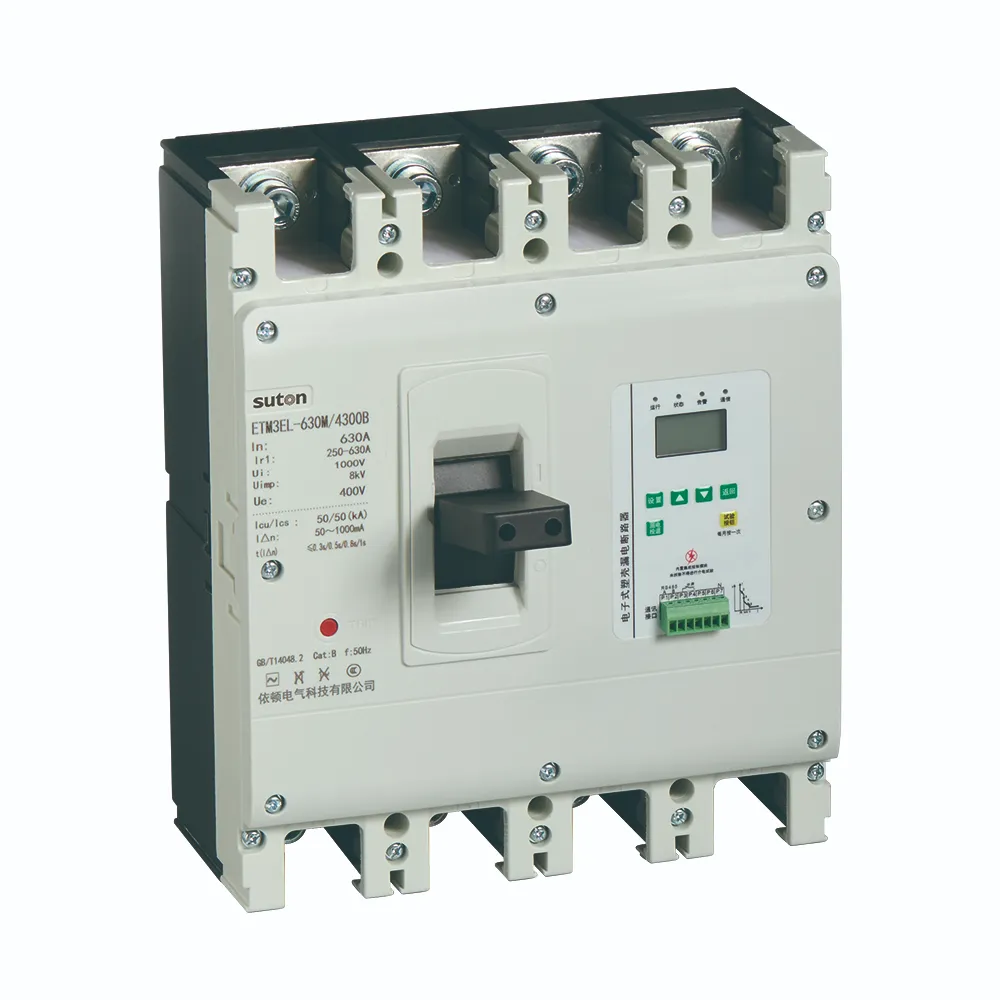
When the trip unit actuates, a stored-energy mechanism drives the moving contact away from the fixed contact. An arc forms as current continues briefly across the gap; arc chutes split and cool the plasma until current falls to zero.
Operators see the handle in a middle tripped position—distinct from off. That visual state is one reason breakers are preferred over fuses in circuits that trip occasionally during commissioning or motor starts.
Qualified personnel should inspect the circuit before reclosing. Document the cause when a breaker trips repeatedly on the same feeder.
After investigation, qualified personnel reset the breaker only when the fault cause is removed. Repeated tripping on the same circuit points to undersized protection, wrong curve, mechanical damage or an actual persistent fault.
Part 4. How is a circuit breaker different from a fuse or switch?
| Device | Protects against overcurrent | Resettable | Typical use |
|---|---|---|---|
| Circuit breaker | Yes | Yes | Branch, feeder and incomer protection |
| Fuse | Yes | No (replace element) | Simple, low-maintenance protection |
| Load-break switch / isolator | No (not a full overcurrent device alone) | Yes | Visible isolation for maintenance |
Do not use an isolator alone where overcurrent protection is required. SUTON lists switch-disconnector products separately from breakers—see ETGL load-break switch for isolation duty, not as a substitute for calculated short-circuit protection.
For leakage and shock protection, pair overcurrent breakers with residual current circuit breaker guidance where the specification calls for earth-fault detection.
Part 5. What ratings must panel builders verify?
Minimum data set for any circuit breaker specification:
| Parameter | Why it matters |
|---|---|
| Rated operational voltage Ue | Insulation and testing category |
| Rated current In | Continuous load capability |
| Rated breaking capacity Icu / Ics | Must exceed prospective fault current |
| Number of poles | Phase, neutral and earth switching needs |
| Utilization category | AC vs DC, PV circuits need DC-rated devices |
| Ambient / installation conditions | Temperature, altitude, enclosure derating |
Public SUTON product pages list series-level features; project-specific Icu values must be confirmed in the datasheet for the exact frame and voltage.
Part 6. How do you size a circuit breaker without nuisance tripping?
Sizing is a balance between protection and operability:
- Load current: In should be at or above continuous load, with margin per engineering practice.
- Inrush: motors, transformers and LED drivers need curve C/D or electronic delay—see motor circuit protector guide for coordinated motor branches.
- Fault level: Icu must clear the maximum prospective fault at the terminals.
- Selectivity: upstream devices should coordinate with downstream breakers to minimize outage area.
Fit Boundary
- Works well when: load type, duty cycle and fault study are documented.
- Poor fit when: only nominal current is known—add curve, poles and Icu before ordering.
- Escalate to engineering: mixed generator/utility sources, high harmonic loads, or DC PV strings without a DC-rated breaker.
Part 7. Where do SUTON circuit breakers fit your panel design?
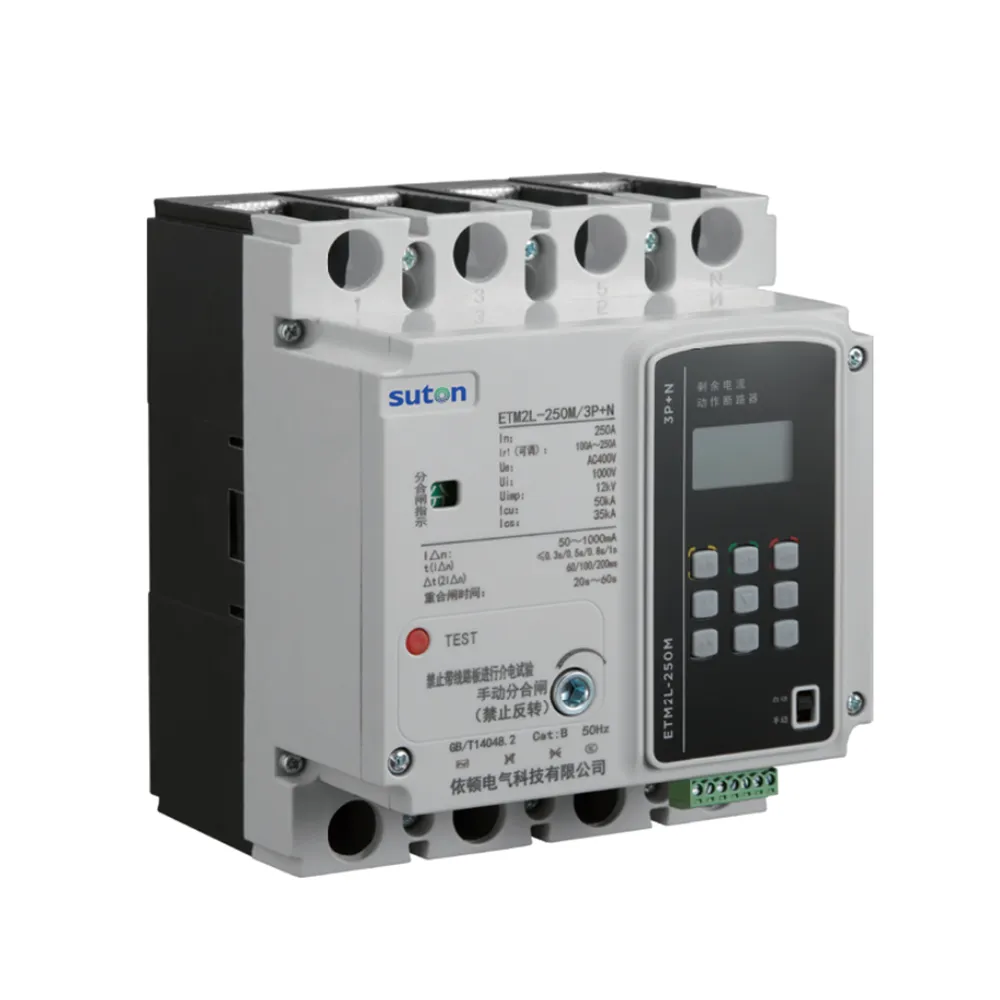
Route by panel job function:
| Job | SUTON entry point |
|---|---|
| Dense final circuits | Modular DIN rail products and DZ47 MCB |
| Feeders / metering / intelligent MCCB | ETM3E intelligent measurement MCCB |
| Leakage + overload in molded case | ETM3EL electronic RCCB MCCB |
| PV on-grid protection | ETM2L PV on-grid MCCB |
| Main incomer class | ETW3 intelligent ACB |
Browse the full Products catalogue when a project mixes several positions in one BOM.
RFQ checklist: application diagram position, voltage, In, Icu requirement, trip type, poles, quantity, target market, delivery window. Send through Contact SUTON for model confirmation.
FAQ
What is a circuit breaker?
An automatic switch that opens a circuit when current or fault conditions exceed safe limits, protecting conductors and equipment.
How does a circuit breaker work?
Sensors detect overload or short-circuit current, release a latch, separate contacts and extinguish the arc in arc chutes.
Why does a circuit breaker trip?
Sustained overload, short circuit, ground fault (on RCBO/RCD devices) or arc-fault conditions (on AFCI devices) exceed the calibrated trip threshold.
Can a circuit breaker replace a fuse?
Functionally yes for overcurrent protection, but selection must still match voltage, In and breaking capacity—breakers are resettable, fuses are not.
What information should I send a manufacturer for a circuit breaker RFQ?
Voltage, rated current, prospective fault level, panel position, trip curve or electronic spec, poles, quantity and installation environment.
When should I read a circuit breaker types guide instead of this page?
Use a types guide when you need the MCB/MCCB/ACB class map; use this page when you need operating principle, trip behavior and sizing inputs.