


Circuit breaker types in low-voltage distribution are grouped by construction class and panel position: MCB for final circuits, MCCB for feeders, ACB for main incomers, with RCBO, AFCI and SPD devices added when the protection function requires them. Choosing the right type starts with where the device sits in the single-line diagram—not with a catalogue keyword alone.
Panel builders sizing a new board should read the site’s molded case circuit breaker definition alongside this type map.
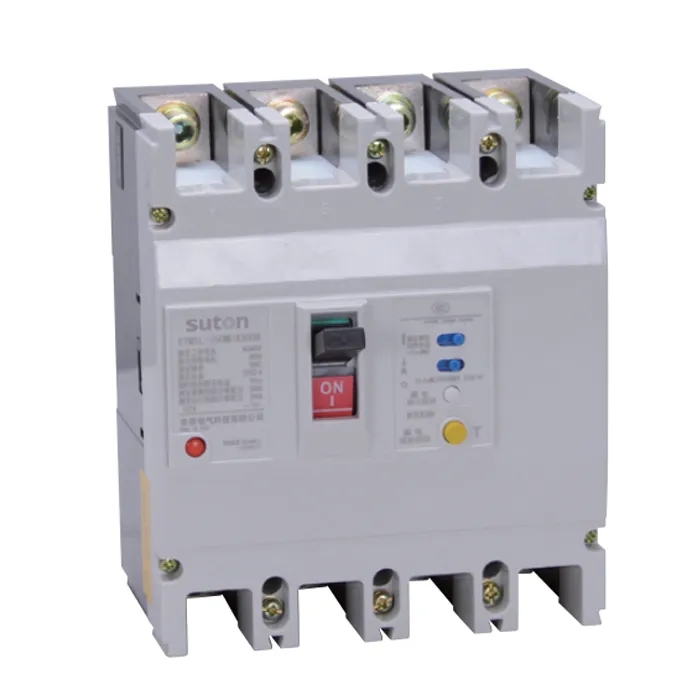
Part 1. How are circuit breaker types organized in a LV panel?
If you are quoting a distribution board, map each outgoing point to a protection class before you compare brands.
Final lighting and socket circuits usually terminate in miniature breakers on a DIN rail. Sub-feeders and motor branches move into molded-case frames. The main incomer—where available fault current is highest—often justifies an air circuit breaker with a higher interrupting duty and service access.
| Panel position | Common circuit breaker type | Typical standard reference | Primary selection driver |
|---|---|---|---|
| Final circuit | MCB / RCBO | IEC 60898-1 (MCB) | Load current, curve, module width |
| Sub-feeder / motor | MCCB | IEC 60947-2 | In, Icu/Ics, adjustable trip |
| Main incomer | ACB or large MCCB | IEC 60947-2 | In, Icu, selectivity, maintenance |
| Surge / leakage adjunct | SPD, RCCB, RCBO | IEC 61643 / 61008 family | Protection function, not overload alone |
This hierarchy mirrors how IEC 60947-2 separates molded-case and air breakers from the MCB rules in IEC 60898-1. It is a design framework—your project’s fault study still sets the minimum breaking capacity.
Part 2. When is an MCB the right circuit breaker type?
MCBs are compact thermal-magnetic (or electronic) breakers built for high-density final distribution. On a DIN rail assembly they protect individual branch circuits where fault levels at the point of installation are relatively low compared with the main bus.
- Current range: typically up to 125 A per pole in standard modular frames.
- Breaking capacity: commonly 6–10 kA Icn class for household and similar duty; verify the marking for your voltage.
- Trip curves: B, C and D curves trade sensitivity against inrush—motors and transformer energizing often need C or D, not a default B curve.
- Physical form: 18 mm or 27 mm modules; group them with DIN rail mounting context when you plan busbar clearances.
For procurement, the public DZ47 Series Miniature Circuit Breaker page is SUTON’s modular starting point. Pair leakage protection with DZ47LE where an RCBO function is required.
Part 3. When should panel builders specify an MCCB?
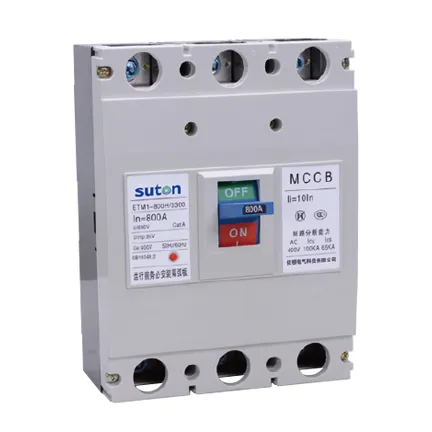
MCCBs use a molded insulating case, larger contacts and arc chutes sized for higher let-through energy than modular MCBs. They appear on feeder circuits, motor protection branches and commercial distribution boards where adjustable thermal-magnetic or electronic trips are needed.
Compared with MCBs, MCCBs generally offer:
- higher rated current per device (tens to hundreds of amperes in typical frames);
- higher declared breaking capacity (Icu) for the same voltage level;
- field-adjustable overload and short-time settings on many frames;
- suitability for coordination studies between upstream and downstream devices.
When your search intent is device-level selection inside the MCCB class, continue to the dedicated MCCB selection guide rather than duplicating frame tables here. At category level, see molded case circuit breakers and the ETM1 Series MCCB product page for series-level RFQ.
Part 4. Where do ACBs fit compared with large MCCBs?
ACBs are air-insulated breakers engineered for main distribution paths. They are chosen when rated current, interrupting duty or maintainability requirements exceed practical molded-case limits—especially for withdrawable switchgear and main bus ties.
- Position: service entrance, main incomer, bus coupler.
- Duty focus: high Icu, long service life on high-energy operations, often with draw-out mechanisms in OEM switchgear.
- Trip units: electronic LS/I or LSIG functions for selective coordination with downstream MCCBs.
SUTON publishes the ETW3 Series Intelligent Air Circuit Breakers for ACB-class discussions. Do not substitute an ACB where an MCCB already meets the fault study—oversizing adds cost and panel depth without safety benefit.
Part 5. What about RCBO, RCCB, AFCI and SPD types?
Not every “breaker type” is an overload device. Some modules add protection functions:
| Device type | Primary risk addressed | Typical placement |
|---|---|---|
| RCCB / RCD | Earth leakage shock | Grouped upstream of socket circuits or entire board |
| RCBO | Overload + leakage in one module | Final circuits needing both functions |
| AFCI / arc-fault | Parallel arc faults on branch wiring | Jurisdictions or specs requiring arc detection |
| SPD | Surge transients | Upstream of sensitive electronics, often with short-circuit backup |
SUTON’s arc fault circuit breaker guide and residual current circuit breaker guide cover two common adjunct types. Modular SPD example: ETU1 Series Surge Protective Device.
Part 6. How do you match type to current, Icu and trip curve?
Selection tables should be filled from the project’s electrical study, not from marketing ranges alone.
| Input from study / client | Drives which circuit breaker type |
|---|---|
| Rated load current In | Minimum frame size |
| Prospective fault current at device | Minimum Icu (and Ics where relevant) |
| Load category (lighting, motor, heater) | Trip curve or electronic trip profile |
| Selectivity requirement | Upstream/downstream type pairing (ACB→MCCB→MCB) |
| Physical envelope | DIN module count vs molded-case footprint |
Fit Boundary
- Suitable when: you have single-line position, voltage, design current and fault level for each device location.
- Not suitable when: only a generic keyword such as “100 amp breaker” is provided without curve, poles or Icu—build a hold note instead of guessing a type.
- Confirm before RFQ: number of poles, neutral/earth arrangement, indoor IP, altitude and ambient temperature corrections.
Part 7. Which SUTON lines match common circuit breaker types?
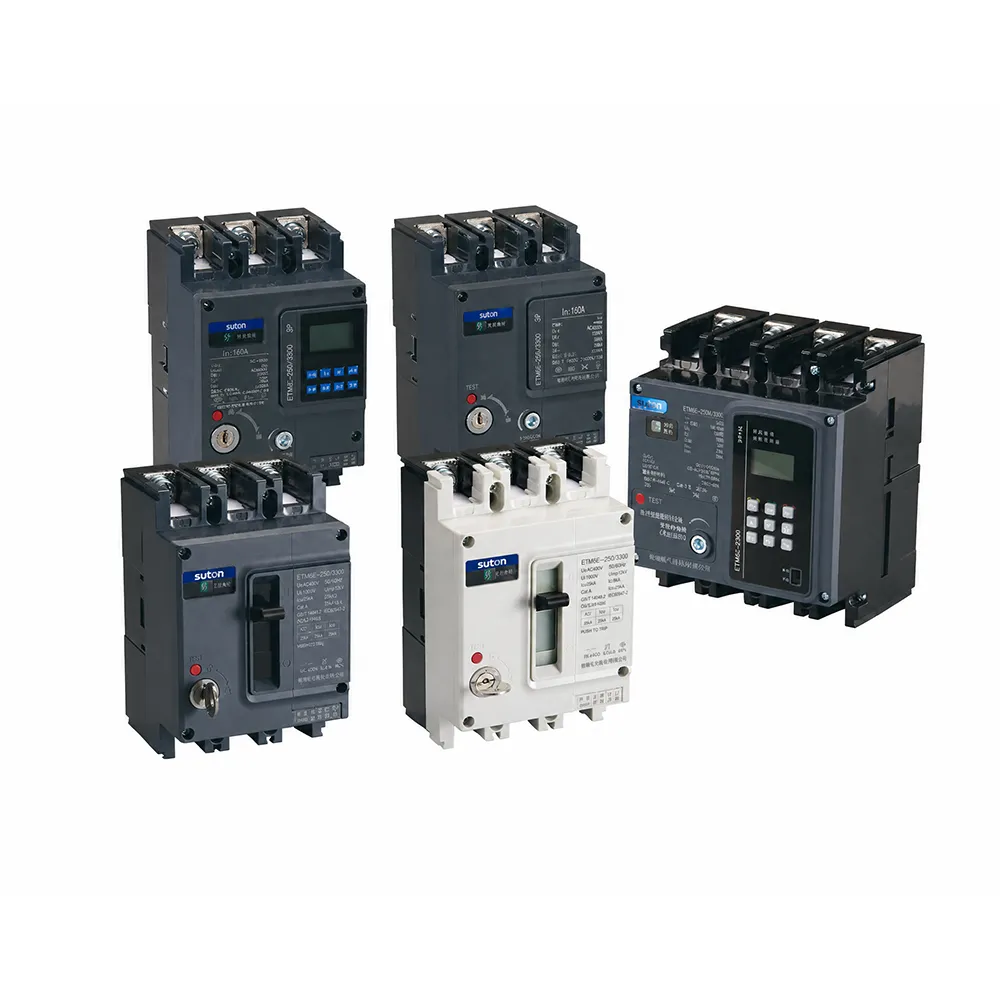
Use this routing table to move from circuit breaker types to public SUTON pages—then send engineering data for confirmation.
| Type need | SUTON starting page | Why start here |
|---|---|---|
| Modular MCB / RCBO | Modular DIN rail products | Final-circuit density and width |
| MCCB / intelligent MCCB | Molded case circuit breakers | Feeders, motors, adjustable trips |
| ACB | ETW3 intelligent ACB | Main incomer conversations |
| PV-specific MCCB | PV systems | DC/AC PV protection context |
IoT-enabled molded-case frames such as the ETM6E Series belong in the MCCB class even when marketing uses “smart breaker” language.
RFQ inputs to attach: panel position, voltage, In, minimum Icu, trip curve or electronic trip spec, number of poles, quantity, delivery market, and any OEM label requirement. Use Contact SUTON with those fields for specification support.
FAQ
What are the main types of circuit breakers in LV panels?
The main classes are MCB for final circuits, MCCB for feeders, ACB for main incomers, plus specialized RCCB/RCBO, AFCI and SPD modules where the protection function requires them.
What is the difference between MCB and MCCB?
MCBs are compact modular devices for branch circuits under IEC 60898-1 duty. MCCBs are larger molded-case devices under IEC 60947-2 for higher current and breaking capacity.
When should you use an ACB instead of an MCCB?
When the incomer current, interrupting duty or maintainability requirements exceed practical molded-case limits—typically main switchgear positions backed by a fault study.
What does breaking capacity (Icu) mean for a circuit breaker?
Icu is the maximum prospective short-circuit current the breaker can interrupt under specified test conditions. The installed device’s Icu must exceed the calculated fault current at that location.
How do I choose a circuit breaker for a distribution panel?
Start from single-line position, load current, fault level and coordination needs—then pick MCB, MCCB or ACB class before comparing series and frames.
How do MCB, MCCB and ACB work together in one panel?
Upstream devices should coordinate so a fault clears at the lowest device that can safely interrupt it—typically ACB or main MCCB upstream of feeder MCCBs and modular MCBs on final circuits.