

ACB closing, opening and undervoltage coils perform different control jobs. A closing release commands a ready breaker to close; an opening or shunt-trip release commands it to open; an undervoltage release responds when its monitored supply falls below the model’s defined range. None should be selected from appearance alone. Confirm the exact ETW3 accessory code, control voltage, coil duty, terminal diagram and interlock sequence, then test each command under the approved safe-work procedure. The public product page lists undervoltage options but does not document every accessory combination.
Separate the three operating functions
Closing, opening and undervoltage releases are not interchangeable accessories. A closing release issues an electrical command to close a breaker whose stored-energy mechanism and permissives are ready. An opening or shunt-trip release issues a remote opening command when energized according to its design. An undervoltage release responds to loss or reduction of its monitored supply and can inhibit closing or cause opening, depending on the device. Exact pick-up/drop-out behavior, duty and control-voltage range belong to the selected manufacturer’s manual.
The Electrical Installation Guide’s switchgear-maintenance section describes remote opening, closing and undervoltage functions as distinct auxiliary circuits. The IEC 60947-2 circuit-breaker product-standard page supplies product context. Neither source validates an undocumented terminal assignment on a SUTON breaker. Use the exact assembly drawing and accessory code for all field wiring.
| Accessory | Typical command or condition | Key selection check |
|---|---|---|
| Closing release | Electrical close command | Stored-energy state, interlocks and coil duty |
| Opening / shunt-trip release | Electrical open command | Trip-signal duration and source reliability |
| Undervoltage release | Voltage below model-defined limit or loss of supply | Supply source, reset and reclose behavior |
| Auxiliary contact | Reports position or mechanism state | Contact rating and truth table |
| Trip unit | Detects electrical fault | Sensor, protection settings and test method |
The table is functional, not a wiring specification. Accessory behavior and terminology vary by ETW3 configuration.
Understand what a close command can and cannot do
A closing release does not override a mechanical or electrical interlock, charged-spring requirement, undervoltage condition or unresolved trip state. The control scheme must make the breaker ready before issuing the command. Record whether the closing signal is momentary or held, the permissible coil duty, control-voltage tolerance and any anti-pumping function from the manufacturer documentation. If the close command does nothing, first check permissives and indication rather than increasing voltage or bypassing an interlock.
A remote close can energize a large section of switchboard. Treat it as an operational action with consequences for personnel and downstream equipment. Confirm the operator can identify the correct breaker and that local/remote modes and interlocks behave as designed. A digital “closed” message or auxiliary contact is not a substitute for required isolation verification.
Distinguish an opening release from protective tripping
An opening coil may be driven by a pushbutton, emergency command, fire or process interlock, remote controller or another approved input. Its circuit needs a reliable power source and a verified pulse or duty period. A protective electronic trip unit may operate a separate internal mechanism. Do not assume the remote opening coil and overcurrent trip path are identical just because both end with open main contacts.
Check whether the release is continuously rated or intended for a defined short-duration command. Holding a coil energized beyond its rating can damage it. Review auxiliary contacts or control logic used to remove the command after operation, using the exact wiring diagram. Where the opening path is part of an emergency system, test the whole initiating-to-breaker chain and document the response, not only the coil terminals. The HSE electrical safety guidance is relevant to isolation, competence and safe testing.
Plan the undervoltage release around the chosen source
An undervoltage release is normally selected because loss of its monitored control supply must cause a defined breaker response. Decide which source will energize it under normal, transfer, generator and maintenance modes. If the control voltage falls during an intended transfer, a release may open even when there is no power-system fault at the protected load. That can be the desired fail-safe response or an unwanted outage; the project design must say which.
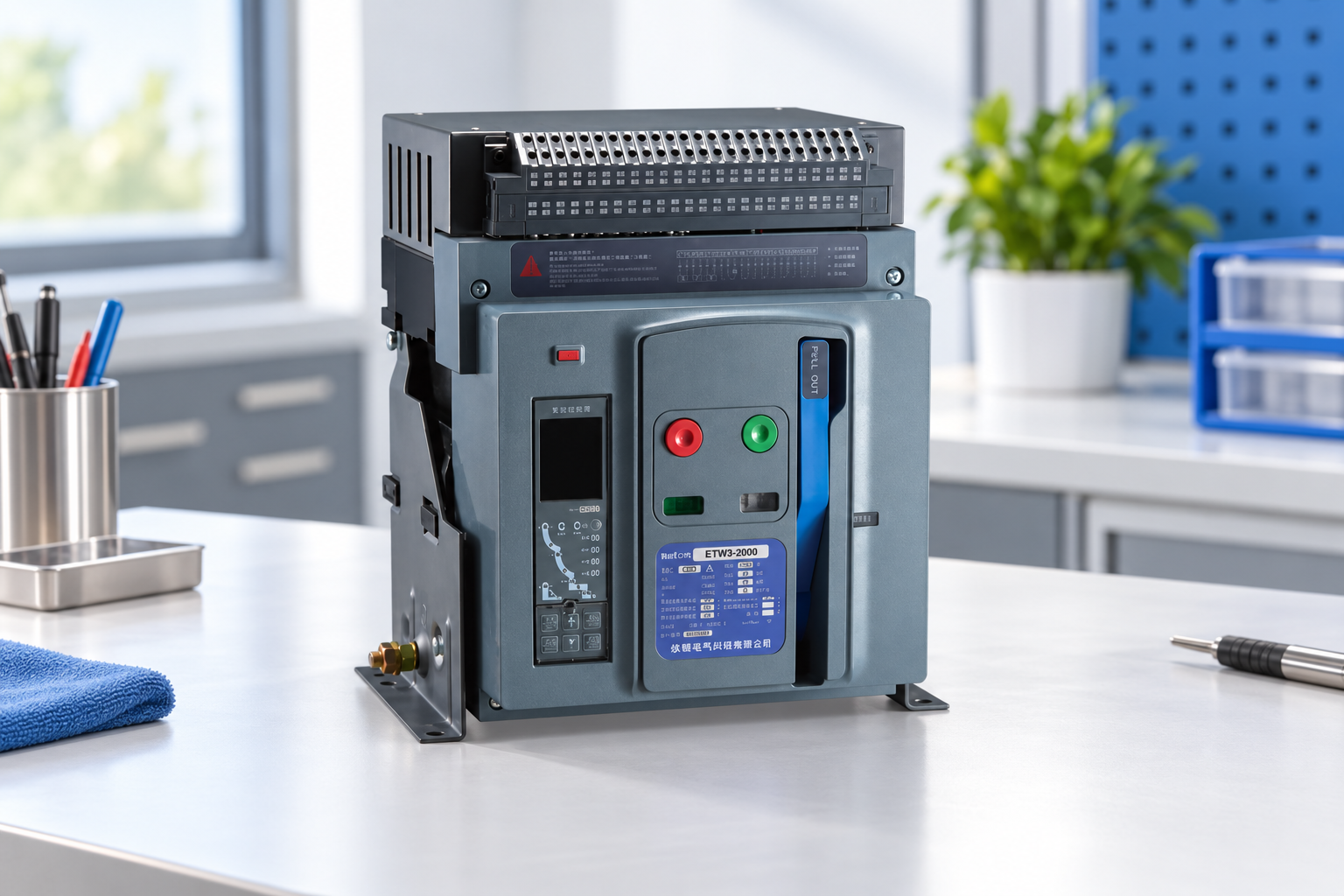
The public SUTON ETW3 page lists instantaneous and time-delay undervoltage trip-unit options. It does not publish every available control voltage, delay, reset threshold or interaction for all models. Ask for the exact accessory code and datasheet. Do not infer that an ETW3 photograph proves a particular UV release is installed. A timer, if offered, should be selected only after studying expected voltage dips and the protective purpose.
Keep control supply and main power paths distinct
The coil circuits usually use a separate control supply from the main protected power path. Draw control transformers, DC batteries, fuses, terminals, switches, relays and return paths. Verify voltage at the accessory under load and during a command, not only open-circuit voltage. A weak DC supply can appear healthy until a closing coil draws current. A failed auxiliary fuse may disable a remote opening command while the main circuit remains energized.
Specify how control power is maintained through utility failure or generator transfer if the required operating action must remain available. Identify the effect of lost control supply on each release. A closing coil becoming unavailable is different from an undervoltage release intentionally opening the breaker. Use a clear cause-and-effect matrix so operations staff can distinguish the two cases.
Check mechanical and electrical permissives together
Stored-energy charge state, spring indicators, anti-pumping, door interlocks, drawout position, bus-tie logic and local/remote selectors can prevent a close command. Some may be mechanical, others electrical, and some combinations may be required by the switchboard design. The fixed-versus-drawout ACB guide explains why mounting construction changes the service interface. It does not define the precise permissive sequence of the ordered ETW3.
For a failed command, document the as-found position and indicators before cycling controls. Follow the manufacturer’s troubleshooting sequence. Never jumper a safety interlock merely to identify whether a coil works. An unauthorized jumper can defeat isolation or cause unexpected re-energization. Escalate an uncertain mechanism state to qualified personnel and the manufacturer.
Procure an accessory by its complete compatibility code
An RFQ should specify the exact ACB frame and revision, fixed or drawout construction, poles, control voltage and type, accessory function, coil duty, terminal arrangement, auxiliary contact needs, interlock logic and required documents. Similar-looking opening and closing releases may fit different slots or have different terminals. Confirm whether an accessory is factory-installed, field-installable or requires a separate module. A loose part number from a third-party marketplace is not enough.
Ask for the manufacturer’s wiring diagram, terminal schedule, control-voltage range, operating sequence, test procedure and replacement instructions. The ACB frame-versus-sensor article illustrates the same procurement principle: a common case appearance does not identify the installed internal components. Keep the accepted submittal with the as-built switchboard drawings.
Commission without energizing an unsafe board
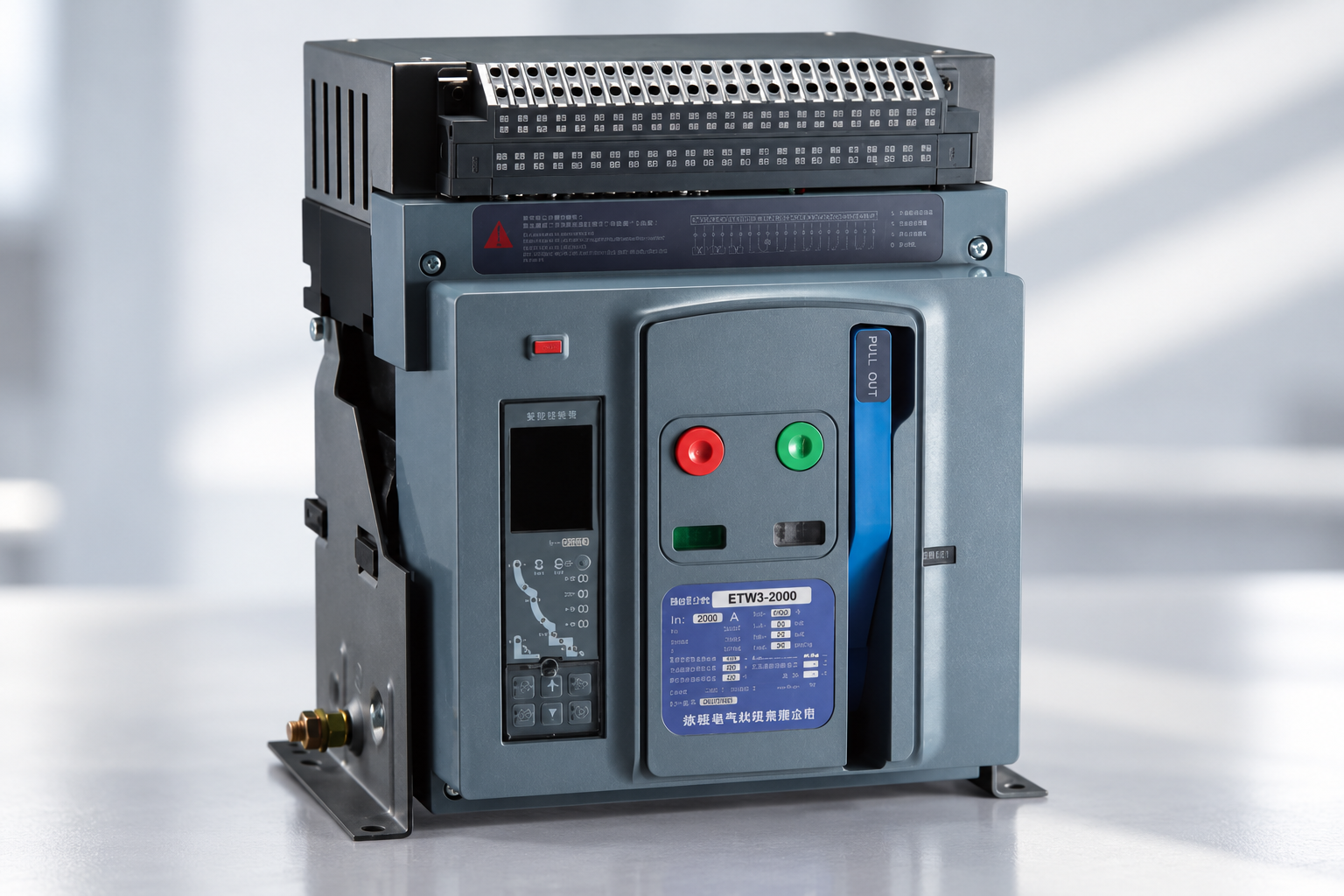
Before functional testing, verify control wiring against the approved drawing, insulation where applicable, terminal tightness, fuse sizes, polarity for DC accessories, auxiliary-contact states and interlock logic. Use the manufacturer-approved sequence to test local opening, remote opening, remote closing, undervoltage action and recovery. Record the control supply measured during each operation, the initiating command, indication, final breaker state and any abnormal sound or heating.
Test each relevant source mode. If a time-delay undervoltage function is specified, verify the declared response under an approved simulated condition. Do not create an uncontrolled supply interruption in a live switchboard to see what happens. The IET switching and isolation guide helps keep protection, switching and isolation roles distinct; site and model instructions govern the actual test method.
Maintain the control chain, not just the coil
At each scheduled maintenance interval, inspect accessible wiring and terminals, confirm control voltage, check the initiating devices and perform functional tests required by the manufacturer and site risk assessment. A coil can be sound while its relay contact, battery, fuse or selector fails. Record event counters and repeated failed-close attempts, because they may reveal a weak supply or interlock problem before a complete outage occurs.
After a replacement, confirm accessory compatibility and rerun the affected operating sequence. Preserve the old part’s failure evidence when a cause is unclear. Train operators not to interpret an unavailable remote close as proof that the breaker is isolated. The circuit-breaker types overview provides the larger protection context; this article addresses the ETW3 control-interface questions that a complete panel submittal must resolve.
Frequently asked questions
Is an opening coil the same as a protective trip unit?
No. A remote opening release is a control accessory; the protective trip unit detects faults.
Will a closing coil close an ACB with an active interlock?
It should not bypass required mechanical or electrical permissives; verify the exact sequence.
Can an undervoltage release trip during source transfer?
It can, depending on its monitored supply and delay. Study and test every intended source mode.
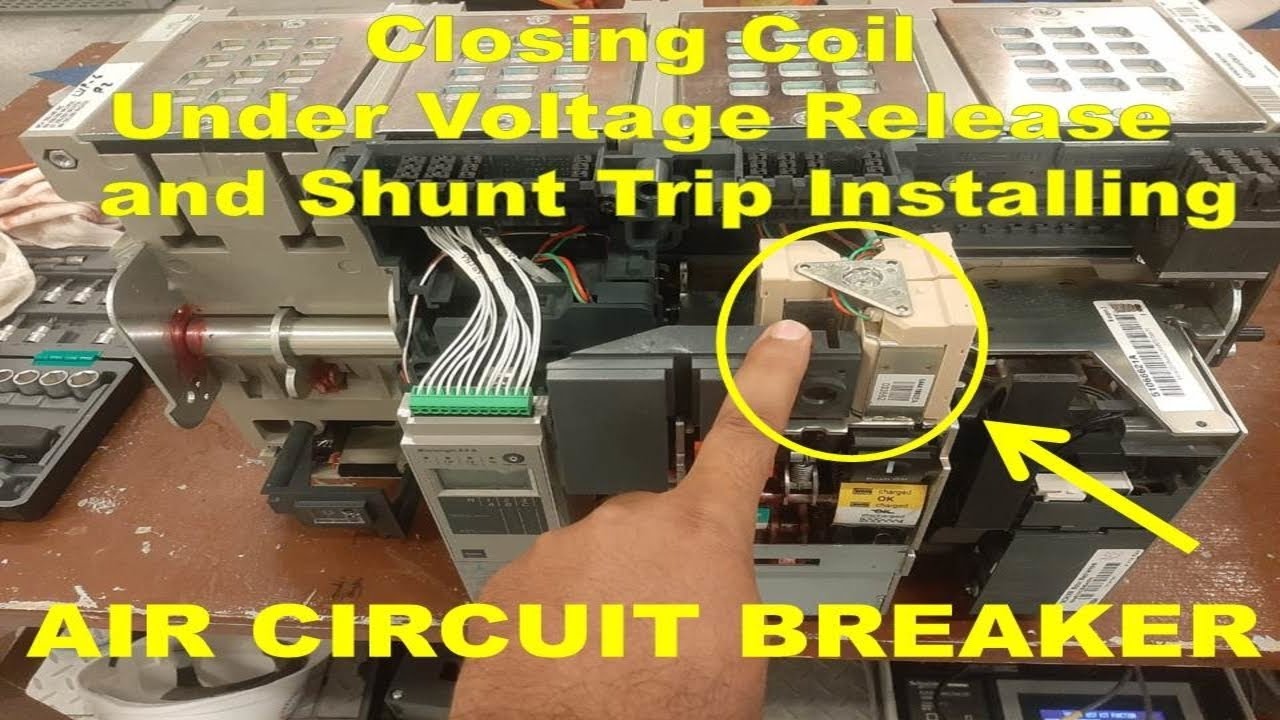
Video explanation
Watch Closing Coil, Undervoltage Release, and Shunt Trip Installing of ACB by Evergreen Electrical for a visual explanation. Model-specific SUTON documentation and the approved panel study remain controlling.