

AC-22A and AC-23A are switch-disconnector utilization categories that describe different switching duties. AC-22 concerns mixed resistive and inductive loads, including moderate overloads; AC-23 concerns motor loads or other highly inductive loads. The A suffix identifies the frequent-operation category. Select using the exact device's operational rating at the actual voltage and duty. A headline ampere value does not establish equal capability across both categories.
For panel builders, the key question is what the switch must make and break in service, not only how much current it carries when closed. This guide explains the comparison, the evidence needed for a motor or mixed-load circuit, and the limits of using a category label as a complete selection rule.
Read utilization category alongside operational ratings
A utilization category describes a defined duty within the relevant product-standard framework. It helps distinguish switching conditions that can impose different stresses on contacts and the interruption mechanism. It does not replace the device's rated operational voltage and current, frequency, installation conditions or product instructions.
The IEC 60947-3 publication scope covers switches, disconnectors, switch-disconnectors and fuse-combination units for relevant distribution and motor circuits. Use the edition and requirements adopted by the project. The public scope is useful context, but the complete standard and exact manufacturer's evidence govern detailed selection and verification.
When comparing offers, ask for the operational rating under the required category at the actual voltage. A supplier may show different category ratings for one frame. Record those values in separate fields instead of placing a single “rated current” number in the purchasing sheet and assuming it applies to every duty.
Understand the mixed-load role of AC-22A
AC-22A is associated with switching mixed resistive and inductive loads, including moderate overloads, under the category's defined conditions. The term mixed describes the duty; it does not mean any collection of loads is automatically acceptable. Establish the actual circuit and the manufacturer's supported rating.
A distribution circuit can feed lighting, heating, transformers, electronic supplies or motors in combinations that deserve closer review. The cabinet's total running current may hide switching conditions that differ from a simple mixed-load assumption. Identify what is energized when the switch closes and what it may interrupt when opened.
Do not use the AC-22A label to approve direct switching of a motor merely because the motor's normal current is below a headline rating. Determine whether the actual duty belongs within the device's declared conditions. If the duty is uncertain, obtain written clarification from the manufacturer or the responsible designer.
Understand the motor-load role of AC-23A
AC-23A is associated with switching motor loads or other highly inductive loads under the defined conditions. Those loads can impose switching stresses that differ from carrying their steady running current. The category therefore gives more relevant information than an enclosure's size or the conductor terminal capacity.
For a motor circuit, record the actual operating voltage, motor information and intended switching function. Establish whether the switch will open under load, close onto a stopped motor, or operate only after another device has removed current. These distinctions help the designer identify the required product evidence.
An AC-23A declaration is still specific to the device's supported voltage and rating. It does not mean that the switch can perform every motor-starting, reversing or frequent-control task. Where the application uses a drive, unusual starting arrangement or other demanding conditions, obtain explicit support for the actual circuit.
Interpret the A suffix without inventing an operation count
The A suffix identifies frequent-operation duty, while B identifies infrequent-operation duty within this framework. It is not a universal daily operation allowance or a promise of indefinite switching life. Mechanical and electrical endurance depend on the exact device, rating and conditions.
Ask for the manufacturer's declared endurance and any operating limitations relevant to the application. The project may need a service-life assessment based on anticipated duty, environment and maintenance. Avoid assigning an arbitrary number of operations per day from the letter alone.
Also distinguish maintenance isolation from process control. A switch selected for occasional maintenance access may have a different service role from a device used repeatedly to start and stop equipment. Record the intended role in the specification so later operational changes do not silently exceed the accepted duty.
Compare the ratings in a structured table
The following table separates duty, current carrying and installation questions. It does not supply numerical ratings for an unverified model. Populate the supplier-comparison sheet with the exact supported values and documents for the same voltage and operating conditions.
| Review item | AC-22A | AC-23A |
|---|---|---|
| Duty context | Mixed resistive and inductive loads, including moderate overloads | Motor or other highly inductive loads |
| Operational current | Request declaration at actual voltage and duty | Request declaration at actual voltage and duty |
| A suffix | Frequent-operation category; verify endurance separately | Frequent-operation category; verify endurance separately |
| Protection | Verify separate short-circuit coordination | Verify separate short-circuit coordination |
| Selection | Actual mixed-load evidence governs | Actual motor-load evidence governs |
If one candidate has an AC-22A rating and another has an AC-23A rating, the category names alone do not establish a like-for-like comparison. Verify both against the actual duty. A higher current in a less relevant category is not automatically a better offer for the circuit.
Keep isolation and switching functions distinct
A disconnector's isolation role and a switch's load-switching role are separate functions. A switch-disconnector combines the relevant functions within its declared scope. Do not assume that any device sold as an isolator can safely make or break the required load, or that an off position alone establishes a complete safe-isolation procedure.
The IET guide to protective, isolation and switching devices explains why function and identification matter when selecting a device. Apply that distinction to the exact product and the installation's adopted requirements.
The site's safe-isolation process must address all relevant sources and verification steps. A generator, UPS, alternate feed or stored energy can remain relevant after one switch is opened. The utilization category describes switching duty; it does not replace identification of sources, locking arrangements and verification by competent personnel.
Check short-circuit conditions separately
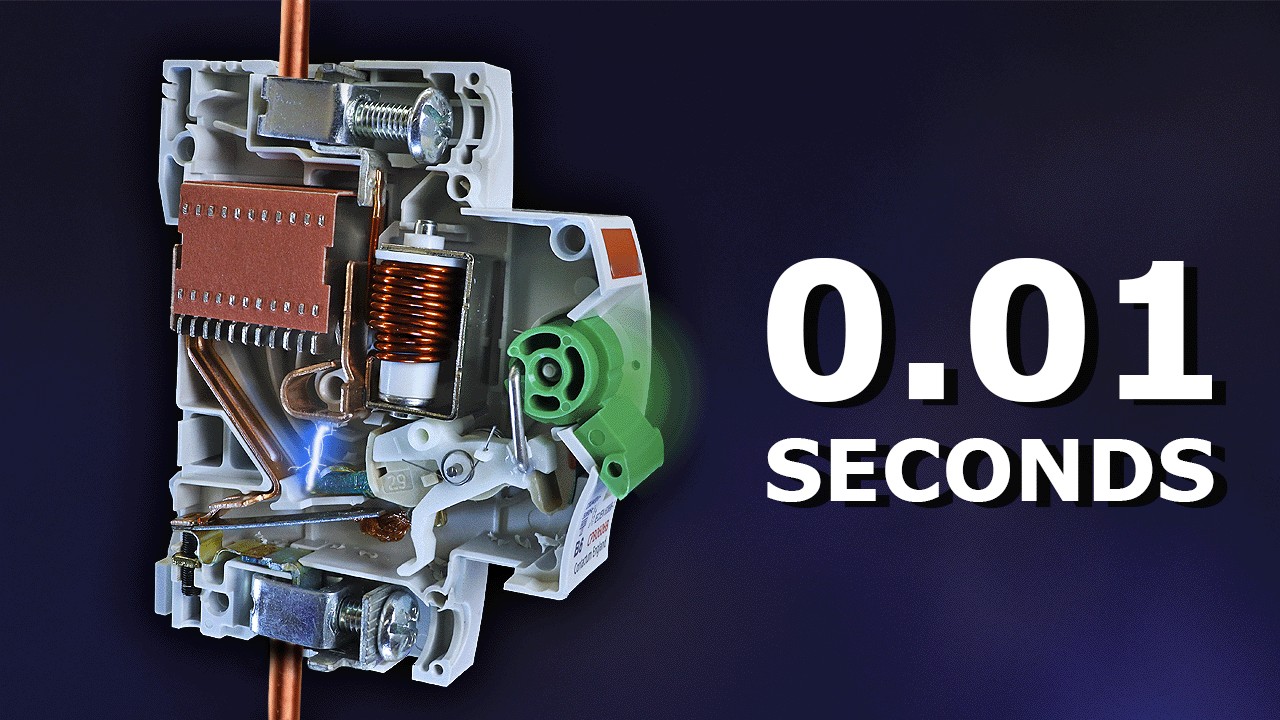
A switch-disconnector does not become a circuit breaker because it has an AC-23A rating. Determine its declared short-circuit conditions and any required upstream protective arrangement. Carrying, making, breaking and short-circuit withstand describe different aspects of performance and must not be collapsed into one number.
Ask for the permitted fuse or breaker coordination and the relevant conditions at the installation point. Confirm the prospective fault assessment and the exact protective device. A generic upstream breaker description can miss model, rating or setting limitations that matter to the supported arrangement.
The circuit breaker versus disconnect switch guide explains their different roles. The switch-disconnector guide provides the broader selection context. Use those roles to organize the design rather than expecting a utilization category to establish overcurrent protection.
Account for enclosure and installation conditions
Verify the operating environment, mounting orientation, ambient conditions, terminals and conductor requirements. The operational rating may depend on stated conditions that differ from the proposed enclosure. Ask the manufacturer how to apply its rating to the actual panel arrangement rather than treating open-air information as universal.
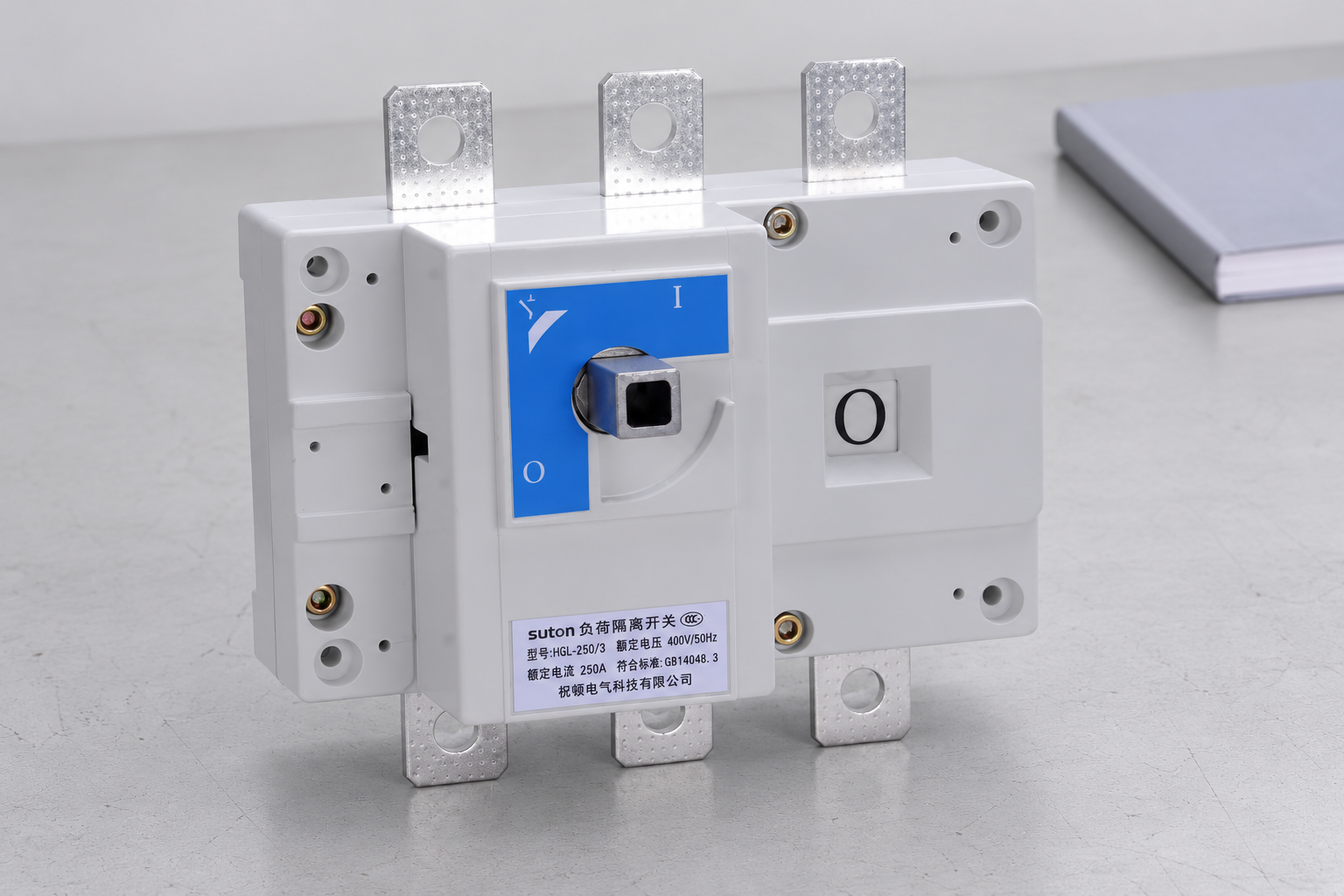
Review the operating mechanism, door coupling where used, indication and maintenance access. A product photograph can show a shaft or housing but cannot prove the suitability of a particular handle assembly or enclosure adaptation. Request the complete supported accessory and installation arrangement.
Keep the approved product documents with the panel drawings. The fuse-switch-disconnector guide addresses a related assembly whose fuse and switching functions also require coordinated evidence. Do not substitute a different construction solely because its front operating handle looks similar.
Work through a motor-circuit selection example
Consider a maintenance switch associated with a three-phase motor. The engineer first records the voltage, motor data, starting arrangement and operating procedure. The critical question is whether the switch must interrupt the motor current or is used only after another device has removed the load under a controlled process.
The engineer then obtains the exact switch's operational rating for the required duty at that voltage, plus the supported short-circuit and upstream-protection conditions. If the motor or switching method falls outside the declared conditions, the selection remains unresolved even if the thermal current rating appears large enough.
Finally, the panel designer reviews enclosure conditions, terminals, mechanism and isolation requirements. No universal multiplication of motor current can replace these checks for an unknown device. The accepted result is a documented arrangement with a stated service role, rather than a guessed oversizing factor.
Request a supported SUTON switch-disconnector
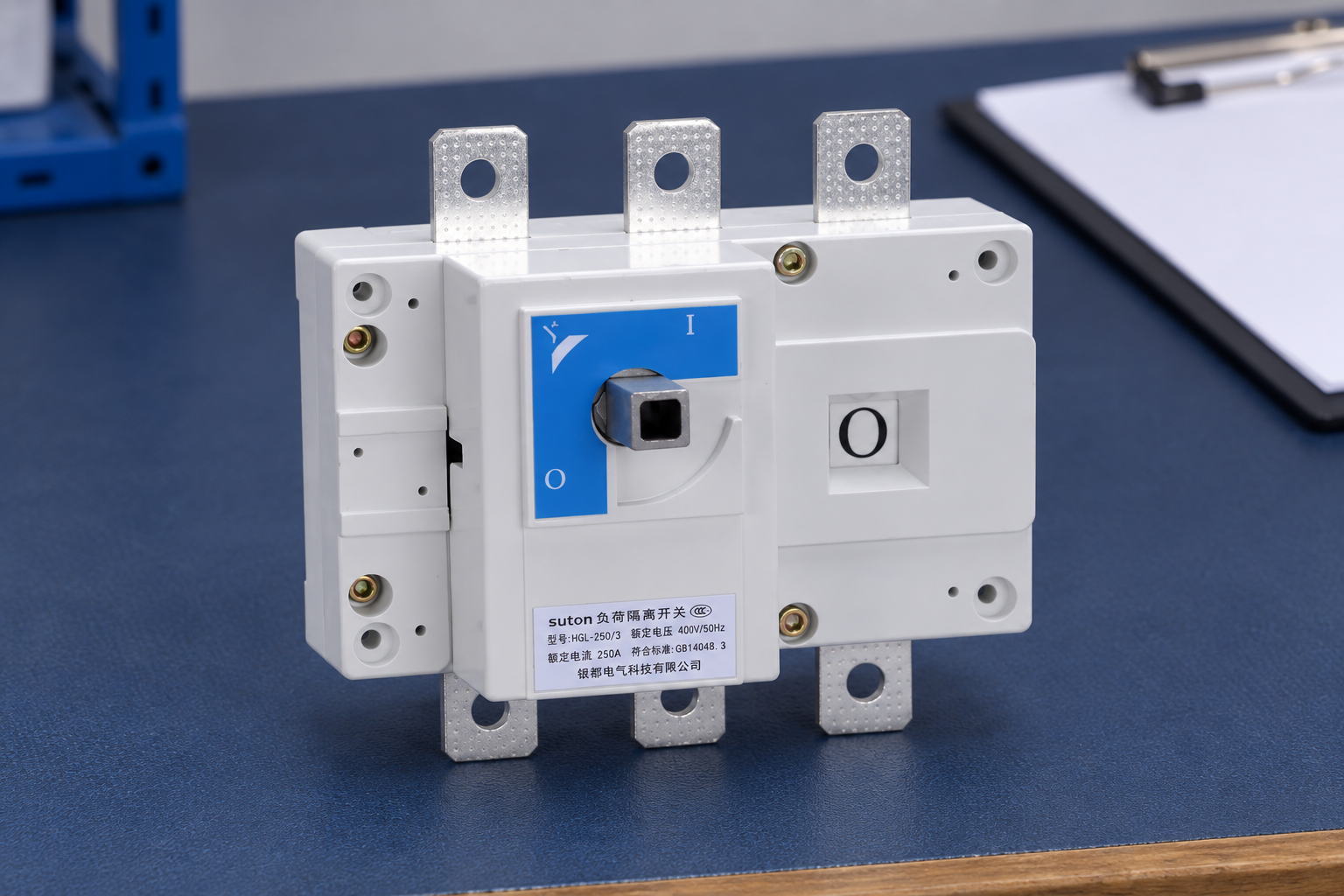
The SUTON ETGL(HGL) load-break switch-disconnector is the actual product reference used for this article's illustrations. The exterior image does not establish an AC-22A or AC-23A rating for every version. Obtain exact model evidence before naming a category in an order.
Send the operating voltage, load type, current information, switching duty, expected operation frequency, available fault conditions and upstream protection. Include the panel layout, enclosure conditions and mechanism requirements. Ask for the supported utilization-category rating, installation instructions and accessory codes in one response.
The HSE guidance on work near electricity supports planning safe work around the resulting equipment. Use SUTON contact support to resolve product questions. Acceptance should establish the required switching function, isolation function and installation conditions before purchasing on a current figure alone.
Frequently asked questions
Can the same current rating be used for AC-22A and AC-23A?
Only if the exact device documentation declares that rating for both categories under the relevant voltage and conditions. Do not assume equal ratings from a headline ampere value. Compare the operational rating for the actual duty.
Does AC-23A mean the device provides overload protection?
No. It identifies a switching utilization category. Overcurrent protection and short-circuit coordination are separate requirements that depend on the device construction and supported protective arrangement. A switch-disconnector should not be treated as a circuit breaker.
Does the A suffix define a fixed daily switching allowance?
No. It identifies the frequent-operation category within the standard framework. Obtain the exact manufacturer's endurance and operating limitations for the anticipated service duty instead of assigning a universal daily operation count.
Educational video
Why Circuit Breakers DON'T Protect People (electric shocks) by The Engineering Mindset. Educational background on why switching or circuit protection is not a complete safe-isolation procedure. It does not establish switch ratings or provide a model-specific work instruction.