


A distribution board subdivides an upstream feeder into protected outgoing circuits inside one enclosure. For panel builders sizing commercial and light-industrial boards, work starts with the approved single-line diagram, prospective fault current, and the way count expected at handover—not with enclosure finish or catalog photos. Where local codes apply (including NEC Article 220 or IEC 61439 families), align device ratings with the project’s calculated loads; this guide summarizes export-oriented practice without implying automatic code approval for any catalog SKU.
Part 1. What does a distribution board do in low-voltage systems?
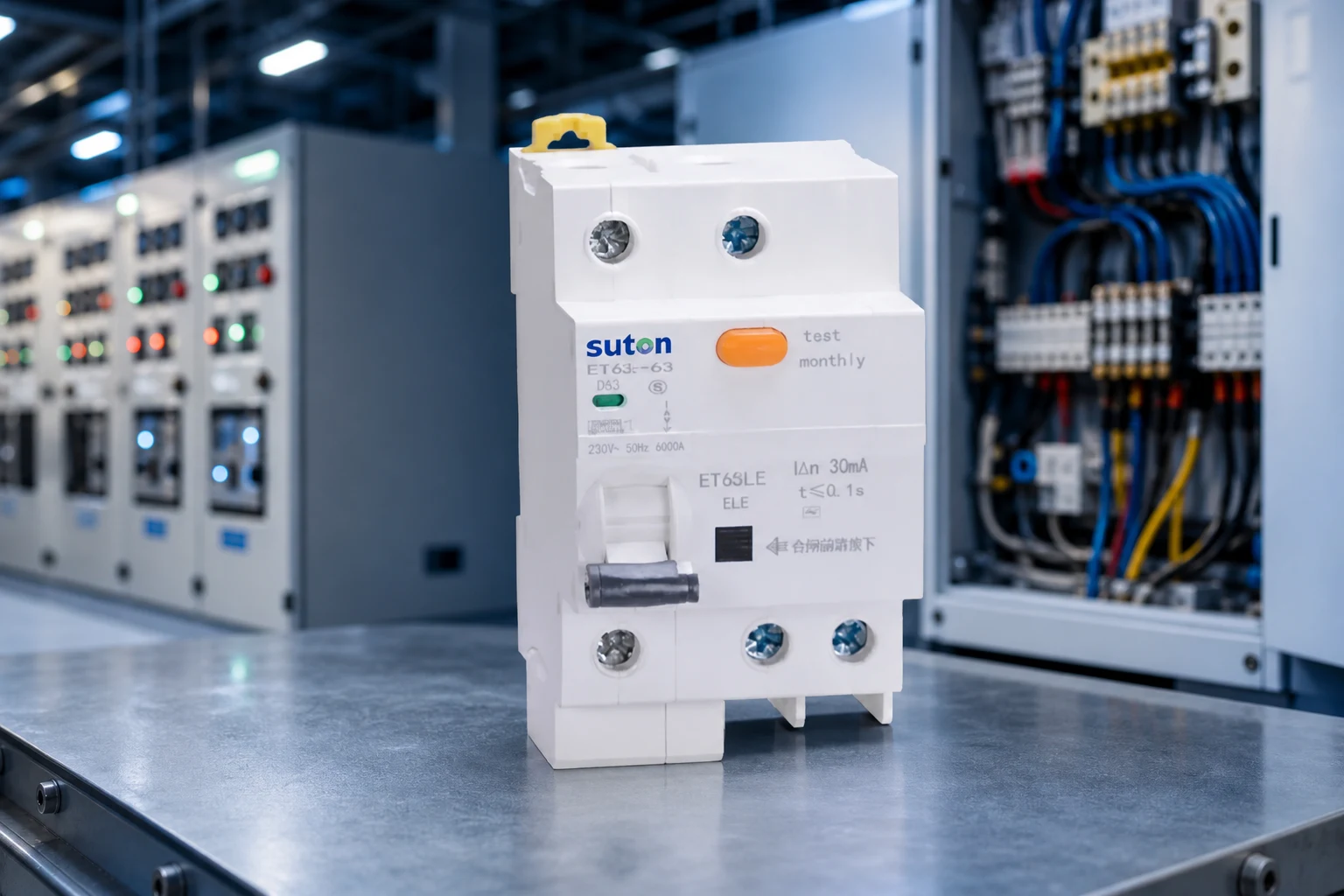
A distribution board receives power from an upstream breaker or busbar and distributes it to multiple protected outgoing circuits inside one enclosure.
Core function and circuit hierarchy
Each outgoing way normally carries its own overcurrent device—typically an MCB or MCCB—and, where specified, residual-current or surge protection. Encyclopedia and manufacturer guides describe the same hierarchy: incomer → optional sub-main → branch ways.
Panel builders should confirm early whether the board is stand-alone or part of a larger switchgear lineup. That choice drives busbar ampacity, cable entry, and whether metering or SPDs share the enclosure.
Stand-alone boards versus switchgear lineups
A stand-alone distribution board serves a single switchroom or plant area. A lineup may share a common bus, metering, and upstream protection—quotations must state which scope applies before device SKUs are frozen.
Part 2. How do load center, consumer unit, and panel board names differ?
Regional labels describe the same functional layer with different standards context. RFQ confusion often starts here—not at ampacity calculations.
IEC distribution board and panel board
IEC-oriented documents use distribution board or panel board for assemblies verified under IEC 61439. Export projects should cite the standard family the owner expects at handover.
North American load center terminology
In North American drawings, load center often denotes a NEMA/UL-oriented product category—useful when the owner’s package references that market, but not interchangeable with every IEC-built board frame.
Consumer unit and IEC 61439-3 DBO
Consumer unit appears in UK and export specs for assemblies built to IEC 61439-3 DBO (distribution boards for operation by ordinary persons). Commercial boards with MCCB incomers and higher busbar ratings may exceed DBO scope even when the owner still says consumer unit.
Installer forums illustrate the mismatch: one electrician prefers DB because it covers more cases; another asks whether a drawing labeled distribution board actually means a consumer unit. Match the owner’s vocabulary on the quotation cover sheet.
Part 3. What electrical inputs should panel builders document first?
Quoting slows when way count, busbar rating, or fault level are missing from the first RFQ package. Capture these inputs before locking enclosure or device SKUs.
Load schedule and diversity
List connected kW/kVA per circuit, diversity factors, and any spare ways the specification allows. The load schedule is the basis for way count and upstream feeder sizing—not the enclosure catalog photo.
Fault level and breaking capacity
Record nominal voltage, system frequency (50 or 60 Hz as applicable), wiring scheme, and prospective fault current at the board terminals. Breaking capacity and short-circuit withstand must clear that fault level. IEEE 141 treats upstream data and cable impedance as prerequisites before comparing downstream device curves.
Enclosure, IP, and installation environment
Enclosure type, IP rating, and indoor versus outdoor placement drive derating. A board in a conditioned electrical room faces different thermal limits than a mezzanine panel in a dusty plant.
| Input document | Why it matters | Typical owner |
|---|---|---|
| Single-line diagram | Defines incomer, sub-mains, and branch hierarchy | Consultant / EPC |
| Load schedule | Basis for way count and cable sizing | Panel builder |
| Fault level study | Sets breaking capacity and busbar stress | Protection engineer |
| Enclosure / IP rating | Environmental fit and maintenance access | Owner / AHJ |
Part 4. How do NEC Articles 220 and 408 set panelboard ratings?
When project specifications reference NEC Articles 220 and 408, panelboard nameplate ampacity should trace to load calculations and assembly rules—cite the applicable code without implying automatic approval for every export SKU.
Article 220 demand and continuous loads
Build the load summary per Article 220 before selecting the panel frame. For feeders with continuous loads (equipment expected to run three hours or more), Articles 210 and 215 require overcurrent devices and conductors to account for continuous-load rules.
Forum discussions among contractors center on whether the panel nameplate should reflect demand after continuous-load adjustments—resolve against the project’s calculated load summary, not a generic catalog frame size.
Article 408.30 minimum panelboard rating
NEC 408.30 requires panelboard rating to be not less than the minimum feeder capacity determined by Article 220 load calculations. Export panels should document how the nameplate ampacity maps to those sheets for the owner’s AHJ package.
Part 5. What should a panel schedule include for permit review?
A panel schedule is standard paperwork for many permit submittals—not an optional appendix.
Circuit list and phase assignment
List each circuit, description, breaker size, connected load, and phase assignment. Reviewers check phase balance and verify that panel and upstream feeder ampacity match the service calculation sheets.
Consistency with load calculations
Breaker sizes on the schedule should trace to the load schedule and Article 220 summary. Discrepancies between permit drawings and as-built labels are a common cause of delayed energization approvals.
Part 6. How do MCB, MCCB, and RCD stages fit typical layouts?
Protection device roles follow the single-line diagram—not a generic catalog row of MCBs.
MCB on final circuits
Modular DIN-rail MCBs commonly protect lighting, receptacles, and small motor loads where fixed thermal-magnetic curves are enough. IEC 60898-1 covers this device class extended into commercial branch rows.
MCCB as incomer or sub-main
Molded case circuit breakers typically serve as incomers or sub-mains when higher ampacity, adjustable protection, or auxiliary contacts are required. IEC 60947-2 applies; datasheets should state Icu/Ics at the system voltage your diagram assumes.
RCD and RCBO grouping
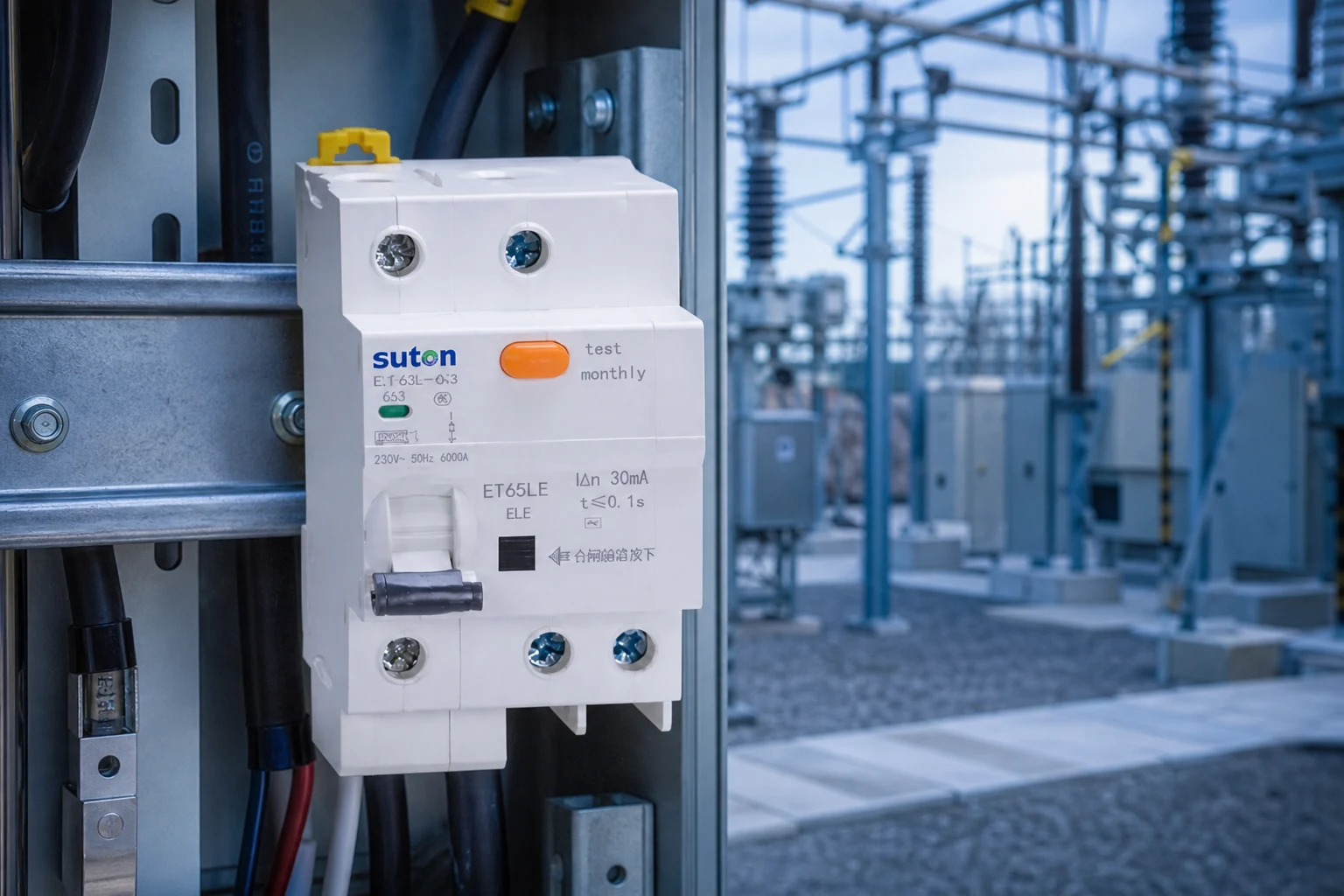
When residual-current protection is required, specify RCBO integration versus a grouped RCD feeding multiple MCBs. The choice affects neutral loading and test-button accessibility after installation.
Selective coordination between stages
A fault should clear at the branch device first. Compare manufacturer time-current data at the stated prospective fault current—not amp rating alone—when upstream MCCBs must remain closed for branch faults.
Part 7. What limits way count, busbar rating, and handover documentation?
Way count is not a universal catalog constant—it emerges from enclosure size, busbar ampacity, temperature rise limits, and the documentation package expected at energization.
Busbar ampacity and thermal rise
RFQs should state required ways, expected diversity, and busbar rating—not ask for a generic 24-way box. Thermal rise limits can cap usable ways even when physical space appears available.
Documented spare ways
Document spare ways only when the single-line diagram and quotation explicitly include them. Spare poles still consume busbar ampacity and enclosure thermal margin from day one.
IEC 61439 and assembly verification
IEC 61439 defines design verification for low-voltage switchgear assemblies; IEC 61439-3 addresses distribution boards for operation by ordinary persons (DBO). Assembly-level type test summaries support export acceptance when available—reference the standard family the owner expects without implying automatic AHJ approval.
Circuit directory and labeling at handover
Projects referencing NEC Article 408 expect a legible circuit directory on or behind the door; IEC-oriented exports still benefit from circuit charts even when final inspection occurs abroad.
RFQ vocabulary and change-order risk
Missing way count, busbar rating, or spare-way assumptions in the RFQ is a common source of change orders after technical review. Align naming with Part 2 before final pricing.
| RFQ / handover item | Purpose | When to include |
|---|---|---|
| As-built single-line diagram | Maintenance isolation | Before energization |
| Device nameplate list | Spares and warranty claims | At shipment |
| Type test summary (assembly level) | Proves withstand ratings | During technical review |
| Circuit chart / labeling drawing | Field identification | With installation manual |
Part 8. Which modular MCB and molded-case ranges fit typical distribution board layouts?
Once the single-line diagram fixes incomer ampacity, branch way count, and fault level, device selection narrows to modular branch rows and molded-case incomers that match your enclosure platform—not catalog photos alone.
Modular MCB rows for branch circuits
DIN-rail MCB families such as the DZ47LE series commonly fill lighting, receptacle, and small-motor ways where fixed thermal-magnetic curves suffice. Compare breaking capacity (Icu/Ics) at your stated system voltage against the fault study before freezing the bill of materials.
MCCB incomers and sub-mains
Molded-case incomers—including the ETM1 class—suit higher ampacity feeders where adjustable protection, auxiliary contacts, or future expansion matter. Pair the incomer Icu rating with busbar short-circuit withstand declared for the assembly.
When to involve factory engineering
Mixed OEM/ODM boards benefit from a single technical contact who can align device curves, enclosure cutouts, and export documentation. Share the load schedule revision, fault-study reference, and any residual-current requirements before requesting a formal quotation.
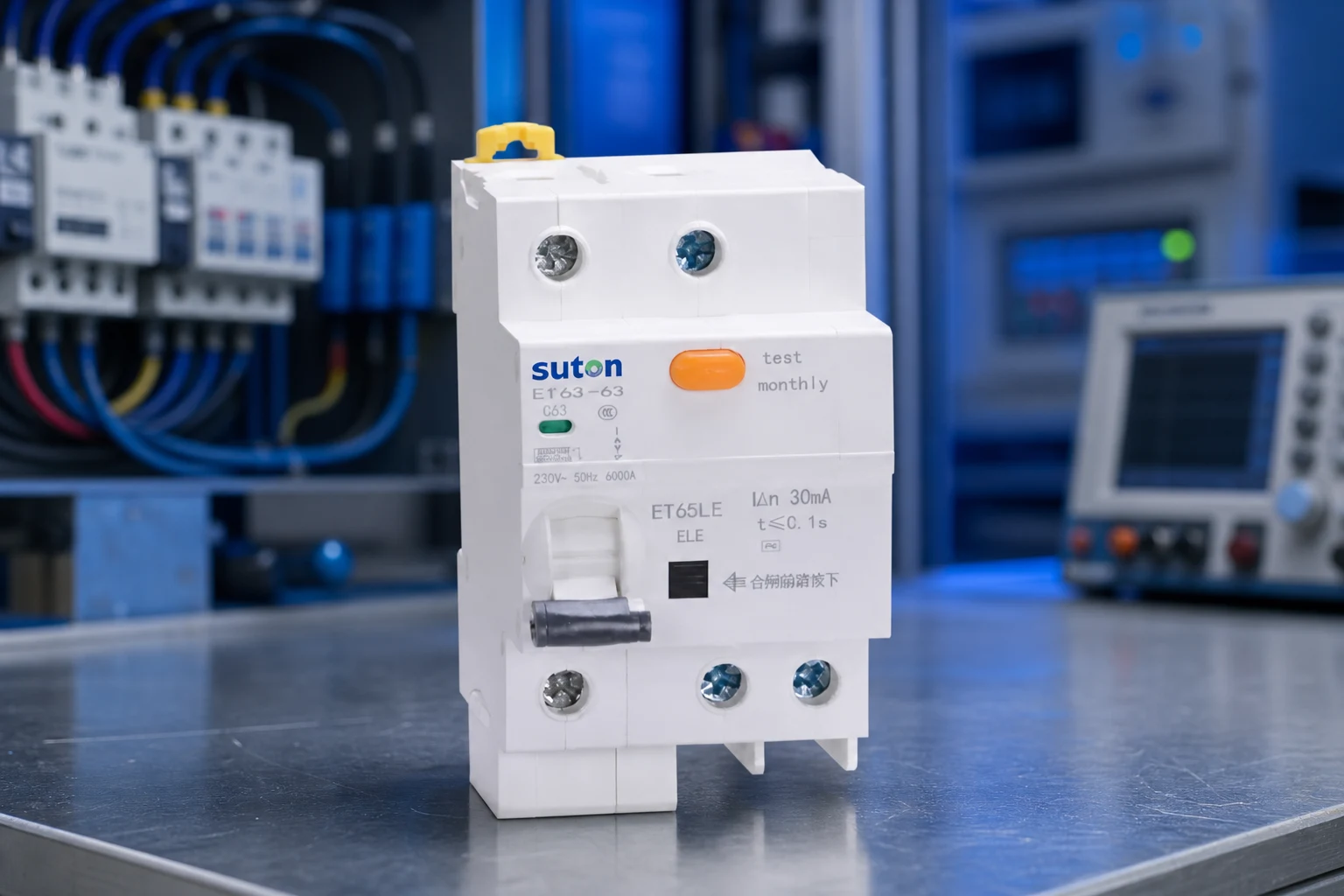
When your single-line diagram and load schedule are fixed, compare SUTON DZ47LE Series MCB, SUTON ETM1 Series MCCB and Distribution Box, explore application solutions, or review OEM/ODM capabilities. For datasheet alignment against your fault study, SUTON engineering support can review project parameters.
FAQ
What is a distribution board used for?
It receives power from an upstream feeder or main device and distributes it to multiple protected outgoing circuits, each typically with its own overcurrent device and labeling on a panel schedule.
What is the difference between a distribution board and a consumer unit?
A consumer unit is a type of distribution board aimed at residential or light-commercial use (IEC 61439-3 DBO). Commercial panelboards often use higher busbar ratings, MCCB incomers, and three-phase arrangements.
What is the difference between a load center and a distribution board?
In North America, ‘load center’ is common NEMA terminology for residential/light panels; ‘distribution board’ is IEC-oriented language for the same functional role, with different standard families (UL 67 vs IEC 61439-3).
How do you size a distribution board for a commercial building?
Build a load schedule, apply NEC Article 220 demand and continuous-load rules, size the incomer and bus to the calculated feeder capacity, and verify short-circuit withstand at the panel terminals.
What protection devices go inside a distribution board?
Typical stages include a main switch or MCCB incomer, feeder MCCBs, modular MCBs on final circuits, and RCD/RCBO or SPD functions where the specification requires them.
What standards apply to low-voltage switchgear assemblies?
IEC 61439 (and 61439-3 for DBO) are widely referenced for assembly verification; U.S. projects also apply NEC Article 408 and local NFPA 70 amendments.
How many circuits can a distribution board support?
Way count depends on enclosure size, busbar ampacity, and thermal limits—not a fixed catalog number. RFQs should state required ways, spare capacity, and expected diversity.
What is a panel schedule and why do permit reviewers ask for it?
A panel schedule lists each circuit, its load, breaker size, and phase assignment. Reviewers use it to verify phase balance, panel rating, and consistency with feeder sizing shown on service sheets.
References