


40 amp wire size is not a universal gauge answer for a panel builder. The 40 A label identifies one circuit-rating input, but conductor material, insulation designation, installation method, ambient conditions, grouped circuits, load duty, run length, voltage-drop objective and the applicable project rules can all change the review.
A useful request therefore starts with the circuit data, not a copied chart. Current-carrying capacity and voltage drop are separate engineering checks, so a conductor that appears adequate in one installation arrangement may still require a different project decision when the route, terminals or duty change.
Part 1. Why is 40 A not a universal wire-size answer?
Search results often turn this question into a single gauge number. That can be useful only inside the exact national rules, conductor construction and installation assumptions behind the table. A global panel project cannot safely inherit those assumptions when the installation location and circuit details have not been supplied.
For panel builders, the more useful question is: what conductor and protection information is needed to review a circuit carrying a stated 40 A requirement? The answer is a controlled input set. It lets the responsible electrical designer apply the governing rules and lets the buyer compare quotations on the same technical basis.
| Review question | Why it changes the decision | What not to assume |
|---|---|---|
| What conductor is specified? | Material, cross-section and insulation designation are part of ampacity assessment | That a gauge label alone identifies construction or temperature rating |
| How is it installed? | Air, conduit, tray, burial, enclosure and grouping change thermal conditions | That a free-air example represents the actual route |
| What is the load duty? | Continuous, cycling, motor and equipment duties can require different review inputs | That every 40 A load has the same duty |
| Which rules govern the work? | Local installation and acceptance requirements control the final design | That a rule from another market applies automatically |
The applicable wiring-system rules and approved design remain the project authority. This article does not reproduce a national table or substitute for the design authority’s installation data.
Part 2. Which inputs establish the conductor duty?
Begin with the electrical and physical facts that a calculation or design review can actually use. The conductor must be identified by more than a trade name: record its material, cross-section, insulation designation and the terminal limitations that apply at each end.
Load information belongs beside the conductor description. A buyer should identify whether the 40 A figure is a protective-device label, a design current, an equipment nameplate value or an upstream feeder requirement. Those phrases are not interchangeable, and the distinction prevents an enquiry from mixing an equipment requirement with a final cable selection.
| Input group | Buyer should provide | Why it matters to the review |
|---|---|---|
| Circuit identity | single-line reference, source and destination | Keeps the enquiry tied to one defined circuit |
| Conductor | material, cross-section, insulation designation, core arrangement | Establishes the actual cable construction to assess |
| Load | equipment type, duty, starting or cycling information where relevant | Separates circuit duty from a shorthand amp label |
| Termination | terminal type, available space and connection constraints | Prevents a cable-only decision that cannot be terminated as designed |
| Governing context | installation location and applicable rules | Assigns final compliance review to the correct authority |
This is not paperwork for its own sake. Cableizer’s ampacity documentation illustrates that current-carrying-capacity work uses conductor and thermal inputs; a quote cannot responsibly invent the missing inputs.
Part 3. How do installation conditions change the review?
The route controls heat dissipation. A conductor installed alone in a favourable arrangement does not have the same thermal environment as one in a filled containment system, inside an enclosure or grouped with other loaded circuits. Ambient conditions, spacing, number of loaded conductors and the selected installation method should therefore be part of the design record.
Important: A universal 40 A wire-size table cannot demonstrate that an actual installation is thermally suitable. The responsible design authority must check the real installation method, thermal conditions, protective-device coordination and applicable local rules. Cableizer’s ampacity documentation shows why conductor and thermal inputs are part of the calculation context.
Ask for a route description rather than the word “indoor” or “outdoor.” Useful descriptions identify whether the conductor is exposed, enclosed, in conduit, on tray, underground, near heat sources, or bundled with other circuits. If any condition is still provisional, mark it as a design assumption rather than presenting a selected cable size as final.
Part 4. Why does run length add a separate voltage-drop check?
Ampacity asks whether a conductor can carry the intended duty under stated thermal conditions. Voltage-drop review asks how the circuit performs between source and load over the actual route. The two checks are related but neither replaces the other.
Long-run questions appear repeatedly in buyer discussions because length changes the electrical path even when the nominal circuit rating remains the same. The relevant review needs the route length, system arrangement, load characteristics and the project’s voltage-performance objective. Do not insert a universal allowable-drop percentage when no governing project requirement has been supplied.
| Run-length review field | Buyer should provide | Decision protected |
|---|---|---|
| Route length | measured or drawing-based route, including the intended path | Avoids treating a short connection and a remote load as the same case |
| System data | voltage system and circuit arrangement | Provides calculation context without assuming a country standard |
| Load behaviour | steady, cycling, motor or electronic load characteristics where relevant | Helps the designer review operating conditions |
| Performance requirement | project voltage-drop target or governing rule reference | Prevents an undocumented acceptance criterion |
Cableizer’s voltage-drop documentation treats voltage drop as its own calculation subject. That separation is the practical reason to request length and system data before a 40 A enquiry becomes a product or cable recommendation.
Part 5. How should breaker and conductor decisions stay coordinated?
The breaker and conductor should be reviewed as one protection path, not as two independent shopping items. The protective device has a duty in the circuit; the conductor must be assessed for the applicable installation conditions; and the terminal or panel arrangement must accommodate the selected components.
The existing 40 amp breaker selection guide addresses the breaker-side decision. This article adds the conductor-input boundary, while the 25 amp breaker requirement guide illustrates a separate nominal-rating decision.
Apply breaker-and-conductor coordination through the approved local design. Do not treat this article as a setting instruction or a compliance certificate.
Part 6. When should a buyer review a SUTON modular route?
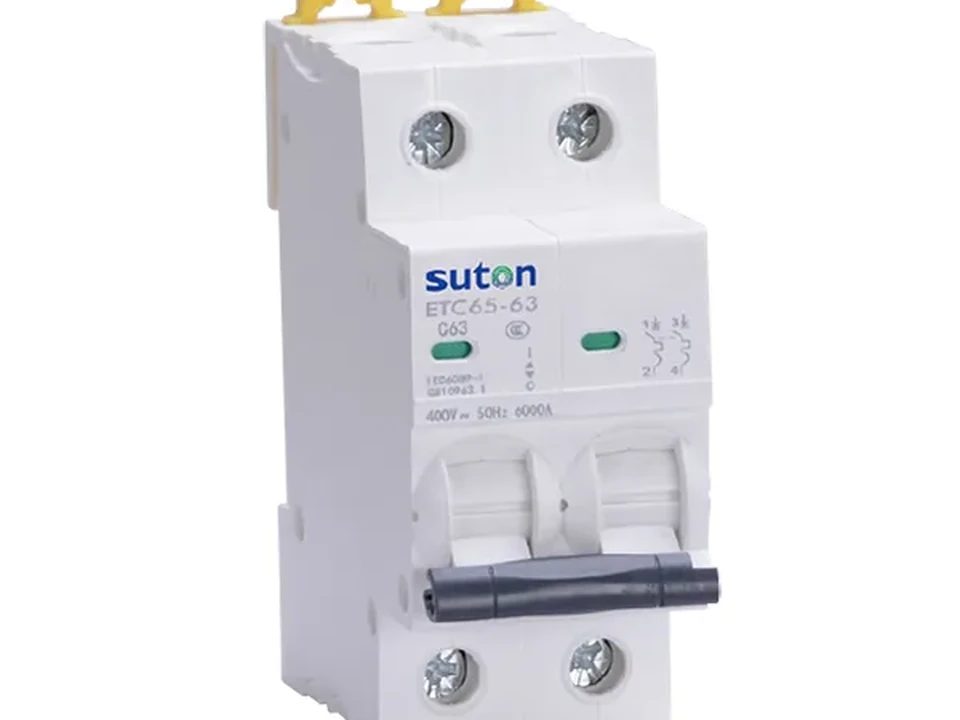
After the circuit duty and conductor-review inputs are defined, a buyer can explore the relevant protective-device family. SUTON publishes modular DIN rail products and a DZ47 Series Miniature Circuit Breaker route for product-family discussion.
That link is not a declaration that a particular model fits every 40 A circuit. Confirm the selected pole arrangement, protection duty, approved design, terminal compatibility and applicable product data before treating any device as a project fit.
For a useful review request, submit the circuit inputs for review with the drawing reference, conductor details, route description, load duty, length, protection role, location and governing rule set. This guide is suitable for a reviewable B2B specification; it is not suitable for field installation without a qualified local design decision.
FAQs
Is 40 A enough information to select a wire size?
No. It is one circuit-rating input, but the selection also depends on conductor construction, installation conditions, load duty, route length, voltage-drop requirement and the applicable project rules.
Which installation details change a 40 A conductor review?
Record the installation method, ambient conditions, enclosure or containment, grouping with other loaded conductors, route description and terminal constraints. These details affect the thermal environment and the practical connection arrangement.
Does run length matter for a 40 A circuit?
Yes. Run length creates a separate voltage-drop review. Provide the actual route length, system arrangement, load behaviour and the project’s stated performance requirement rather than assuming a short-route result applies.
Is voltage drop the same as ampacity?
No. Ampacity concerns current carrying under stated thermal conditions; voltage drop concerns electrical performance along the route. A project review normally needs both subjects considered separately.
Can a breaker rating choose the conductor by itself?
No. The breaker role, conductor conditions and local design rules must be reviewed together. A product label does not establish the installation method or the final conductor decision.
What belongs in a 40 A wire-size RFQ?
Include the circuit reference, conductor material and construction, installation method, ambient and grouping conditions, load duty, route length, system arrangement, voltage-drop requirement, protective-device role, terminal constraints and applicable local rules.