


arc fault circuit breaker — An arc-fault circuit breaker targets dangerous arcing on branch circuits that conventional MCBs may not clear quickly. Contractors need a circuit-by-circuit AFCI schedule, trip class references, and load compatibility notes—not a blanket safety upgrade on every way. Cite project standards where they apply without stating that any export catalog device is automatically approved by the local AHJ. Freeze the panel schedule revision before DIN-rail layout closes so AFCI module widths are not squeezed into occupied ways.
Part 1. What does an arc-fault circuit breaker do in branch circuits?
An arc-fault circuit breaker (AFCI) adds detection of dangerous arcing faults that may not draw enough current to trip a standard thermal-magnetic MCB quickly.
Panel builders should map AFCI requirements circuit by circuit on the panel schedule rather than treating arc-fault protection as a universal upgrade for every outgoing way.
Arc fault versus bolted fault
Bolted faults draw high current and are cleared by conventional overcurrent elements. Series or parallel arcing can persist at lower current levels—AFCI devices use electronic detection patterns defined in product standards.
Treat AFCI selection as a documented engineering decision tied to the circuit type and load mix, not a generic safety upgrade line on every branch.
Branch circuit scope
Project documents should state which branch circuits require AFCI versus conventional MCB protection. Mixed residential and commercial feeders on export panels need explicit circuit lists to avoid applying the wrong device class.
When the owner supplies AFCI modules separately, document which ways are factory-wired versus field-installed so acceptance tests cover every protected circuit.
Part 2. How do AFCIs differ from GFCI, RCD, and standard MCBs?
AFCI, GFCI/RCD, and standard MCB functions are not interchangeable even when devices look similar on DIN-rail rows.
Quotation cover sheets should list required functions per circuit—arc-fault, residual-current, or conventional overcurrent—so procurement does not substitute the wrong device family.
AFCI versus residual-current protection
RCDs and GFCIs sense leakage to earth. AFCIs target arcing signatures on the branch circuit. Some combined devices exist in certain markets—verify the required function list on the specification.
Dual-function devices may satisfy both clauses on one circuit, but only when the consultant schedule and manufacturer trip class explicitly allow that combination.
Standard MCB limits
A standard MCB may never detect a low-level arc that does not trip the magnetic element. Do not assume an ordinary branch breaker satisfies an AFCI clause on the consultant schedule.
If the owner downgrades AFCI scope after quotation, capture the revision on the panel schedule before release to production.
Part 3. Which ratings and trip classes should be verified?
Record nominal voltage, branch load type, and required trip class before comparing AFCI device quotations.
Export panels often mix AFCI-protected lighting circuits with conventional power feeds—freeze the circuit list revision before mechanical layout closes DIN-rail spacing.
Voltage and breaking capacity
Breaking capacity must clear prospective fault current at the branch device—not only the connected load current. Cite Icu/Ics at system voltage from the fault study.
When AFCI modules share a sub-main with conventional branches, confirm upstream device selectivity so a branch arc fault clears at the intended level.
Load categories and electronic equipment
Circuits with heavy electronic loads, dimmers, or motor drives may need specific AFCI categories or alternative protection strategies per manufacturer guidance. Compare quotations on equal trip class and test standard references.
Motor branch circuits rarely carry AFCI clauses, but mixed panels still need a clear boundary between motor feeders and AFCI lighting or receptacle ways.
| Data item | Typical question it answers | Source |
|---|---|---|
| Trip class / standard reference | Matches consultant AFCI clause | Specification |
| Breaking capacity (kA) | Survives branch fault | Fault study |
| Load type per circuit | Nuisance-trip risk | Load schedule |
| Panel way count | Physical fit on DIN rail | Panel layout |
Part 4. Where do project specifications require AFCI protection?
AFCI requirements appear selectively by circuit type and occupancy—not as a universal rule on every outgoing way.
Hotel, dormitory, and residential export projects often show the longest AFCI circuit lists; industrial feeder panels may have none—match the schedule to the occupancy noted on drawings.
NEC Article 210.12 when cited
Where project documents reference NEC Article 210.12, map required locations to your panel schedule. Cite the applicable code without implying automatic AHJ approval for any export catalog SKU.
List bedroom, living-area, and other named locations on the handover index when the consultant schedule references room-type wording rather than panel way numbers alone.
IEC-oriented export panels
IEC-oriented assemblies may reference arc-fault detection standards under different product families. Align naming with Part 2 before final pricing to avoid supplying conventional MCBs where AFCI function was intended.
When standards cite AFDD terminology, confirm whether the owner expects branch devices, distribution-board-mounted units, or a combination before freezing the BOM.
Part 5. What causes nuisance tripping on AFCI-protected circuits?
Nuisance tripping often traces to load types, shared neutral paths, or incompatible dimmers—not necessarily a defective device.
Commissioning teams should log which circuits nuisance-trip during load energization so engineering can adjust load assignments or device class before final acceptance.
Electronic and lighting loads
LED drivers, switched-mode supplies, and certain dimmers can produce waveforms that challenge arc-detection algorithms. Review manufacturer compatibility lists before downgrading device class without engineering approval.
Vacuum cleaners, hair dryers, and other portable loads on AFCI bedroom circuits are common field complaints—note them on the O&M troubleshooting sheet.
Neutral and shared-return wiring
Shared neutral arrangements between AFCI-protected and unprotected circuits can produce false trips. Document neutral routing on the wiring diagram handed over at commissioning.
Multi-wire branch homeruns deserve explicit neutral identification on as-built drawings when AFCI devices protect only some circuits on the shared neutral.
Part 6. How should AFCIs be placed in panel layouts?
Place AFCI devices on the branch ways identified on the approved panel schedule—not as a uniform replacement for every MCB unless the specification requires it.
Group AFCI-protected ways in the panel directory with a consistent prefix so maintenance staff can locate them quickly during night-shift troubleshooting.
Circuit labeling and directories
Circuit directories should identify which ways are AFCI-protected for maintenance and troubleshooting. Export panels should ship with updated charts even when final inspection occurs abroad.
Provide spare AFCI modules in the recommended spares list when the owner contract includes warranty replacement within the first operating year.
Physical space and test access
AFCI electronics may require wider modules or specific DIN-rail spacing. Confirm door clearance and test-button access when the enclosure is fully populated.
Part 7. Which documentation should contractors request for AFCI branches?
Handover packages should tie each AFCI-protected circuit to its trip class, test procedure, and load description.
Include manufacturer test-button instructions in the commissioning binder—field teams often skip monthly verification when steps are not printed in the handover set.
Datasheets and type references
Request trip class, breaking capacity, and compatibility notes for electronic loads. Type test excerpts support export acceptance when assembly-level summaries are not yet available.
Commissioning records
Include test results and circuit assignments on the commissioning record before energization. Maintenance teams rely on these records when swapping modules after warranty service.
| RFQ / handover item | Purpose | When to include |
|---|---|---|
| AFCI datasheet / trip class | Proves function matches spec | Before purchase order |
| Panel schedule with AFCI flags | Identifies protected ways | Design phase |
| Compatibility notes for loads | Reduces nuisance trips | Technical review |
| Commissioning test record | Documents verification | Before energization |
Part 8. Which RCBO and modular MCB ranges fit panels that specify AFCI branches?
This site does not list a dedicated AFCI catalog SKU. When specifications require arc-fault branches alongside conventional feeders, combine modular branch rows and molded-case incomers that match your panel platform—and confirm AFCI device sourcing with the owner when a named AFCI SKU is mandatory.
DZ47LE modular branch rows
DIN-rail MCB families such as DZ47LE cover conventional branch ways that often sit beside AFCI-protected circuits in mixed panels. Compare breaking capacity at your stated system voltage against the fault study.
ETM1L RCBO for combined branch protection
Molded-case RCBO families such as ETM1L cover branches where consultants group residual-current and overcurrent functions. Compare trip class and breaking capacity at your stated system voltage before sourcing dedicated AFCI modules.
When to involve factory engineering
Share the panel schedule with AFCI flags, load types, and any named AFCI standard references before formal quotation. Engineering can confirm whether conventional modular rows plus owner-supplied AFCI modules fit the enclosure layout.
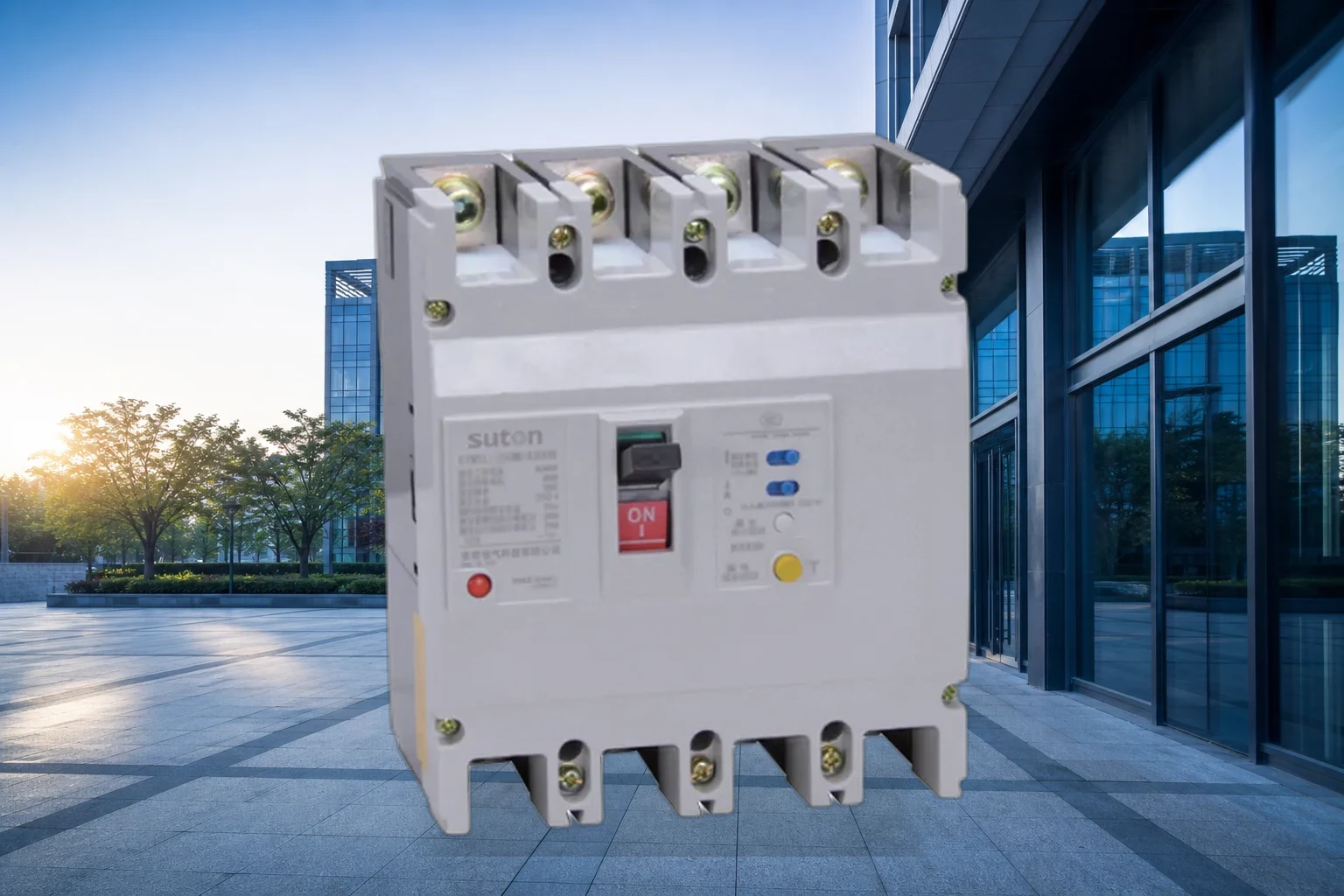
When your single-line diagram and load schedule are fixed, compare SUTON ETM1L Series RCBO and SUTON DZ47 Series MCB, explore application solutions, or review OEM/ODM capabilities. For datasheet alignment against your fault study, SUTON engineering support can review project parameters.
FAQ
What is a arc fault circuit breaker used for?
A arc fault circuit breaker provides defined protection or switching functions within a low-voltage distribution path, selected to match load, fault level, and wiring rules.
How do you select a arc fault circuit breaker for a commercial panel?
Collect load schedules, fault studies, enclosure ratings, and coordination targets; match device curves to upstream and downstream protectors.
What is the difference between arc fault circuit breaker and related protection devices?
Related devices may combine functions (e.g., overcurrent plus residual current); the specification should name required functions explicitly.
What standards apply to arc fault circuit breaker in low-voltage assemblies?
IEC 60947 series and IEC 61439 assemblies are common references; U.S. projects also follow NFPA 70 (NEC) and local AHJ rules.
How does a arc fault circuit breaker coordinate with upstream breakers?
Coordination requires aligned time-current curves so faults isolate at the intended level without unnecessary upstream trips.
What documents should panel builders request for arc fault circuit breaker?
Request type test summaries, wiring diagrams, spare parts lists, and commissioning checklists suitable for your acceptance plan.
References